
Mr Softwash®
The Original Soft Washing Company
"The UK's K Rend & Render Cleaning Specialist"
Mr Softwash®
The Original Soft Washing Company
"The UK's K Rend & Render Cleaning Specialist"
Mr Softwash is a highly rated, professional exterior cleaning service based in Hamworthy, Poole, specialising in low-pressure soft washing and modern render treatments. Run by Steve Taylor, who brings over 30 years of industry experience, the company provides safe, non-abrasive cleaning alternatives to traditional high-pressure jet washing across Poole, Bournemouth, Dorset, Hampshire, Wiltshire.
What can be softwashed?
Because of its gentle approach, softwashing is suitable for a wide range of surfaces that could be damaged by high-pressure cleaning.
These include:
Don't let stained and weathered Surfaces spoil the appearance of your property.
For professional Soft washing in Poole, Dorset and Hampshire, contact Mr Softwash today for a free online quote.
WhatsApp a photo & postcode for a free quote
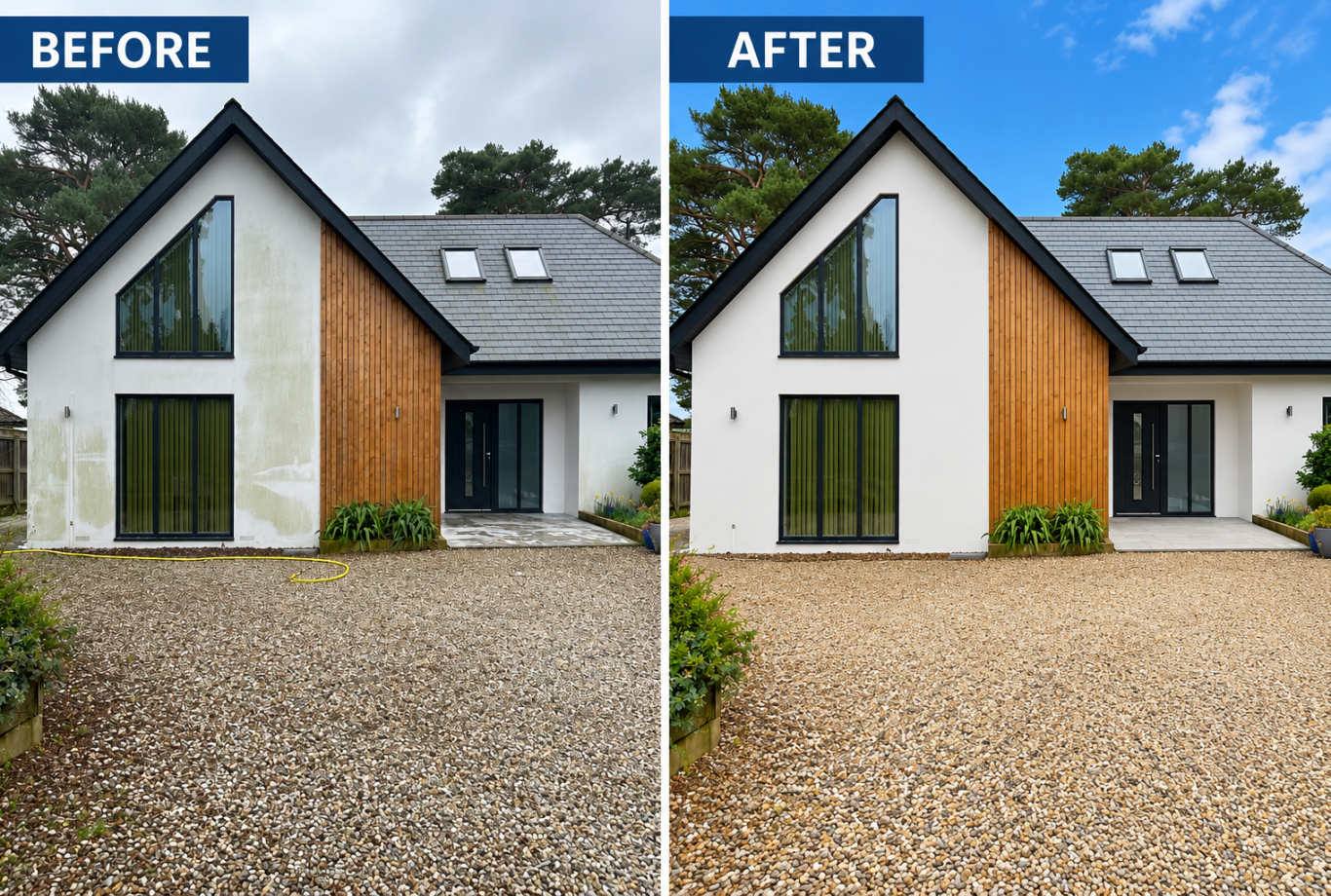
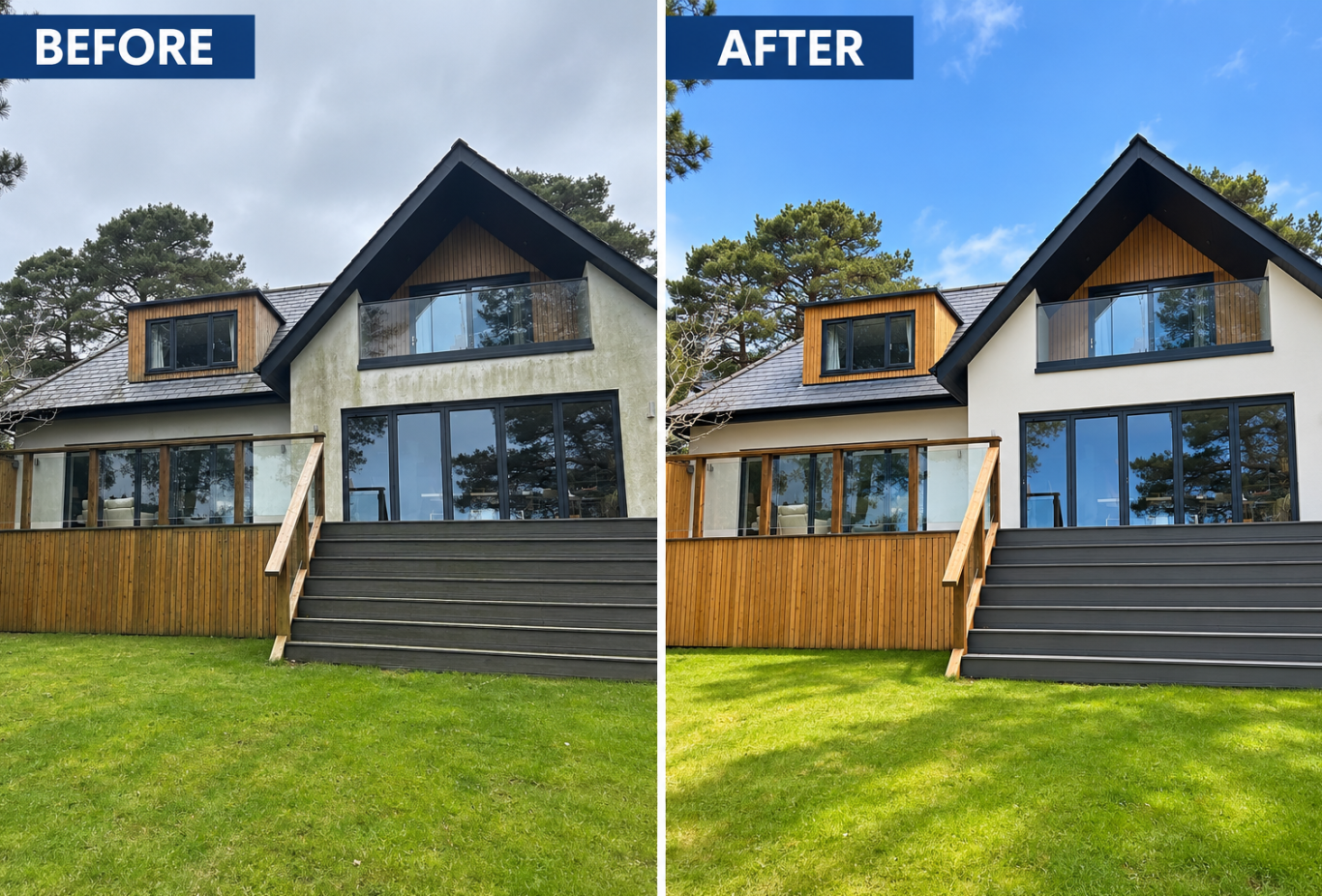
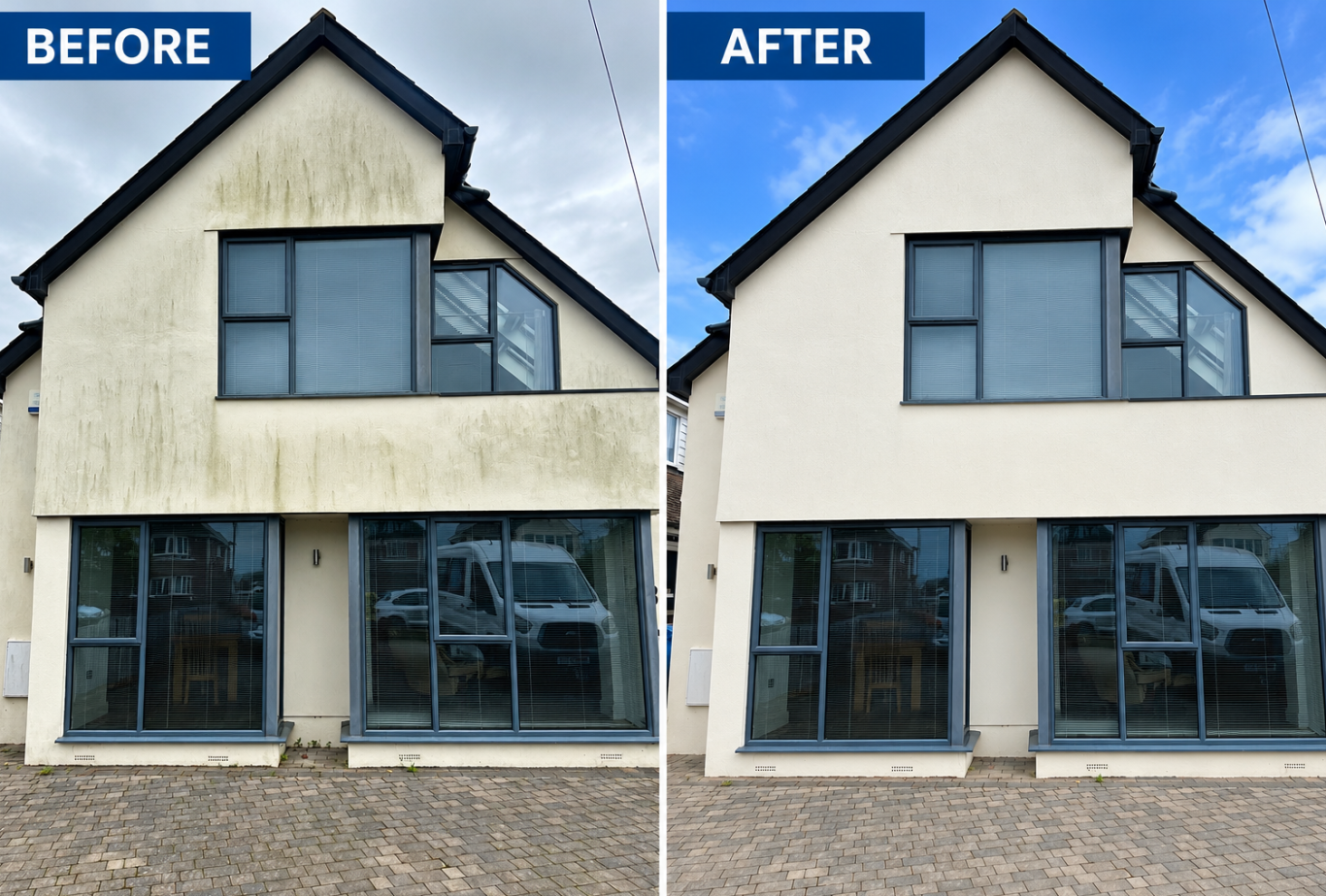
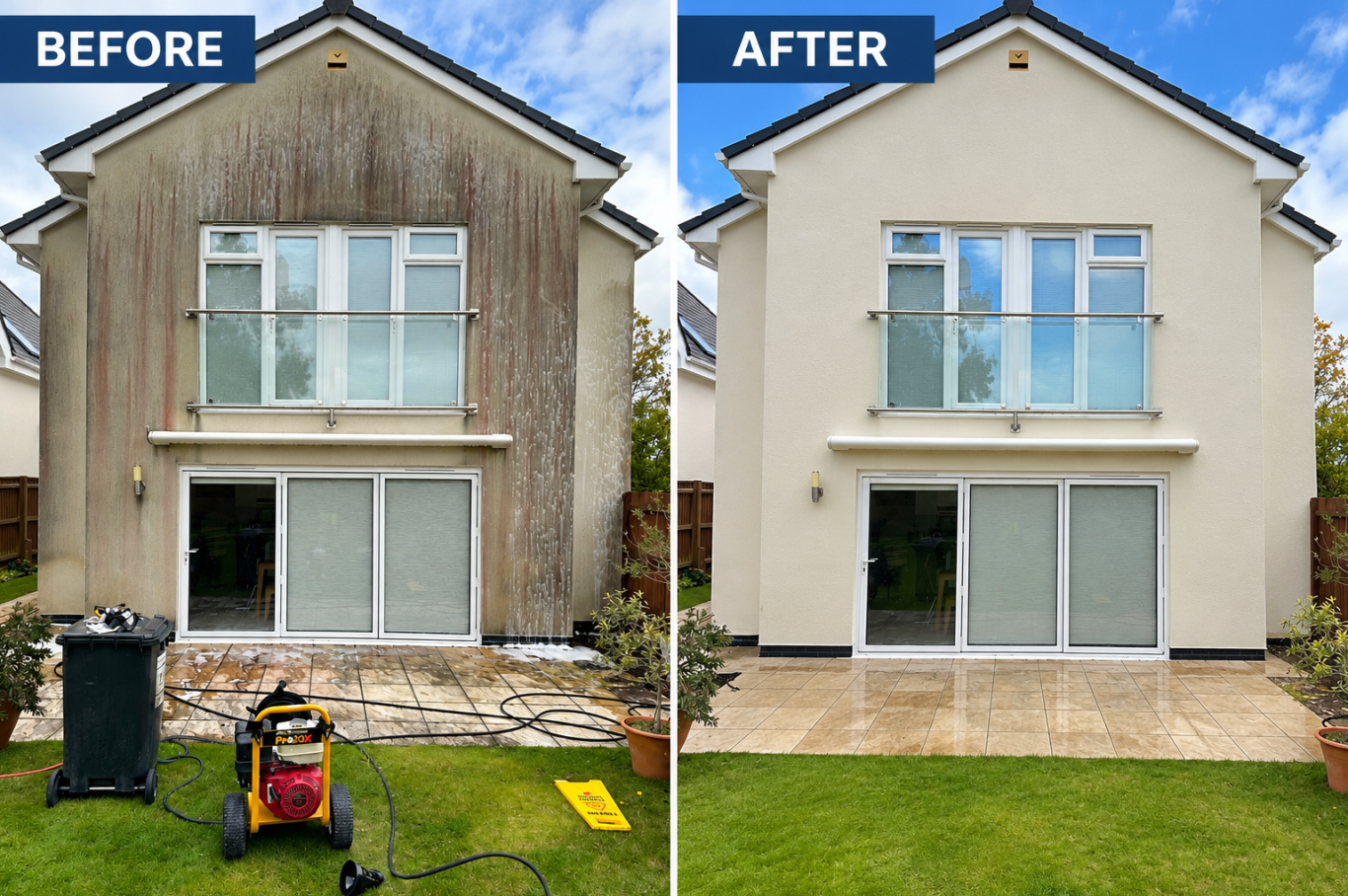
Sodium Hypochlorite in Soft Washing – How It Works and Why It Is Used
Mr Softwash® – Professional Exterior Cleaning Specialists
Sodium hypochlorite is one of the most widely recognised cleaning chemicals used in the professional soft washing industry. Its powerful oxidising properties make it particularly effective at treating algae, mould, mildew and other forms of biological contamination found on exterior building surfaces.
At Mr Softwash®, we understand the importance of selecting the correct cleaning chemicals and methods for different exterior surfaces. Effective soft washing is not simply about removing visible dirt. It involves understanding the causes of biological contamination and using appropriate treatments to restore the appearance of exterior surfaces without unnecessary damage.
In this guide, we explain what sodium hypochlorite is, how it works, why it is used in soft washing and the advantages and limitations of this cleaning chemical.
What Is Sodium Hypochlorite?
Sodium hypochlorite is an inorganic chemical compound with the chemical formula NaOCl.
It is a chlorine-based oxidising agent commonly used in cleaning, disinfection, water treatment and industrial sanitation.
Sodium hypochlorite is also the active ingredient found in conventional household bleach, although professional cleaning products may contain different concentrations and formulations.
In the exterior cleaning industry, sodium hypochlorite is used primarily for its ability to attack organic contamination.
This includes:
Green algae
Mould and mildew
Certain fungi
Biological staining
Some lichens
Organic deposits
Unlike conventional pressure washing, which relies primarily on mechanical force to remove contamination, sodium hypochlorite works through a chemical reaction.
This makes it particularly useful in soft washing, where the objective is to clean suitable surfaces using controlled chemical treatments and relatively low water pressure.
How Does Sodium Hypochlorite Work?
The effectiveness of sodium hypochlorite comes from its oxidising properties.
When dissolved in water, sodium hypochlorite establishes an equilibrium involving two important chemical species:
Hypochlorous acid (HOCl)
Hypochlorite ion (OCl⁻)
These substances are responsible for much of sodium hypochlorite's antimicrobial and oxidising activity.
When sodium hypochlorite comes into contact with susceptible biological contamination, it can damage essential components of microorganisms.
This includes disrupting cell membranes, oxidising proteins and damaging other cellular structures.
As a result, sodium hypochlorite can kill or inactivate many microorganisms responsible for algae growth and biological staining.
It can also oxidise certain organic pigments, helping remove discolouration from contaminated surfaces.
Why Is Oxidation Important in Soft Washing?
Many exterior surfaces become discoloured because algae, fungi and other microorganisms grow on them.
These organisms thrive in environments where moisture, shade and suitable nutrients are available.
Common examples include:
Green algae: Frequently found on render, brickwork, patios and driveways.
Black biological staining: Often associated with microorganisms growing on damp exterior surfaces.
Red or pink biological staining: Sometimes found on rendered buildings and associated with pigmented microorganisms.
Mould and mildew: Common in damp, shaded or poorly ventilated areas.
Sodium hypochlorite can chemically attack susceptible organisms and help remove the associated staining.
However, it is important to recognise that not every stain is biological.
Rust, mineral deposits, efflorescence and oil contamination generally require different cleaning methods.
Why Is Sodium Hypochlorite Used in Professional Soft Washing?
Soft washing is a specialist exterior cleaning method that uses suitable cleaning solutions and controlled low-pressure application to remove contamination.
Sodium hypochlorite is used in certain soft washing systems because it can treat biological growth without requiring the aggressive water pressure associated with traditional pressure washing.
1. Effective Algae Removal
Algae is one of the most common causes of exterior surface discolouration.
Green algae frequently develops on rendered walls, brickwork, patios and driveways, particularly in damp or shaded environments.
Sodium hypochlorite can effectively treat susceptible algae and help restore the appearance of affected surfaces.
2. Treatment of Mould and Mildew
Sodium hypochlorite has antimicrobial properties that make it effective against many types of mould and mildew.
On suitable surfaces, it can help remove visible biological contamination.
However, porous materials may contain contamination beneath the surface, where treatment effectiveness can be limited.
3. Removal of Organic Staining
Biological growth can produce green, black, brown or reddish discolouration.
Sodium hypochlorite can oxidise certain organic pigments, improving the appearance of contaminated surfaces.
The results depend on the type of staining, the surface material and the treatment used.
4. Reduced Reliance on High-Pressure Cleaning
One of the principal benefits of soft washing is its reduced dependence on high-pressure water.
Excessive pressure can damage certain exterior materials, including decorative render, mortar joints and delicate surface finishes.
By using an appropriate chemical treatment, soft washing can remove biological contamination while reducing the need for aggressive mechanical cleaning.
5. Efficient Cleaning of Large Surfaces
Sodium hypochlorite-based treatments can be useful when cleaning large areas affected by biological contamination.
However, safe application requires appropriate equipment, chemical handling procedures and environmental controls.
Sodium Hypochlorite for K Rend and Render Cleaning
Rendered buildings are particularly susceptible to biological contamination.
Over time, K Rend, silicone render, acrylic render and other decorative render systems can develop green, black or reddish staining.
This is often caused by microorganisms growing on the external surface.
The problem can be particularly noticeable on north-facing elevations, shaded walls and buildings surrounded by trees or vegetation.
Can Sodium Hypochlorite Clean K Rend?
Certain sodium hypochlorite-based cleaning products may be suitable for some rendered surfaces.
However, compatibility must always be established before treatment.
Different render systems have different chemical resistance characteristics, and some manufacturers recommend specific cleaning products or methods.
The use of an unsuitable chemical may affect the appearance, colour or protective properties of the render.
For this reason, professional render cleaning should begin with identifying the render system, assessing the contamination and checking the manufacturer's maintenance recommendations.
At Mr Softwash®, we recognise that effective render cleaning depends on using a suitable method for the particular surface.
Sodium Hypochlorite for Patio and Driveway Cleaning
Patios and driveways are regularly exposed to rain, organic debris and environmental contamination.
These conditions encourage algae, moss and lichen growth.
Sodium hypochlorite may be used in professional cleaning treatments to help control biological contamination on compatible surfaces.
Patio Cleaning
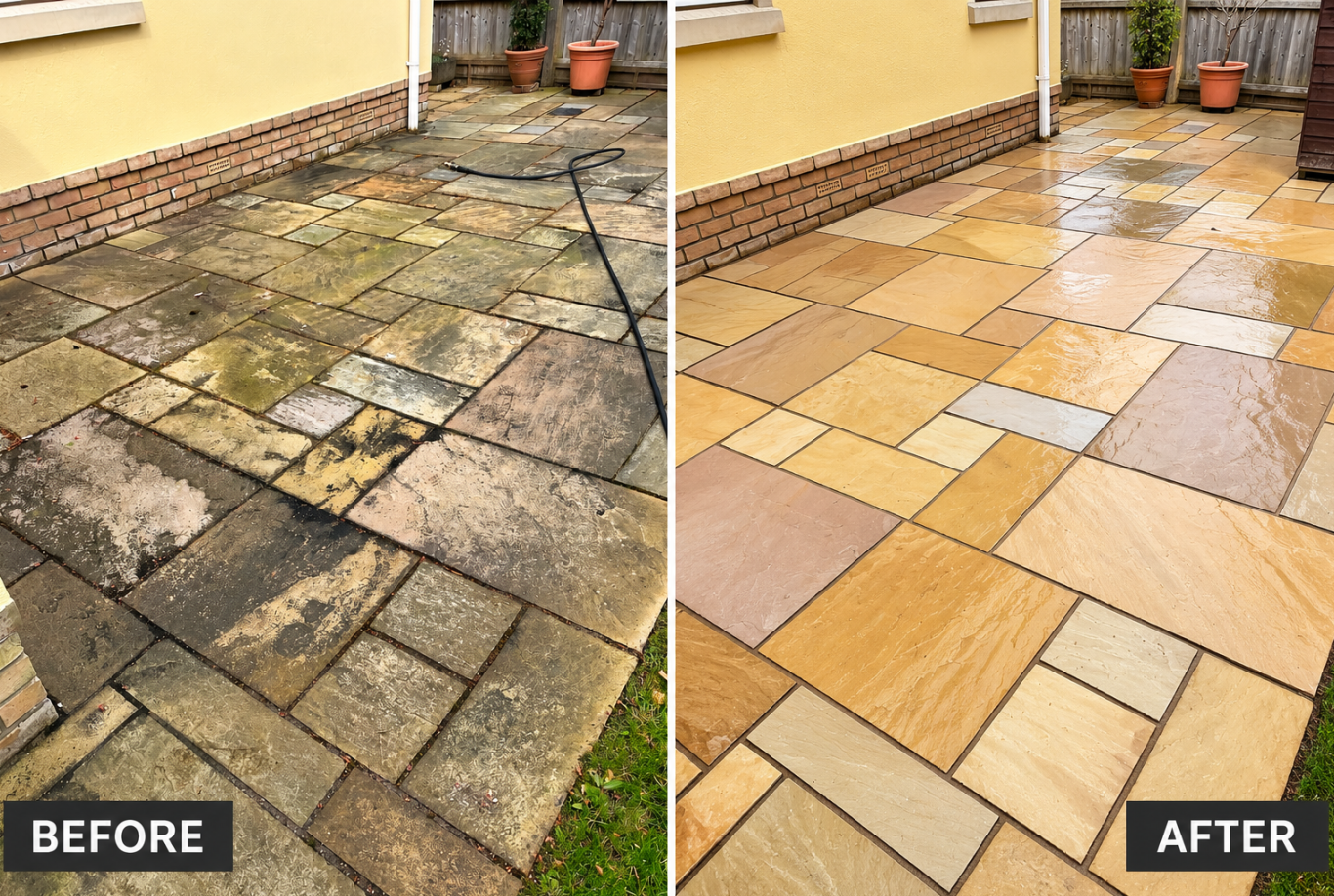
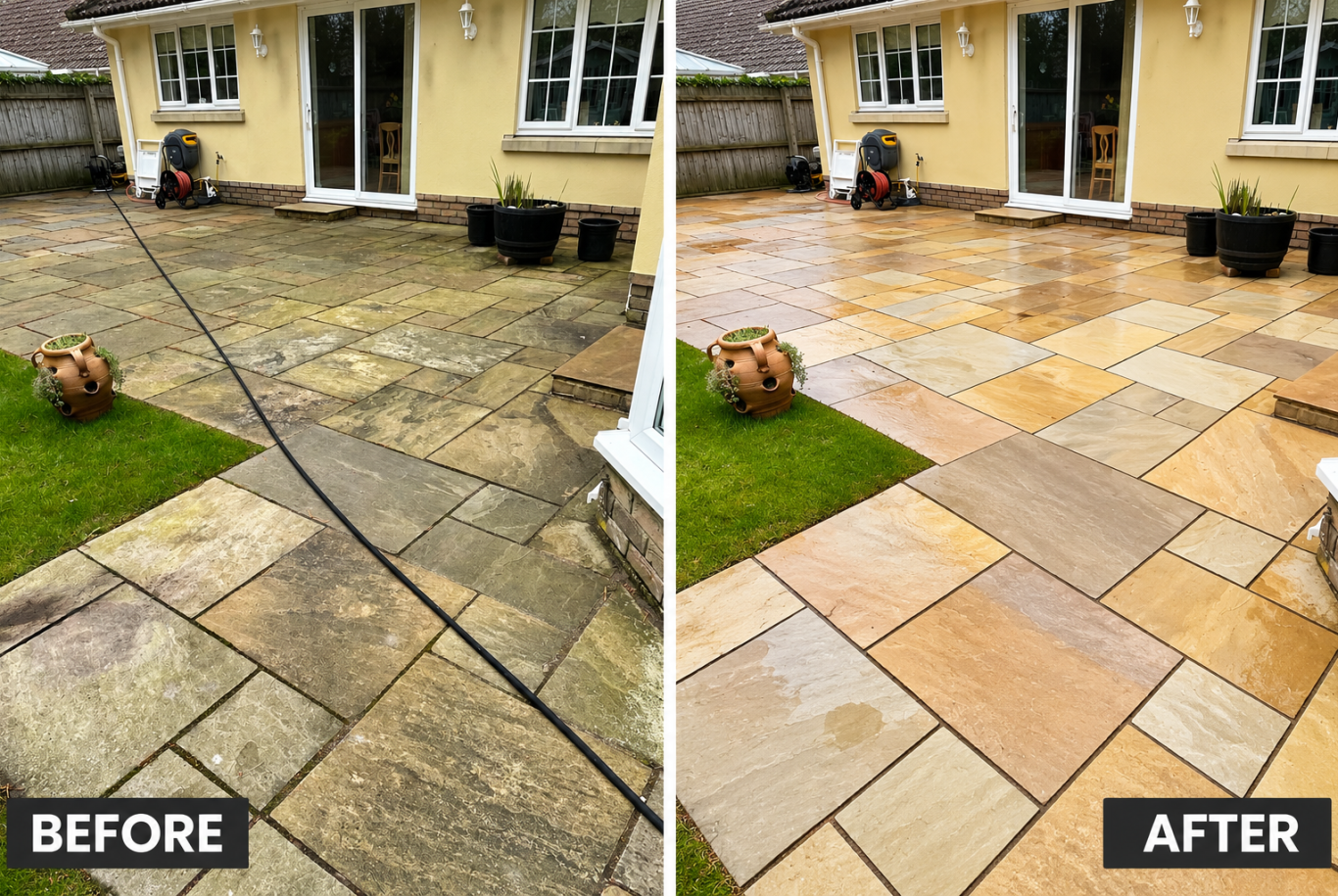
Sodium hypochlorite can help treat green algae and certain organic stains on suitable paving materials.
It may also help treat some forms of black spot lichen.
However, lichen can be strongly attached to porous surfaces, and complete removal is not always possible with a single treatment.
Driveway Cleaning
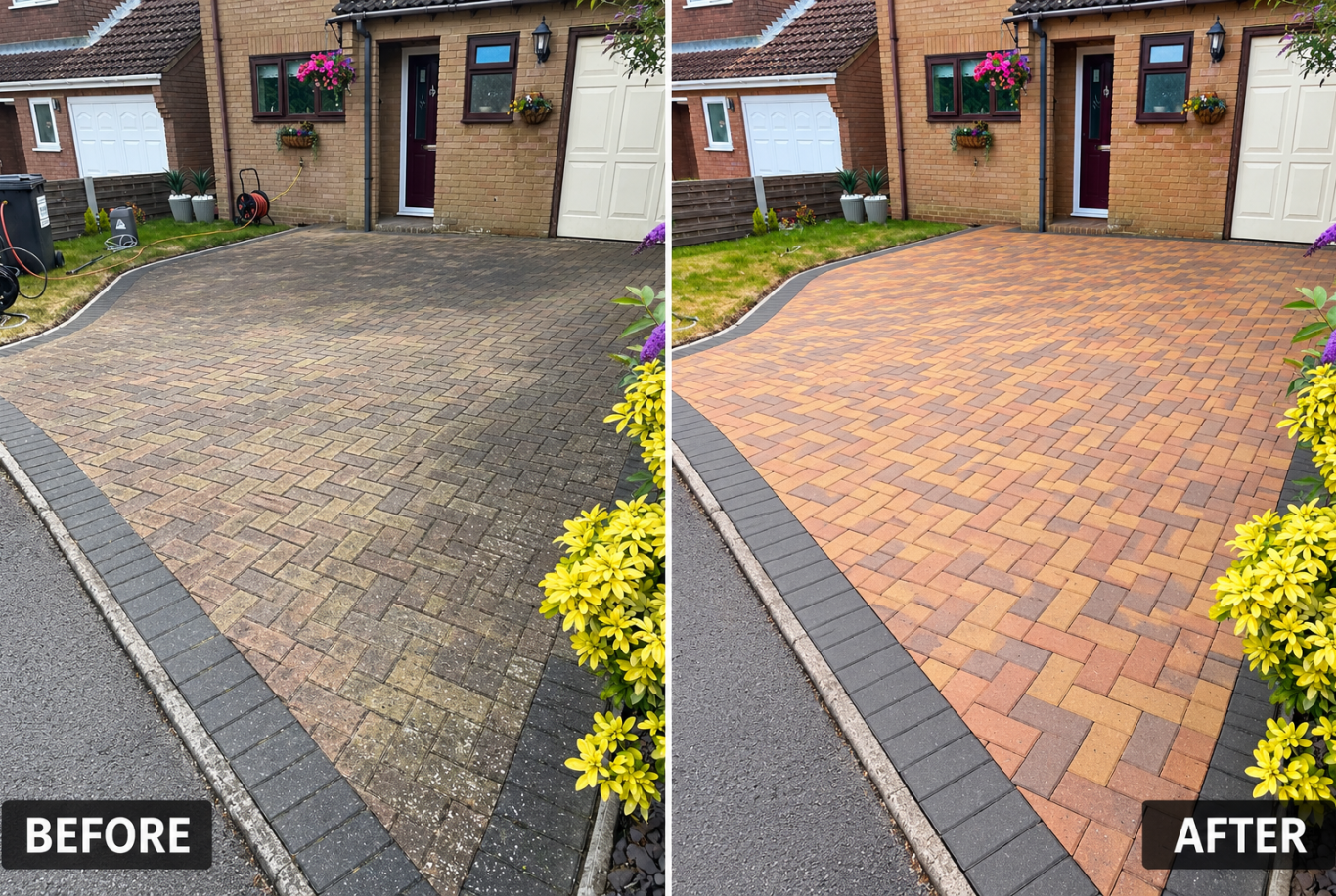
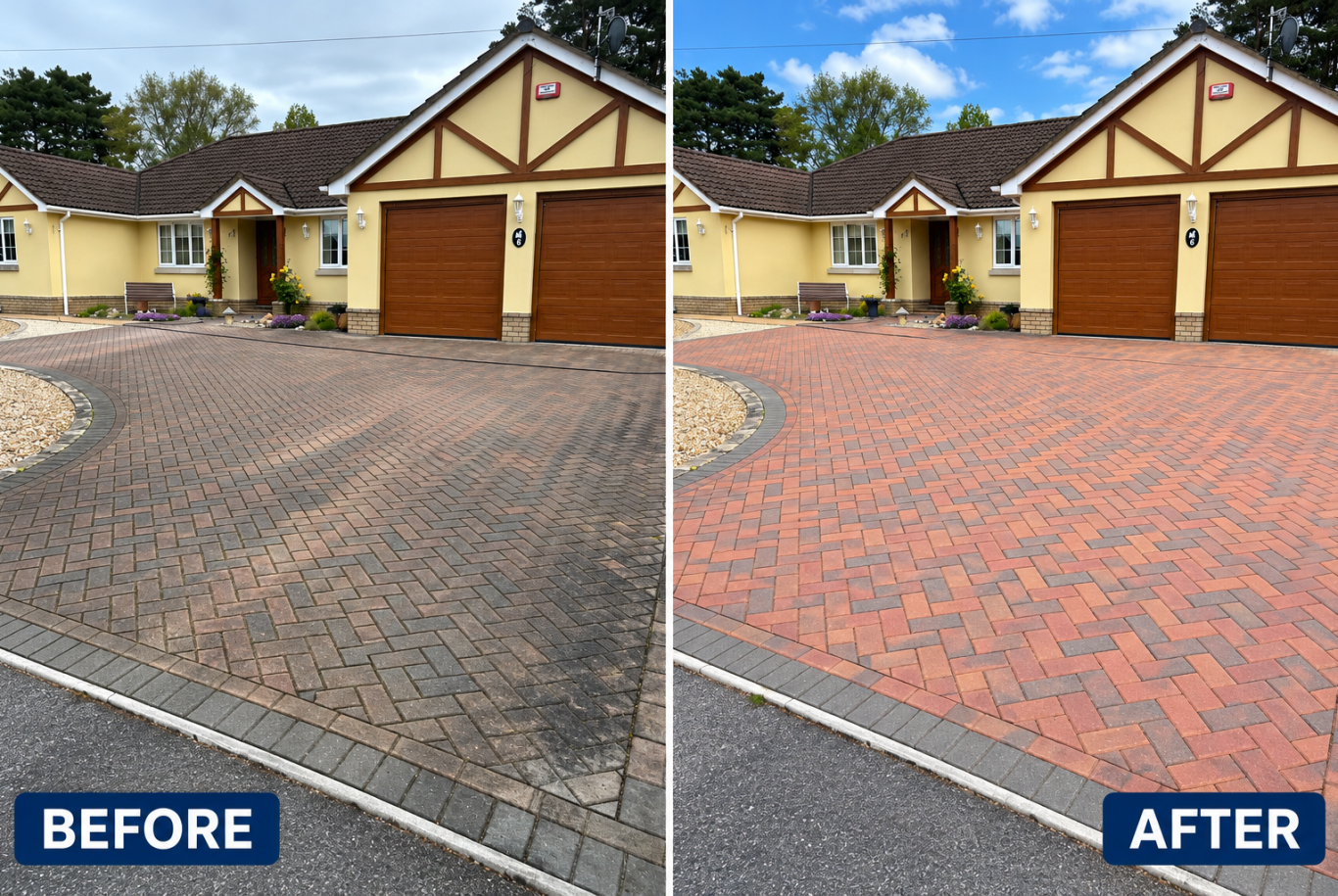
Some concrete and block-paved driveways can benefit from appropriate biological cleaning treatments.
Sodium hypochlorite may help remove algae and organic staining, but it does not replace mechanical cleaning where accumulated dirt, debris or established moss must be physically removed.
Special care is required with natural stone, resin-bound surfaces, coloured paving and sealed materials.
The manufacturer's cleaning recommendations should always be followed.
Sodium Hypochlorite vs Pressure Washing
Although both methods are used in professional exterior cleaning, they work in fundamentally different ways.
Pressure washing relies primarily on the mechanical force of pressurised water to remove surface contamination.
Sodium hypochlorite-based soft washing uses chemical oxidation to treat susceptible biological growth, with controlled low-pressure application and rinsing where appropriate.
Pressure washing is often effective for removing mud, accumulated dirt and loose deposits from durable surfaces.
Soft washing may be more suitable for treating biological contamination on compatible surfaces where aggressive pressure could cause damage.
In some situations, a combination of cleaning methods provides the most appropriate solution.
The correct choice depends on the surface, contamination and manufacturer guidance.
Does Sodium Hypochlorite Prevent Algae from Returning?
Sodium hypochlorite can kill susceptible algae and other microorganisms during treatment.
However, it does not provide permanent protection against biological regrowth.
Exterior surfaces remain exposed to moisture, airborne microorganisms and changing environmental conditions.
Over time, algae may return, particularly on damp or shaded elevations.
Some professional cleaning systems incorporate separately approved residual biocidal treatments to help delay biological regrowth.
Products containing quaternary ammonium compounds, such as benzalkonium chloride (BAC) or didecyldimethylammonium chloride (DDAC), may be used for certain applications where legally permitted and compatible with the surface.
These products work differently from sodium hypochlorite and should not be assumed to be interchangeable.
No cleaning treatment can guarantee that biological growth will never return.
Is Sodium Hypochlorite Safe to Use?
Sodium hypochlorite is a hazardous chemical and requires careful handling.
Although it can be effective in professional exterior cleaning, inappropriate use can cause damage to surfaces, vegetation and surrounding materials.
Potential risks include:
Skin burns and serious eye damage
Corrosion of certain metals
Discolouration of incompatible surfaces
Damage to plants and vegetation
Harm to aquatic organisms
Hazardous chemical reactions
Environmental contamination from uncontrolled runoff
Sodium hypochlorite must never be mixed with acids or ammonia-containing cleaning products.
These combinations can release dangerous gases.
Professional contractors must also consider COSHH requirements, relevant biocidal product regulations, chemical safety information and environmental legislation.
Chemical runoff should be prevented from entering surface-water drains, ponds and watercourses.
At Mr Softwash®, we recognise the importance of responsible chemical selection and safe exterior cleaning practices.
Is Sodium Hypochlorite Environmentally Friendly?
Sodium hypochlorite can break down through chemical reactions and exposure to environmental conditions.
However, this does not mean it is harmless to the environment.
It can be toxic to aquatic organisms and harmful to plants.
Responsible professional use requires careful control of application, spray drift and wastewater.
Appropriate environmental precautions are essential to prevent contamination of surrounding areas.
The environmental impact of a cleaning treatment depends on the product, the way it is used and how residues and wastewater are managed.
Why Professional Knowledge Matters
Effective soft washing requires more than simply applying a chemical to a dirty surface.
Professional exterior cleaning involves understanding the relationship between the surface material, biological contamination and cleaning treatment.
Important considerations include:
Identifying the surface material
Understanding the cause of staining
Selecting a compatible cleaning product
Following manufacturer instructions
Protecting surrounding materials
Controlling chemical exposure
Preventing environmental contamination
Assessing the finished surface
Using the wrong cleaning product or application method can cause unnecessary damage.
At Mr Softwash®, our approach is based on understanding exterior surfaces and selecting appropriate cleaning techniques.
Frequently Asked Questions
Is sodium hypochlorite the same as bleach?
Sodium hypochlorite is the active ingredient in conventional chlorine bleach. However, commercial products vary in concentration, formulation and intended use.
Does sodium hypochlorite kill algae?
Yes. Sodium hypochlorite can kill many types of algae through its oxidising action.
Can sodium hypochlorite remove black stains from render?
It can help remove certain forms of black biological staining. However, not all black stains are biological, and some require alternative cleaning treatments.
Can sodium hypochlorite damage K Rend?
Yes. Unsuitable chemical treatments can damage or discolour some render systems. Manufacturer guidance and surface compatibility must be checked before application.
Is sodium hypochlorite suitable for natural stone?
It may be suitable for certain stone surfaces when used in an approved formulation, but other materials can be sensitive to chlorine-based chemicals. Professional assessment is essential.
Does sodium hypochlorite remove black spot lichen?
It can help treat certain lichens and associated staining, although effectiveness varies depending on the organism, surface and severity of contamination.
How long does sodium hypochlorite keep surfaces clean?
There is no fixed period. Biological contamination can return when environmental conditions favour regrowth.
Is sodium hypochlorite better than BAC or DDAC?
Not necessarily. Sodium hypochlorite is an oxidising agent, whereas BAC and DDAC are quaternary ammonium compounds. Each has different properties, advantages and limitations.
The correct choice depends on the intended treatment, surface compatibility and legal product-use requirements.
Professional Soft Washing in Dorset & Hampshire
Mr Softwash® – Specialist Exterior Cleaning Services
At Mr Softwash®, we provide professional exterior cleaning services across Poole, Bournemouth, Christchurch, Dorset and Hampshire.
Our services include:
K Rend cleaning
Silicone render cleaning
Acrylic render cleaning
Render cleaning
Soft washing
Pressure washing
Patio cleaning
Driveway cleaning
Brickwork cleaning
Stonework cleaning
Cladding cleaning
Decking cleaning
We understand that every exterior surface is different and that successful cleaning depends on choosing an appropriate treatment.
Whether your property is affected by green algae, black biological staining, mould or general environmental contamination, selecting the correct cleaning process is essential.
Contact Mr Softwash®
For professional soft washing and exterior cleaning services across Dorset and Hampshire, contact Mr Softwash®.
Website: www.mrsoftwash.co.uk
Mr Softwash® – Professional Soft Washing & Exterior Cleaning Specialists.
Conclusion
Sodium hypochlorite is an important chemical in the professional soft washing industry.
Its oxidising properties make it particularly effective for treating algae, mould, mildew and certain forms of organic staining.
When used correctly on compatible surfaces, sodium hypochlorite-based treatments can help restore exterior surfaces while reducing reliance on aggressive high-pressure cleaning.
However, sodium hypochlorite is not suitable for every material or cleaning application.
Professional soft washing requires careful surface assessment, appropriate chemical selection, environmental protection and safe working procedures.
At Mr Softwash®, we believe that understanding the science behind exterior cleaning is an important part of achieving effective results while protecting the surfaces being treated.
Give me a quick call, send me an email or WhatsApp
Written Quote
Tell me what you need and I'll send you a free written quote to your phone or by email
We need your consent to load the translations
We use a third-party service to translate the website content that may collect data about your activity. Please review the details in the privacy policy and accept the service to view the translations.