
Mr Softwash®
The Original Soft Washing Company
"The UK's K Rend & Render Cleaning Specialist"
Mr Softwash®
The Original Soft Washing Company
"The UK's K Rend & Render Cleaning Specialist"
Award-Winning
K Rend Cleaning
Specialist.
K Rend | Monocouche | Parex
✅ 30+ years Experience
✅ 5 Star ⭐️ Google Reviews
✅ £5 Million Insurance
✅ Free Written Quote - No Obligation
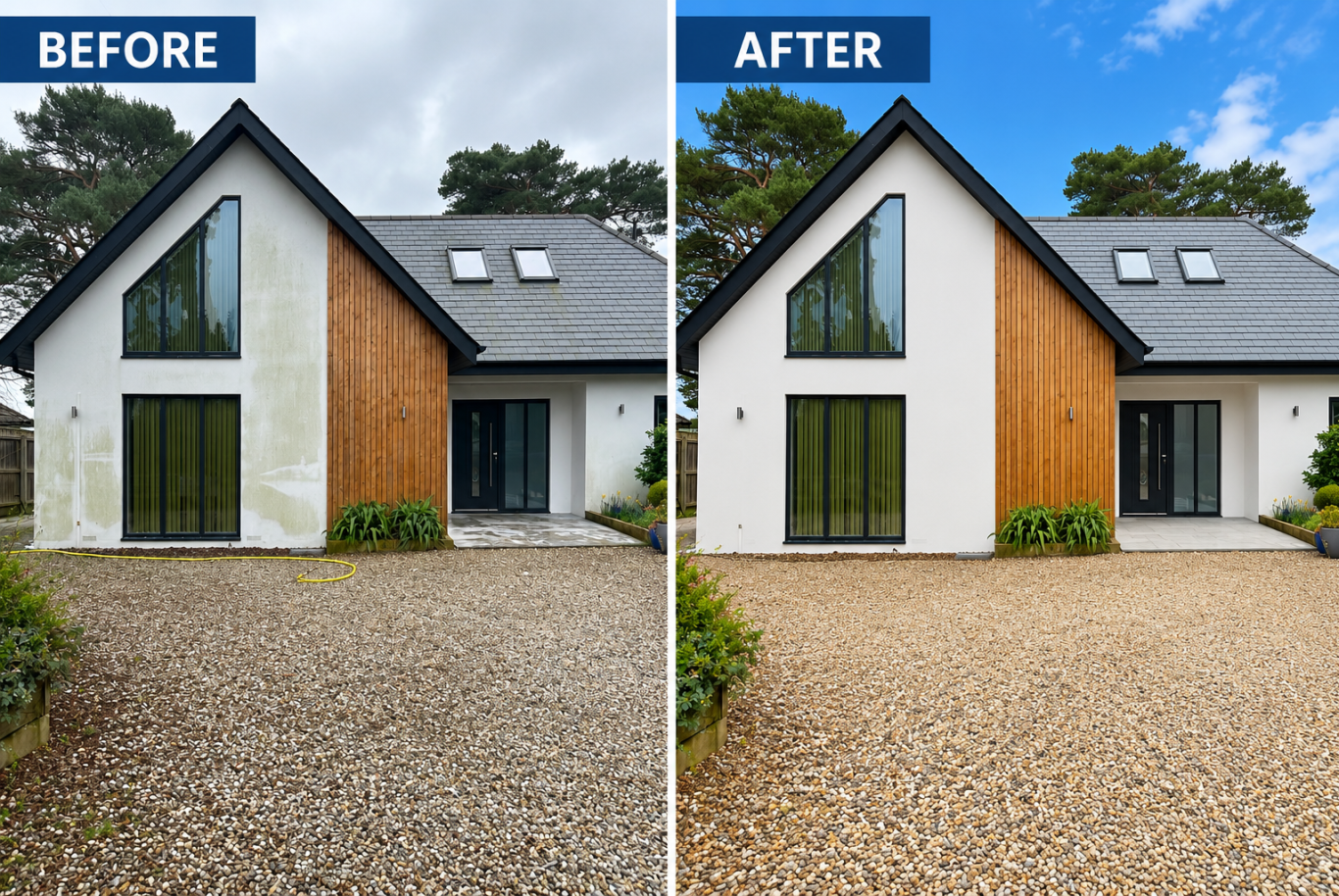
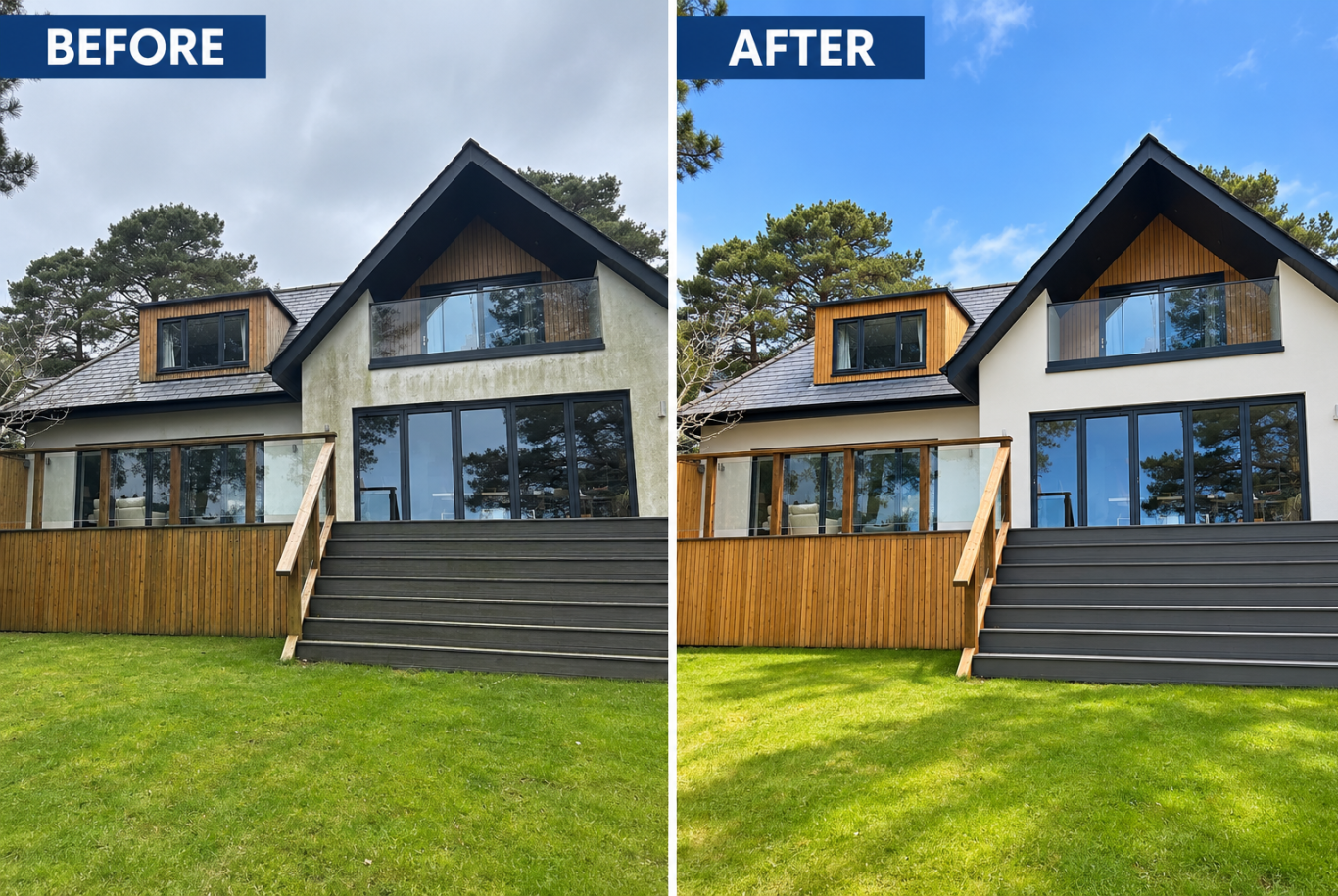
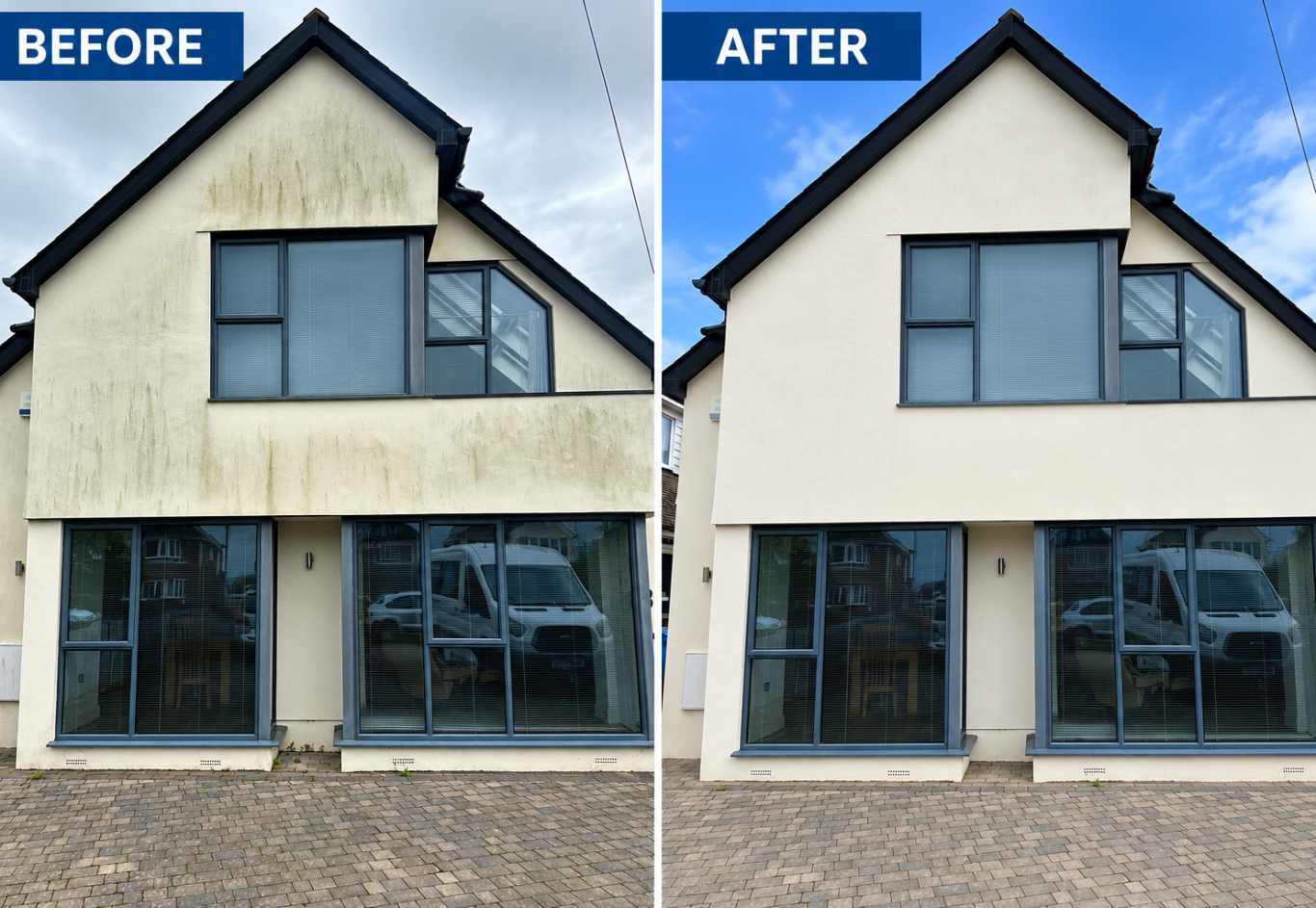
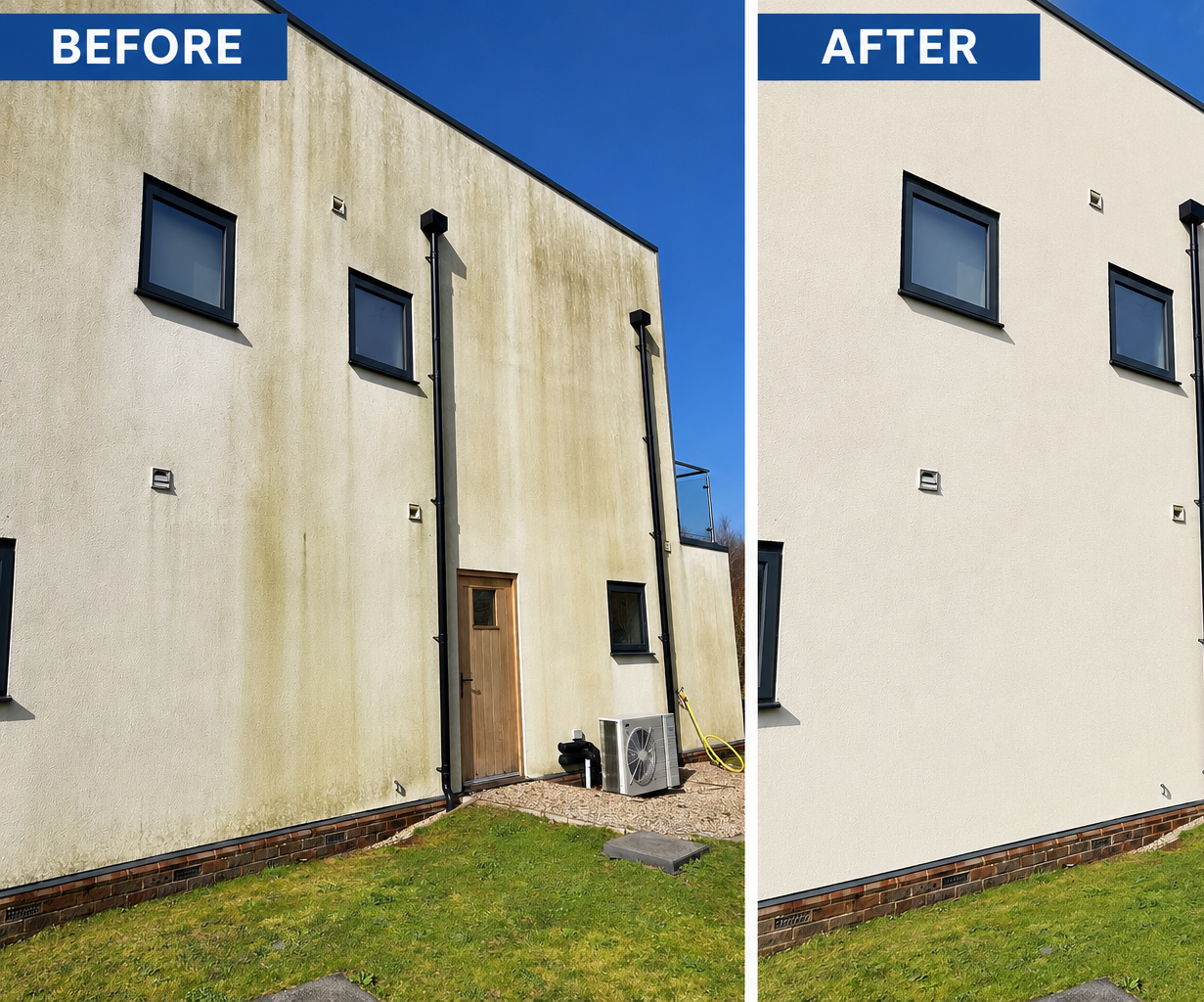
Don't let stained and weathered render spoil the appearance of your property.
For professional K Rend cleaning in Poole, Dorset and Hampshire, contact Mr Softwash today for a free online quote.
WhatsApp a photo & postcode to get a free quote



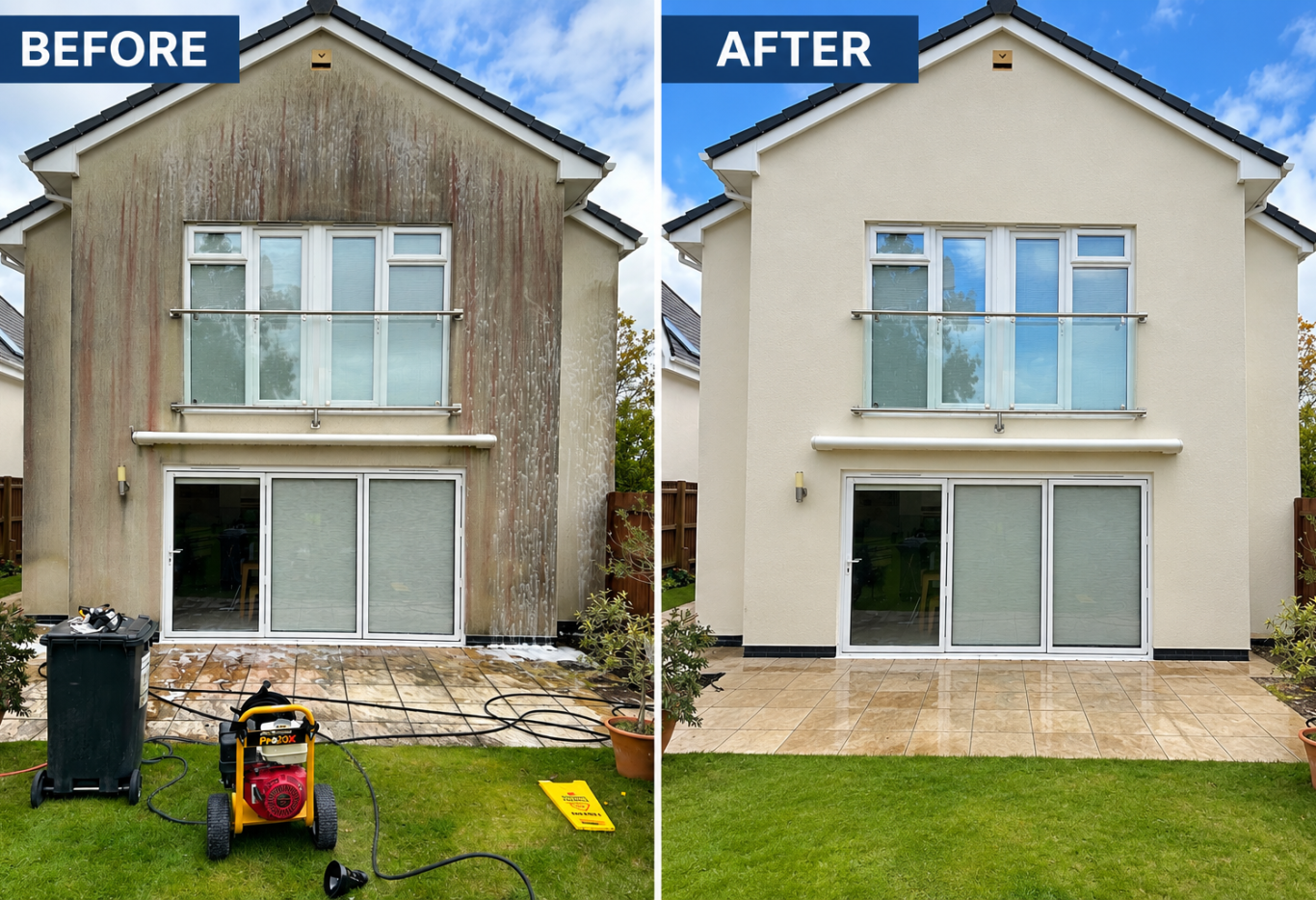
Why You Should Avoid Steam Cleaning K Rend
Steam cleaning is generally not recommended for K Rend because excessive heat, moisture and inappropriate pressure can potentially damage the render's surface, protective finish and underlying structure.
Although steam cleaning is effective on certain exterior surfaces, K Rend requires a more controlled cleaning approach to protect its appearance and long-term performance.
For Mr Softwash, there are several important technical reasons why low-pressure soft washing is generally a better option for cleaning K Rend.
1. Thermal shock and temperature changes
K Rend is a cementitious or polymer-modified render system, depending on the product.
When very hot steam comes into contact with cold render, the sudden temperature difference can create thermal stresses.
Potential consequences include:
Fine surface cracking or microcracking.
Increased stress around existing cracks.
Damage to weakened or poorly bonded areas.
Possible deterioration of vulnerable surface finishes.
This does not mean steam will automatically crack sound K Rend. The risk depends on the temperature, render condition, application technique and particular render system.
2. Damage to the render's surface finish
Many K Rend finishes have a textured surface and may incorporate water-repellent properties.
Excessively aggressive steam cleaning can potentially:
Dislodge loose surface grains.
Erode or roughen textured finishes.
Damage existing coatings or surface treatments.
Produce uneven patches or visible cleaning marks.
Once the render's original texture has been damaged, cleaning alone cannot restore it.
3. Increased risk of moisture penetration
Steam cleaning equipment can deliver hot water under pressure.
If the render has existing cracks, damaged joints or weak areas, water may penetrate behind the surface.
This can contribute to:
Trapped moisture.
Damp patches.
Freeze–thaw deterioration during cold weather.
Further damage to already compromised render.
Importantly, steam cleaning is not automatically more moisture-intensive than soft washing. Water volume, pressure, exposure time and the condition of the substrate all matter.
4. Steam does not necessarily provide long-term biological control
One of the main reasons K Rend becomes discoloured is biological contamination, including green algae, mould and other microorganisms.
Steam can remove or kill exposed biological growth through heat, but it does not necessarily provide a residual treatment that helps prevent recolonisation.
A correctly selected soft washing biocide can treat biological contamination without requiring high temperatures or aggressive mechanical cleaning.
5. Higher risk on older or deteriorated K Rend
Older render may have existing problems such as hairline cracking, delamination, loose aggregate or previous inappropriate cleaning damage.
Applying hot water or steam to these surfaces can increase the likelihood of further deterioration, especially if the equipment also operates at high pressure.
For this reason, the render should be inspected before choosing any cleaning method.
What is the best way to clean K Rend?
Mr Softwash recommends a professional soft washing process:
Inspect the K Rend for cracking, loose material, coatings and other defects.
Identify the contamination, such as algae, mould, lichen or atmospheric staining.
Select a cleaning product compatible with the particular K Rend finish.
Apply the treatment using controlled low-pressure equipment.
Allow the appropriate dwell time in accordance with the product instructions.
Rinse gently where required, avoiding excessive pressure and water penetration.
Always follow the render manufacturer's cleaning guidance and the chemical manufacturer's instructions.
Important: Is steam cleaning actually prohibited by K Rend?
Not necessarily. It would be inaccurate to claim that all steam cleaning damages K Rend or that the manufacturer universally prohibits it.
The distinction between low-pressure steam, high-temperature hot-water cleaning and high-pressure steam cleaning is important. These methods produce different levels of risk.
For a definitive recommendation, the exact K Rend product and its technical cleaning guidance should be checked.
Conclusion:
Mr Softwash advises caution when considering steam cleaning K Rend & silicone renders as resin, acrylic & silicone products can be damaged with excessive heat.
K Rend should be cleaned using the least aggressive effective method, with careful consideration of temperature, pressure, cleaning chemistry and the condition of the render.
We need your consent to load the translations
We use a third-party service to translate the website content that may collect data about your activity. Please review the details in the privacy policy and accept the service to view the translations.