
Mr Softwash®
The Original Soft Washing Company
"The UK's K Rend & Render Cleaning Specialist"
Award-Winning
K Rend Cleaning
Specialist.
K Rend | Monocouche | Parex
✅ 30+ years Experience
✅ 5 ⭐️ Google Reviews
✅ £5 Million Insurance
✅ Free Written Quote - No Obligation
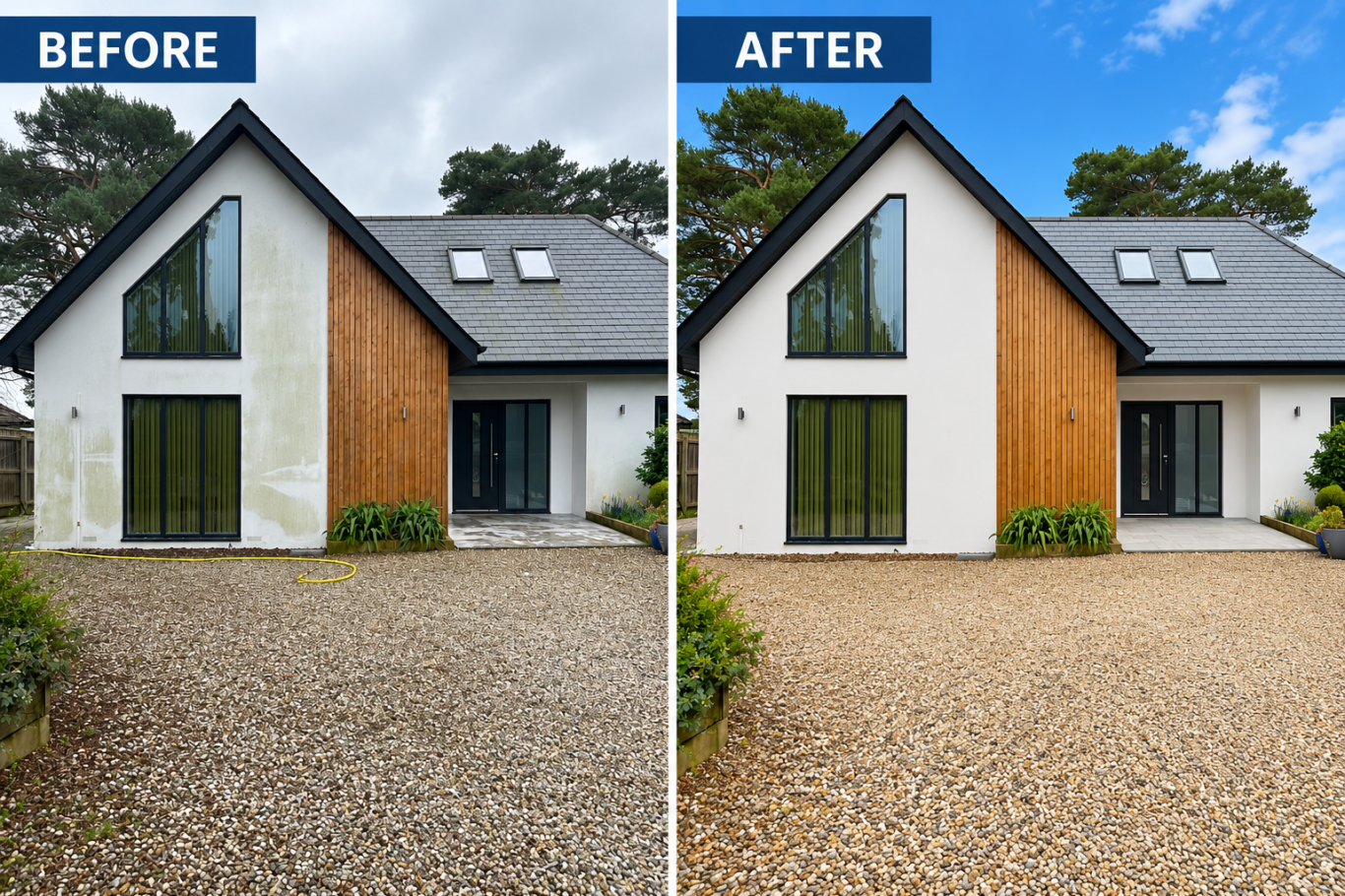
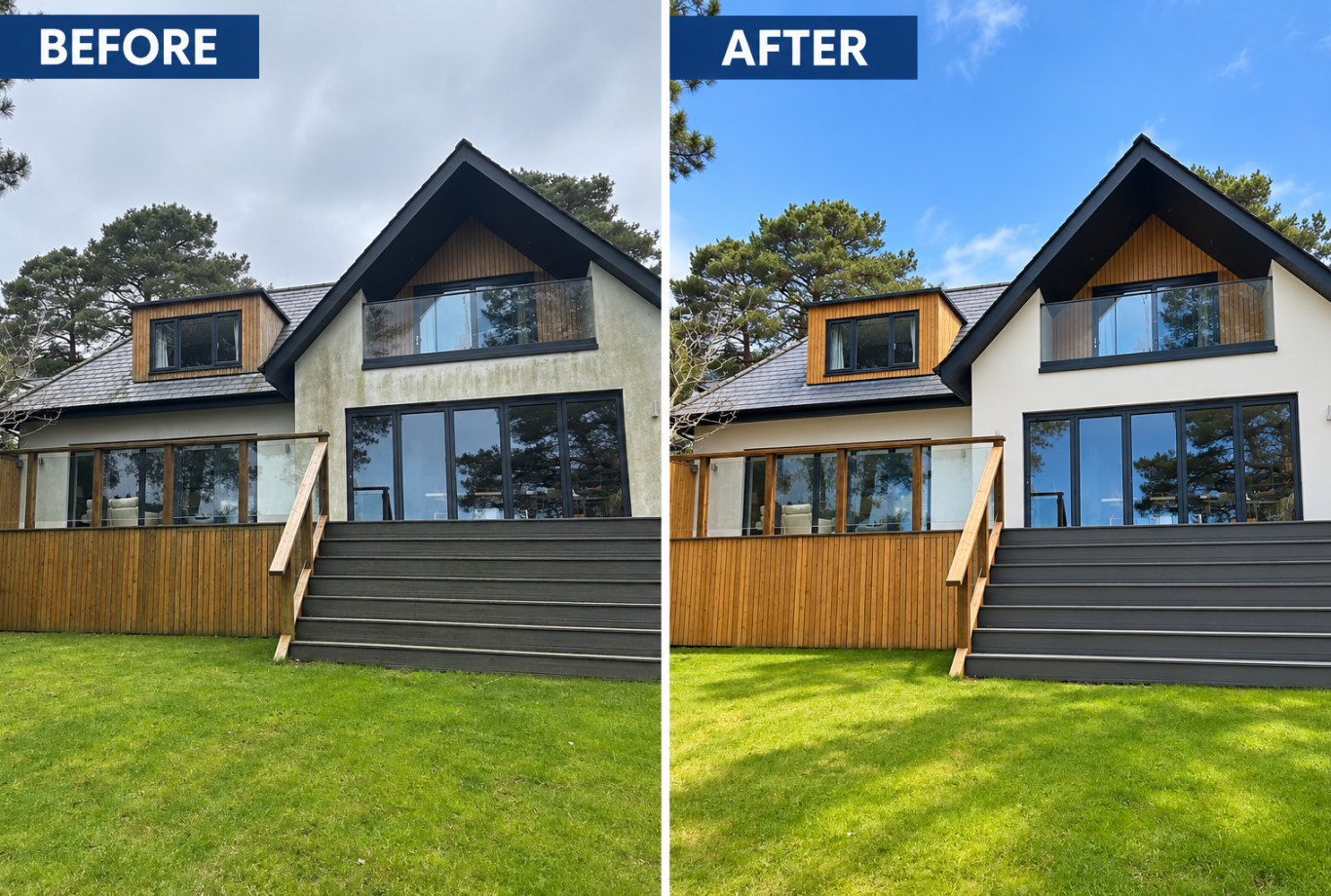
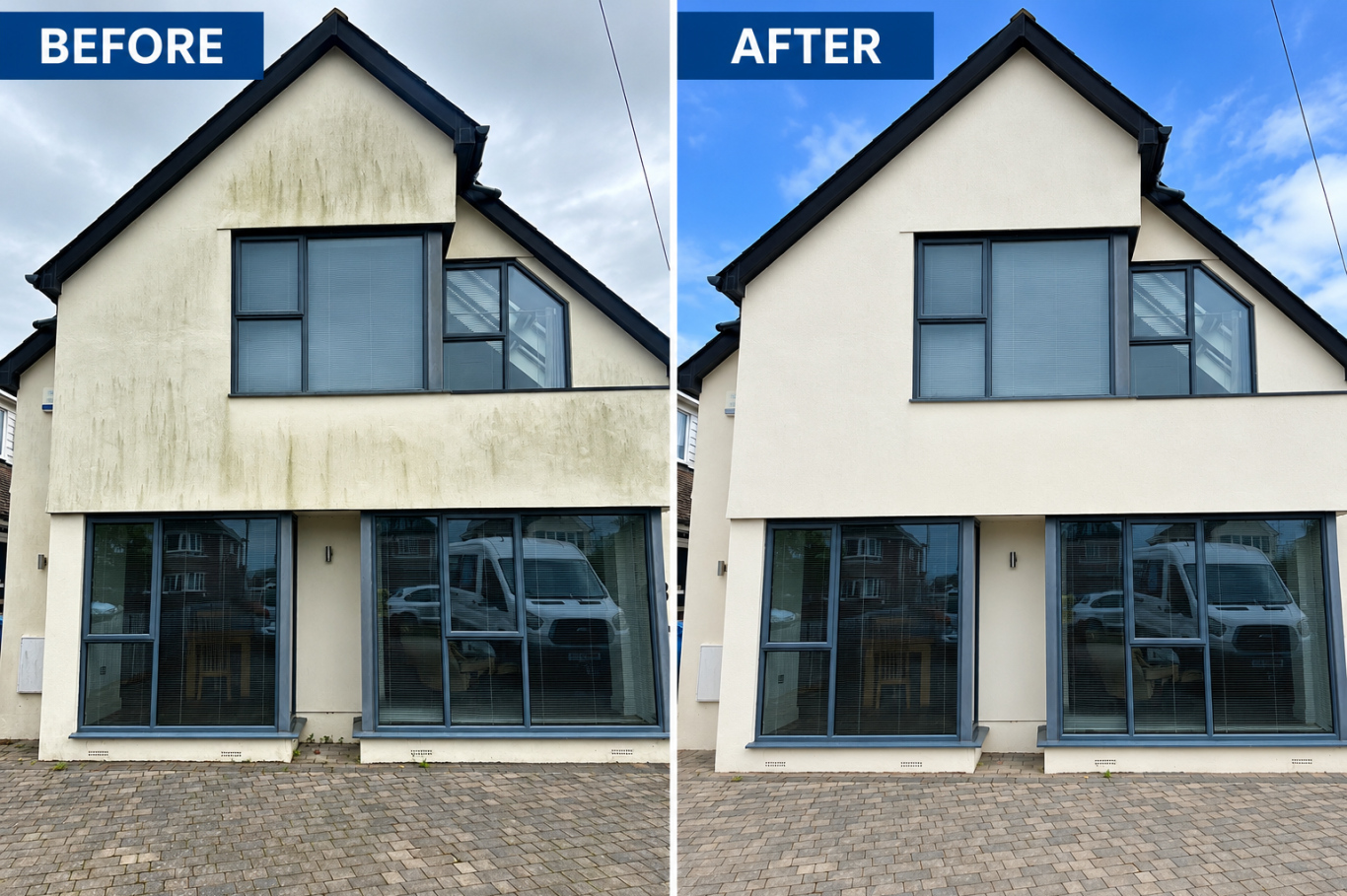
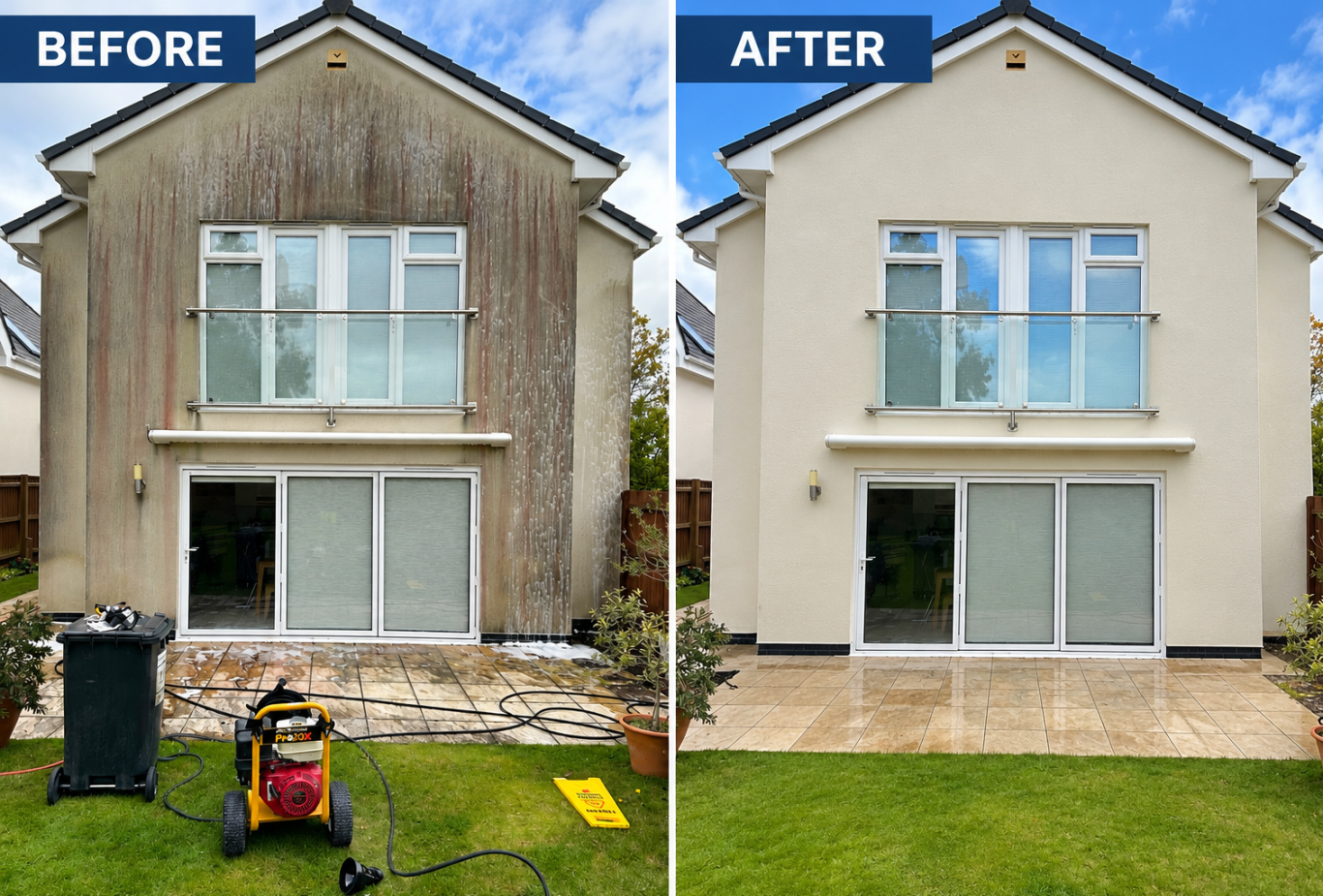
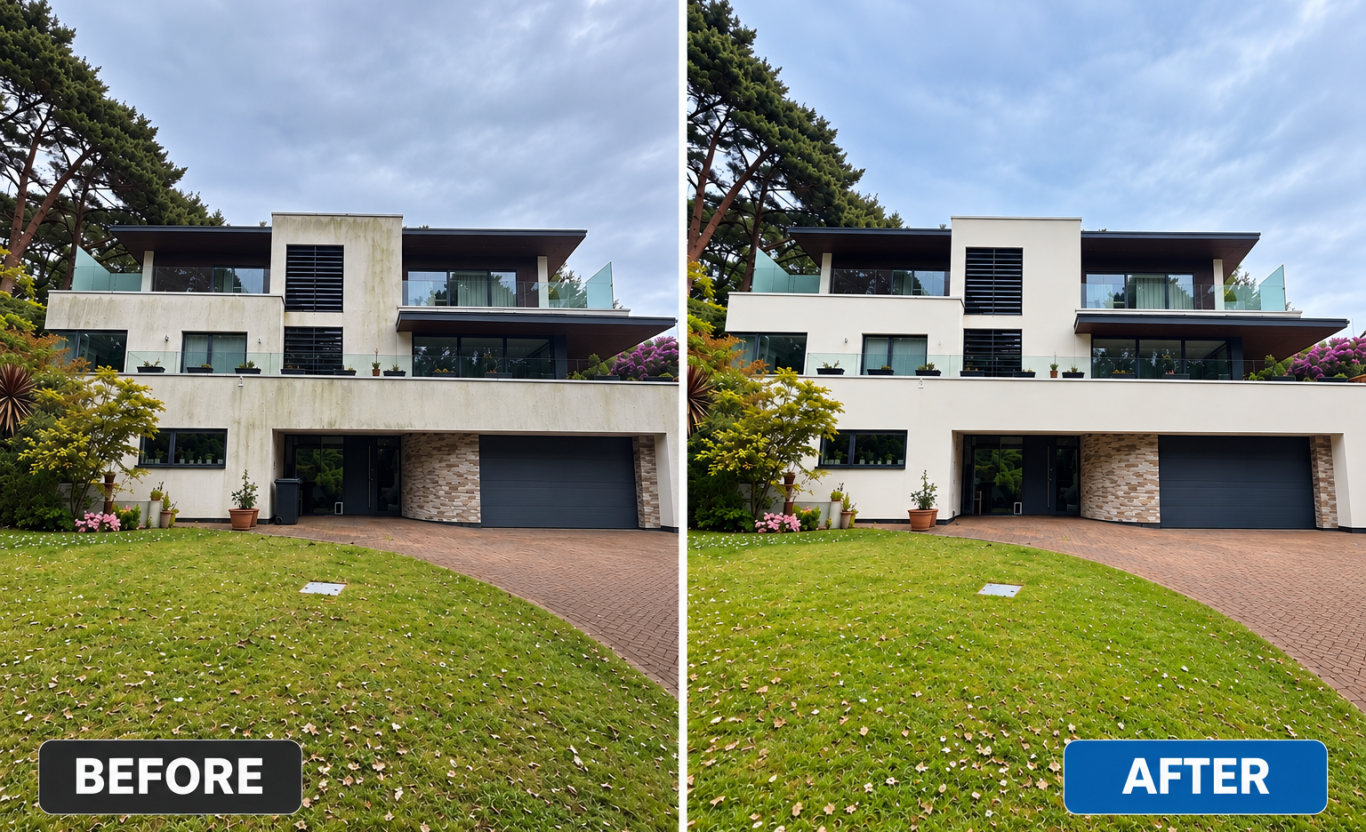
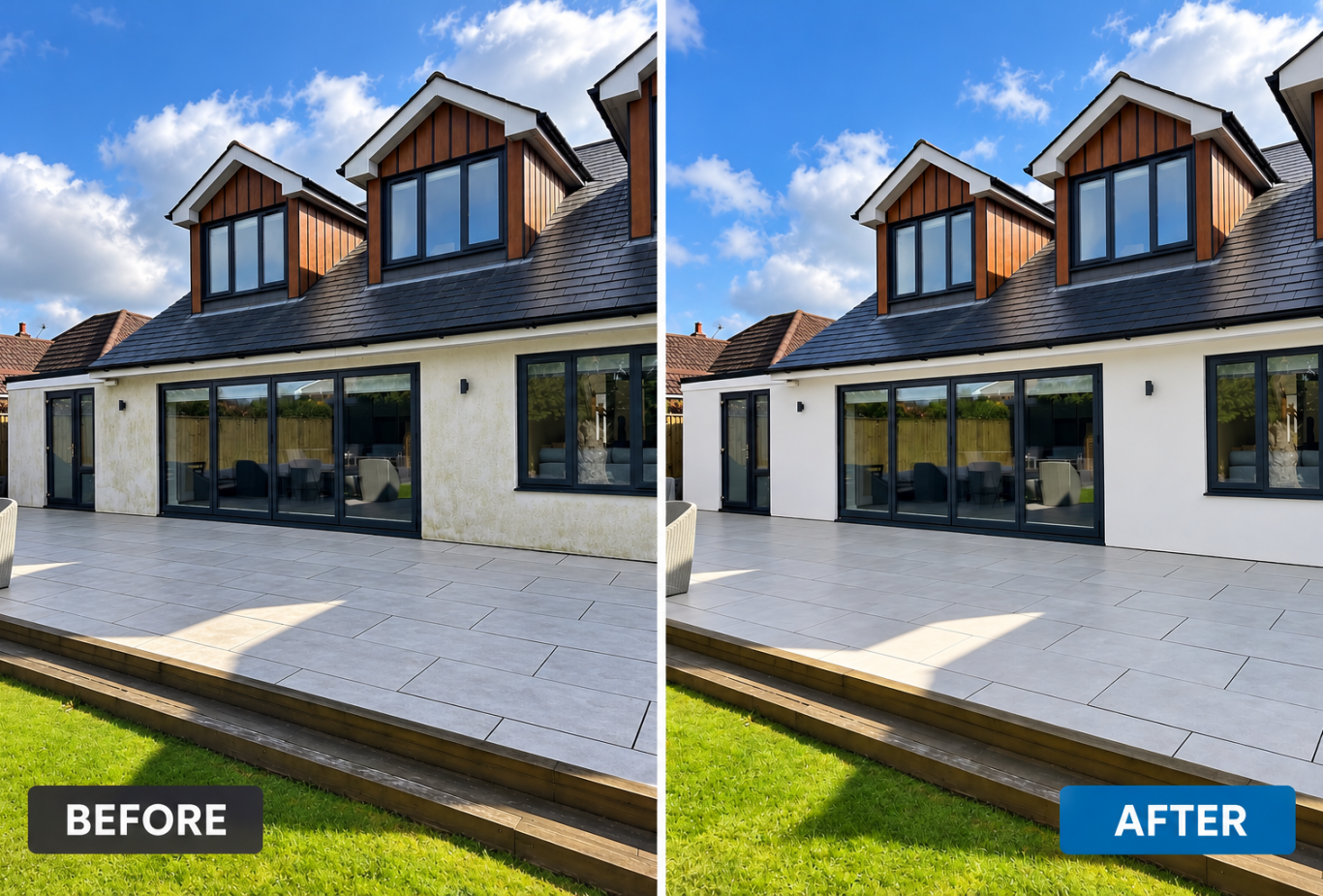
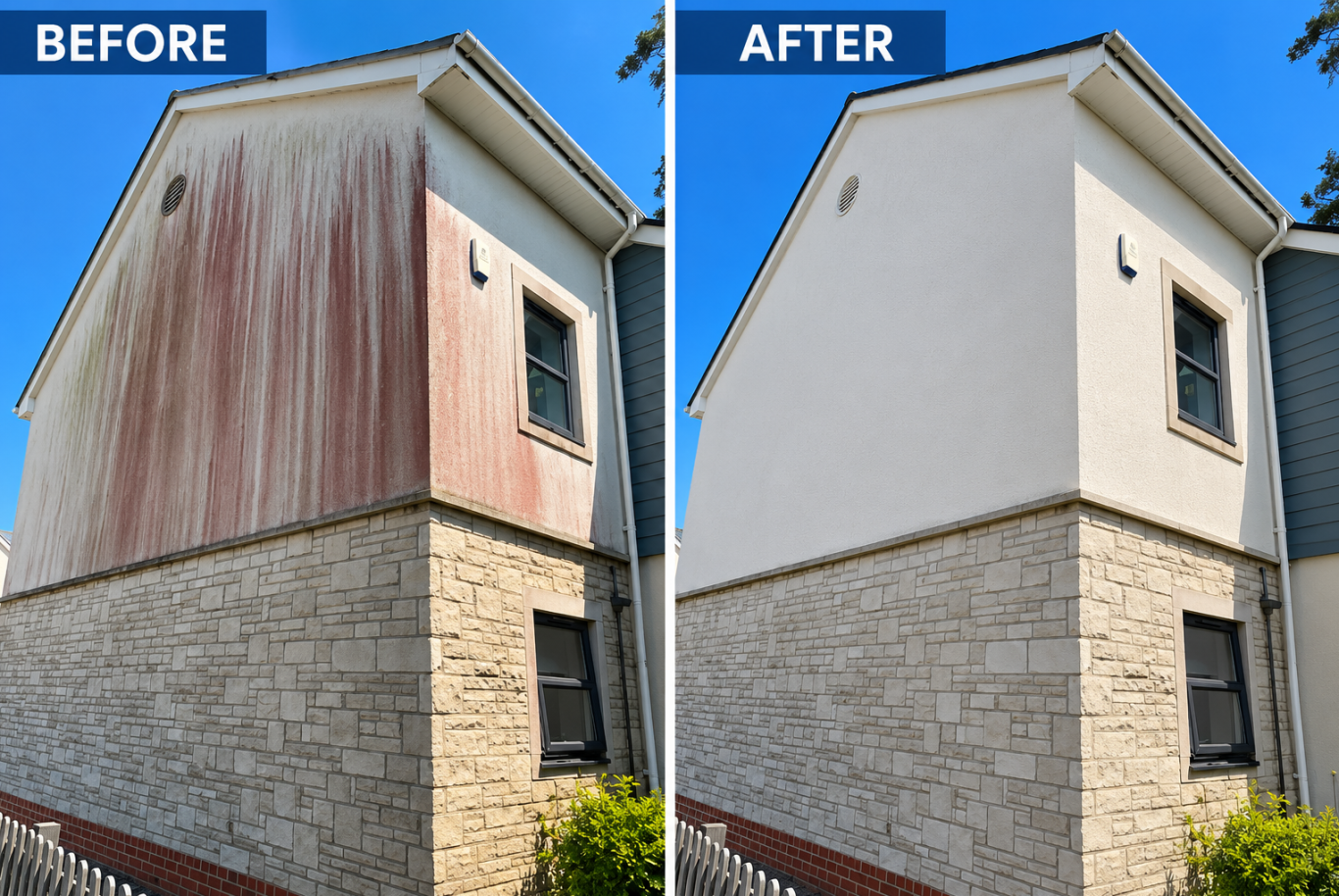
When K-Rend and silicone-based renders start showing ugly red algae, black mold, or environmental staining, aggressive high-pressure washing often causes expensive surface damage. Mr Softwash delivers a specialized, low-pressure softwashing solution designed specifically to restore render without compromising its structural integrity. By combining gentle water pressure with targeted, eco-friendly biocide treatments, Mr Softwash sanitizes surfaces at the root level—killing organic growth rather than just blasting away surface dirt. Mr Softwash’s specialised non-abrasive method guarantees a longer-lasting clean, protecting your property’s curb appeal and preserving your render from further contamination for 3-5 years.
K Rend market their own K Rend cleaning product called K Rend Render Clean. (Previously known as K Rend Algae Clean)
K Rend Render Clean is an eco- friendly biocide cleaning product which is a great product for cleaning renders safely without the risks associated with using sodium hydrochlorite (Bleach) or the high heat with steam cleaning.
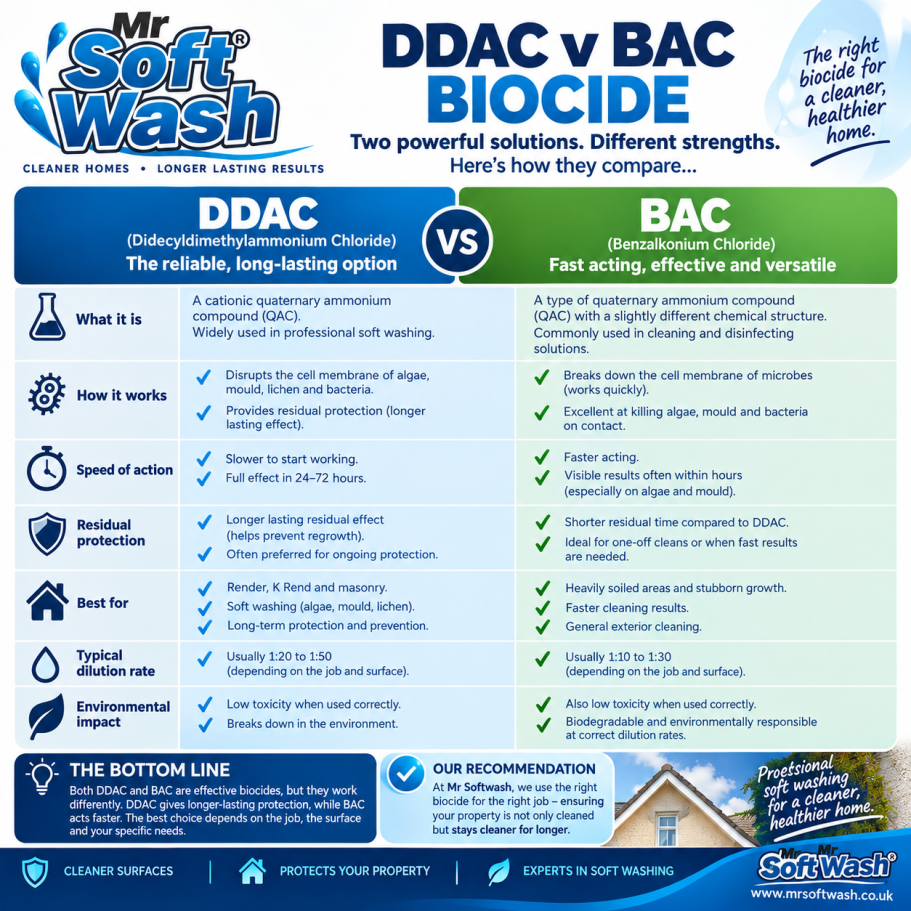
Mr Softwash uses biocide render cleaning products such as K Rend Render Clean and other DDAC products as we have found it's the safest way to clean and protect renders without damaging them, giving results lasting for up to 3-5 years.
Don't let stained and weathered render spoil the appearance of your property.
For professional K Rend cleaning in Poole, Dorset and Hampshire, contact Mr Softwash today.
WhatsApp a photo & postcode to get a free quote



Mr Softwash®
How to Clean K Rend & Silicone Renders – Complete Guide
The safest way to clean K Rend is generally by using a low-pressure soft washing method with a suitable render-cleaning solution. This removes algae, mould, mildew and other biological contamination without exposing the render to the risks associated with aggressive pressure washing.
K Rend is a popular silicone-based render used on properties throughout the UK. Although many K Rend finishes are water-repellent, they can still develop green algae, black staining and general discolouration over time.
1. Identify the Type of Staining
Before cleaning K Rend, establish what is causing the discolouration.
Type of staining
Appearance
Recommended treatment
Green algae
Green patches or streaks
Suitable biocide treatment
Black algae and biological staining
Dark spots or patches
Specialist render-cleaning treatment
Red algae
Pink or reddish staining
Appropriate biocidal soft wash
Mould and mildew
Black or grey patches
Render-compatible cleaning solution
Dirt and pollution
Grey or brown discolouration
Gentle cleaning with a suitable detergent
Rust staining
Orange or brown marks
Specialist rust remover approved for the render
Efflorescence
White crystalline deposits
Identify moisture source before treatment
Important: Not all black staining is biological. Pollution, mineral deposits and other contaminants may require different treatments.
2. Choose the Correct Cleaning Method
There are three main approaches to cleaning K Rend.
Method 1: Soft Washing – Usually the Best Option
Soft washing uses low-pressure application of specialist cleaning solutions to treat biological growth.
The process typically involves:
Advantages of soft washing:
Method 2: Biocide Treatment
A biocide is designed to control biological contamination such as algae and mould.
Two commonly encountered active ingredients in professional cleaning products are:
Both can be effective in suitable formulations, but neither should automatically be considered safe for every K Rend finish.
Only use products authorised for their intended application, following their labels, safety information and environmental precautions.
Some approved biocidal treatments are designed to remain on the surface, gradually reducing biological growth over subsequent weeks.
Method 3: Gentle Manual Cleaning
For small areas of light contamination:
Avoid abrasive brushes, wire brushes and aggressive scrubbing.
3. Can You Pressure Wash K Rend?
High-pressure washing is generally not recommended for K Rend.
Excessive pressure can:
Where pressure-assisted rinsing is permitted, it should be carried out using a gentle setting and technique consistent with the render manufacturer's instructions.
Never assume that a pressure setting safe for brickwork or concrete is suitable for silicone render.
4. How to Remove Green Algae From K Rend
Green algae is particularly common on north-facing walls and shaded elevations.
Recommended process
Step 1: Inspect the render and identify the affected areas.
Step 2: Protect nearby vegetation, drainage systems and sensitive materials.
Step 3: Apply an appropriate algae treatment using low-pressure equipment.
Step 4: Allow the manufacturer's specified contact time.
Step 5: Rinse if required, or leave the product to work if its approved instructions permit.
Step 6: Reassess the surface once the treatment has taken effect.
Some treatments produce relatively quick results, while slower-acting biocides can take several weeks to achieve their full effect.
5. How to Remove Black Staining From K Rend
Black staining can be more difficult to remove than green algae.
It may be caused by:
The cleaning method depends on the cause.
For biological contamination, a specialist render-compatible biocide may be appropriate. Pollution-related staining may require a separate cleaning process.
Avoid applying increasingly concentrated chemicals without first establishing what caused the staining.
6. Can You Use Sodium Hypochlorite on K Rend?
Sodium hypochlorite is an active ingredient found in certain professional exterior-cleaning formulations.
However, it should not be assumed to be suitable for K Rend.
Incorrect use can cause:
Always check the specific render manufacturer's guidance and the cleaning product's approved uses.
Never mix sodium hypochlorite with acids, ammonia or other cleaning chemicals.
7. How Often Should K Rend Be Cleaned?
Cleaning frequency depends on the property's environment.
Property location
Suggested inspection and maintenance
Coastal properties
Inspect annually for salt deposits and biological growth
Shaded properties
Inspect annually, particularly north-facing walls
Properties near trees
Check annually for algae and organic deposits
Open, sunny locations
Inspect periodically and clean when necessary
High-pollution areas
Monitor staining and clean as required
These are practical maintenance suggestions rather than fixed manufacturer cleaning intervals.
A full professional clean may only be needed every few years, depending on local conditions and the effectiveness of previous treatment.
8. How Much Does K Rend Cleaning Cost in the UK?
Professional K Rend cleaning costs depend on several factors, including:
A professional company should assess the property before providing an accurate quotation.
Be cautious of companies quoting solely by square metre without considering access, render condition and contamination.
9. How to Keep K Rend Cleaner for Longer
Regular maintenance can help reduce biological growth and staining.
Recommended preventative measures:
It is also important to repair cracks and other defects before applying water or cleaning chemicals.
10. Professional K Rend Cleaning in Dorset & Hampshire
Frequently Asked Questions
What is the best way to clean K Rend?
Low-pressure soft washing with a suitable render-compatible cleaning solution is generally the preferred approach for biological contamination.
Can you clean K Rend yourself?
Small areas of light contamination may be suitable for careful manual cleaning. Larger areas, difficult access and chemical treatments are generally better handled by experienced professionals.
Does K Rend need cleaning?
Yes. Although silicone K Rend systems are designed to resist water penetration, their surfaces can still accumulate algae, dirt and pollution.
Will cleaning K Rend damage it?
Cleaning should not damage sound render when compatible products and appropriate techniques are used. Incorrect chemicals, aggressive brushing and excessive pressure can cause damage.
Does biocide prevent algae returning?
Biocidal treatment can help control biological growth, but it cannot guarantee that algae will never return. Moisture, shade and environmental conditions continue to influence regrowth.
Expert K Rend Cleaning Advice from Mr Softwash
K Rend is one of the UK's most popular exterior render finishes, recognised for its attractive appearance, durability and low-maintenance properties. However, even high-quality silicone render can become discoloured by green algae, black staining, dirt, pollution and other environmental contaminants.
If your K Rend has developed green patches, black marks or general discolouration, you may be wondering how to clean it safely without damaging the surface.
The good news is that K Rend can usually be cleaned successfully without repainting or replacing the render.
At Mr Softwash, we focus on exterior cleaning methods designed to remove contamination while protecting delicate surfaces.
In this comprehensive guide, we explain how to clean K Rend, which cleaning products to consider, whether pressure washing is suitable and how to keep rendered walls looking cleaner for longer.
What Is K Rend?
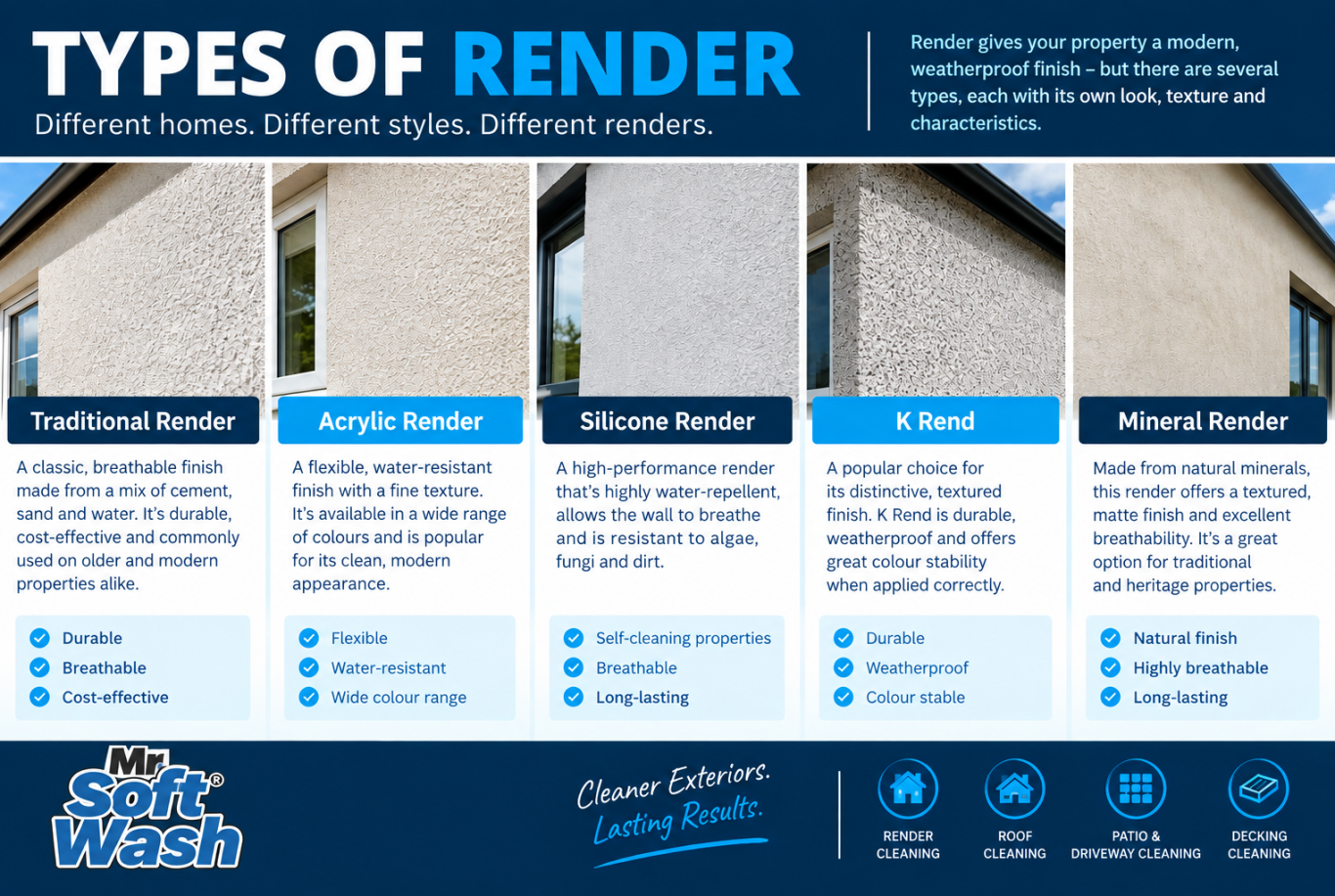
K Rend is a specialist render brand manufactured by Kilwaughter Minerals. Its range includes silicone-enhanced, through-coloured renders and other decorative finishes used on residential and commercial properties.
Many K Rend products incorporate silicone technology, which provides water-repellent properties while allowing water vapour to pass through the render.
This helps reduce moisture absorption and can make the surface less susceptible to dirt accumulation.
However, water-repellent does not mean completely maintenance-free.
Over time, airborne contaminants and biological growth can affect the appearance of rendered walls.
Common problems include green algae, black staining, red discolouration, atmospheric pollution and general dirt accumulation.
These problems are particularly noticeable on light-coloured render, including white, cream and ivory finishes.
Why Does K Rend Become Dirty?
Understanding why K Rend becomes dirty is important when choosing an effective cleaning method.
1. Green Algae
Green algae is one of the most common problems affecting K Rend.
Algae thrives in damp conditions, particularly where walls receive limited sunlight.
North-facing elevations, shaded areas and properties surrounded by trees are especially susceptible.
Green algae can develop as small patches before spreading across larger sections of render.
Although algae is primarily an aesthetic problem, its presence can significantly affect the appearance of a property.
2. Black Algae and Dark Staining
Black staining is another common problem affecting rendered buildings.
Dark patches may result from biological growth, atmospheric pollution or a combination of contaminants.
Black biological staining can be particularly noticeable on white and cream K Rend.
Because different contaminants require different treatments, correctly identifying the cause is essential.
3. Red and Pink Biological Growth
Some rendered surfaces develop reddish or pink discolouration.
This may be associated with pigmented microorganisms growing on the exterior surface.
These stains can be particularly visible on pale silicone render.
Appropriate specialist cleaning treatments may be needed to remove the contamination.
4. Atmospheric Pollution
Properties near busy roads, industrial areas and urban environments can accumulate airborne pollutants.
These contaminants may become trapped within the textured surface of K Rend.
Pollution-related staining often appears as grey or black discolouration.
Unlike algae, pollution deposits may require detergent-based cleaning rather than biocidal treatment alone.
5. Dampness and Water Runoff
Persistent moisture is a major contributing factor to biological growth.
Common causes include leaking gutters, overflowing downpipes, poor drainage, shaded elevations and defective building details.
Addressing these problems can help reduce future staining.
What Is the Best Way to Clean K Rend?
The best cleaning method depends on the render finish, its condition and the type of contamination.
For biological growth, soft washing with a suitable render-compatible biocide is often an effective option.
For general dirt and atmospheric deposits, gentle washing with clean water and a mild detergent may be sufficient.
K Rend's own maintenance guidance permits carefully controlled pressure-assisted cleaning for suitable finishes, provided a gentle fan spray is used rather than high pressure.
The manufacturer also recommends appropriate biocidal or algaecidal products for algae contamination.
The key principle is to remove the contamination without unnecessarily damaging or abrading the render surface.
How to Clean K Rend: Step-by-Step
Step 1: Inspect the Render
Before starting, carefully inspect the rendered walls.
Look for cracks, loose render, damaged joints, staining around windows and signs of persistent moisture.
It is also important to establish whether the render is through-coloured, painted, thin-coat or part of an external wall insulation system.
Different render systems may require different cleaning procedures.
Any significant damage should be assessed before cleaning begins.
Step 2: Identify the Contamination
Determine whether the staining is caused by algae, mould, atmospheric pollution, rust, mineral deposits or general dirt.
Biological growth may respond well to an appropriate biocide.
However, non-biological staining may require a different treatment.
Using the wrong cleaning product can result in ineffective cleaning or surface damage.
Step 3: Protect Surrounding Areas
Before applying cleaning solutions, protect vulnerable surfaces and surrounding areas.
These may include:
Windows and doors.
Decorative metalwork.
Timber features.
Plants and landscaping.
Patios and decking.
Drainage systems.
Nearby ponds and water features.
Cleaning chemicals must be used in accordance with their instructions, including any restrictions on runoff and environmental exposure.
Step 4: Select a Suitable Cleaning Product
Choose a product specifically suitable for the type of K Rend and contamination being treated.
For algae, this may involve a manufacturer-recommended algaecide or another compatible biocidal product.
For general dirt, a mild detergent may be more appropriate.
Always check product compatibility and carry out a small test in an inconspicuous area.
Step 5: Apply the Cleaning Solution
Apply the chosen product using equipment appropriate for the render and the manufacturer's instructions.
Low-pressure application is often preferred for chemical treatments because it reduces unnecessary mechanical force.
Apply the product evenly and avoid allowing unsuitable cleaning chemicals to dry on the surface.
Observe the specified application rate, contact time and safety precautions.
Step 6: Allow the Treatment to Work
Different cleaning products work at different speeds.
Some require a short contact time followed by rinsing.
Others are designed to remain on the surface and gradually control biological growth.
Do not assume that every biocide is suitable for leave-on treatment.
Always follow the product's approved instructions.
Step 7: Rinse Where Required
If rinsing is required, use a gentle method suitable for the particular render system.
Avoid concentrated jets, excessive pressure and aggressive mechanical cleaning.
Where the manufacturer permits pressure-assisted washing, use a controlled fan spray and work systematically from top to bottom.
Step 8: Inspect the Results
Once cleaning is complete, inspect the surface for remaining contamination.
Some stubborn stains may require additional treatment.
Avoid repeatedly applying strong cleaning chemicals without checking their compatibility and the condition of the render.
Can You Pressure Wash K Rend?
One of the most frequently asked questions about render maintenance is whether K Rend can be pressure washed.
Yes, certain K Rend finishes can be cleaned using carefully controlled pressure washing, but high-pressure cleaning can cause damage & is discouraged.
K Rend recommends using a gentle fan setting rather than a concentrated high-pressure jet.
Excessive pressure may:
Dislodge particles from textured render.
Damage the decorative finish.
Create uneven cleaning marks.
Force water into cracks or defects.
Cause unwanted surface erosion.
Some finishes, including dry dash, require particular care and may not be suitable for the same pressure-washing methods.
For this reason, pressure washing should never be treated as a universal cleaning solution for all K Rend systems.
Soft Washing vs Pressure Washing for K Rend
Soft washing and pressure washing work in different ways.
Pressure washing primarily relies on the mechanical force of water to remove contamination.
Soft washing relies more heavily on suitable cleaning solutions, with minimal mechanical pressure.
For algae and other biological growth, chemical treatment may be particularly useful because it addresses the organisms responsible for the discolouration.
For general dirt, controlled low-pressure rinsing with a suitable detergent may be sufficient.
The most appropriate approach is often a combination of compatible cleaning products and gentle rinsing.
How to Remove Green Algae From K Rend
Green algae is one of the most common reasons homeowners arrange professional render cleaning.
It typically develops on shaded or damp walls and can spread across large areas.
The recommended approach is to identify the contamination and apply an appropriate algaecidal treatment.
K Rend manufactures a product called Algae Clean, which is intended for treating algae contamination.
Other products may also be suitable, provided their approved uses and compatibility are established.
Why Treating Algae Is Important
Removing visible algae improves the appearance of the render.
Appropriate biocidal treatment can also help control biological growth that may remain within the textured surface.
However, cleaning cannot permanently eliminate the environmental conditions responsible for algae growth.
Shaded and damp walls may develop further contamination over time.
Regular inspections and timely maintenance can help manage this problem.
How to Remove Black Stains From K Rend
Black staining can be more challenging to remove than green algae because its causes vary.
Some black stains are biological, while others result from pollution, dirt or mineral deposits.
Biological Black Staining
Where black discolouration is caused by biological contamination, an appropriate render-compatible biocide may be effective.
Treatment results depend on the organisms involved, the severity of the staining and the condition of the render.
Pollution-Related Black Staining
Atmospheric pollution can create dark deposits on rendered surfaces.
These deposits may require a suitable detergent and controlled rinsing rather than biocide alone.
Why Correct Diagnosis Matters
Applying an algae treatment to pollution staining may produce disappointing results.
Likewise, using aggressive cleaning methods on biological growth can unnecessarily damage the render.
Professional assessment helps determine the most appropriate treatment.
Can You Use Bleach to Clean K Rend?
Household bleach is sometimes suggested as a quick solution for removing algae from exterior walls.
However, using ordinary household bleach on K Rend is not generally advisable without confirmation that the formulation is suitable.
Bleach-based products can present risks to surrounding materials, vegetation and the environment.
Incorrect application may also cause unwanted discolouration or surface damage.
Sodium hypochlorite is used in some professional exterior-cleaning formulations, but this does not mean every formulation is suitable for K Rend.
Always establish compatibility with the specific render system and follow the product's safety instructions.
Never mix bleach with acids, ammonia or other cleaning chemicals.
For homeowners, a manufacturer-recommended render-cleaning product is generally the more straightforward choice.
What Chemicals Are Used to Clean K Rend?
Professional render-cleaning products may contain different active ingredients depending on their intended purpose.
Benzalkonium Chloride (BAC)
Benzalkonium chloride belongs to a group of chemicals known as quaternary ammonium compounds.
It is used in certain biocidal formulations intended to control microorganisms.
Products containing BAC may be suitable for some exterior biological-cleaning applications.
Suitability depends on the formulation, approved use and render compatibility.
Didecyldimethylammonium Chloride (DDAC)
DDAC is another quaternary ammonium compound used in some biocidal products.
It can be effective against certain microorganisms when used in an appropriate formulation.
However, DDAC and BAC products are not automatically interchangeable.
Sodium Hypochlorite
Sodium hypochlorite is used in some cleaning formulations because of its oxidising properties.
It requires particular care regarding surface compatibility, chemical handling and environmental protection.
Which Chemical Is Best?
There is no single chemical that is best for every K Rend cleaning situation.
The correct product depends on the contamination, render type, product instructions and environmental conditions.
Professional cleaning should always prioritise product suitability over chemical strength.
Can You Clean K Rend Without Chemicals?
Yes. Some types of light surface contamination can be removed using clean water, mild detergent and gentle manual cleaning.
This approach may be appropriate for loose dirt, dust and some atmospheric deposits.
However, water alone may not adequately control established biological growth.
Where algae or other microorganisms are responsible for staining, an appropriate biocidal treatment may provide a more effective solution.
Avoid wire brushes, abrasive pads and aggressive scrubbing, which can damage textured finishes.
How Often Should K Rend Be Cleaned?
K Rend is designed to be a low-maintenance exterior finish, but periodic cleaning is still beneficial.
The required frequency depends on environmental conditions.
Properties in shaded or damp locations may need more frequent attention than buildings exposed to sunlight and good airflow.
Homes near trees, woodland and coastal environments may also require closer monitoring.
Suggested Maintenance Schedule
Every 6–12 months: Visually inspect rendered walls, gutters, joints and drainage details.
As required: Remove light surface contamination using an appropriate gentle cleaning method.
When biological growth appears: Consider suitable treatment before contamination spreads extensively.
Every few years: Assess whether the property would benefit from a more comprehensive render clean.
These are general maintenance recommendations rather than mandatory cleaning intervals.
How to Prevent Algae Growing on K Rend
Although biological growth cannot always be prevented, several maintenance measures can help reduce the conditions that encourage it.
Keep Gutters Clear
Blocked gutters can cause water to run down rendered walls.
Persistent moisture encourages algae growth.
Regular gutter maintenance can help reduce this problem.
Repair Leaking Downpipes
Defective downpipes can create damp patches that become particularly susceptible to biological contamination.
Prompt repairs help prevent recurring staining.
Reduce Excessive Shade
Trees and dense vegetation can limit sunlight and airflow.
Carefully managing vegetation may help rendered surfaces dry more quickly after rainfall.
Maintain Building Details
Window sills, roof edges and other architectural features influence how rainwater moves across a building.
Poorly functioning details can create repeated staining patterns.
Consider Suitable Protective Treatments
Some render systems can benefit from compatible water-repellent protective products.
K Rend offers K Pro, a water-based treatment designed to enhance water repellency.
However, protective treatments should only be applied where appropriate for the particular render system.
Does K Rend Need Repainting After Cleaning?
In many cases, no.
One advantage of through-coloured K Rend is that the colour is incorporated into the render rather than relying solely on an external paint coating.
Where discolouration is caused by removable contamination, cleaning may significantly improve the appearance without repainting.
However, cleaning cannot correct every cosmetic problem.
Permanent staining, fading, previous damage or inconsistent repairs may require additional assessment.
If recolouring is necessary, use a suitable coating system compatible with the render.
K Rend offers Colour Enhance for certain applications.
How Much Does Professional K Rend Cleaning Cost?
The cost of professional K Rend cleaning varies according to the size and condition of the property.
Important factors include the total area of render, height of the building, access requirements and type of contamination.
A small bungalow with easily accessible walls will generally involve different cleaning requirements from a large three-storey property.
Heavily contaminated surfaces may also require additional treatment.
For an accurate quotation, a professional cleaning company should assess the property and recommend an appropriate cleaning method.
Homeowners should be cautious about choosing a contractor based solely on the cheapest quotation.
Experience, surface knowledge, suitable cleaning products and careful working practices are equally important.
DIY K Rend Cleaning vs Professional Render Cleaning
Homeowners can sometimes clean small areas of lightly contaminated render themselves.
However, larger properties and heavily stained walls present additional challenges.
DIY Cleaning
DIY cleaning may be suitable for accessible areas with light dirt accumulation.
It is important to use appropriate products, avoid excessive pressure and follow all safety instructions.
Working at height should not be attempted without suitable equipment and competence.
Professional K Rend Cleaning
Professional render cleaning may be more appropriate where:
Large wall areas require treatment.
The building has difficult access.
Biological contamination is extensive.
The render is heavily textured.
Black staining requires investigation.
The surface is delicate or previously damaged.
An experienced exterior-cleaning contractor should understand the differences between render types and select cleaning methods accordingly.
Professional K Rend Cleaning in Poole, Bournemouth, Dorset & Hampshire
If your property has developed green algae, black staining or general discolouration, professional cleaning may help restore its appearance.
Mr Softwash provides exterior-cleaning services with a focus on K Rend, silicone render and other exterior surfaces.
For homeowners in Poole, Bournemouth, Christchurch and the surrounding Dorset and Hampshire areas, biological growth is a common concern.
The region's mild, damp conditions can encourage algae development, particularly on shaded elevations.
Coastal properties may also experience salt deposits and other environmental contamination.
Different types of staining require different approaches, which is why identifying the contamination is an important first step.
At Mr Softwash, the aim is to select appropriate cleaning methods that improve the appearance of rendered surfaces while minimising unnecessary mechanical stress.
Whether your property has developed green algae, dark streaks or general weathering, an assessment can help establish the most suitable cleaning treatment.
Why Choose Mr Softwash for K Rend Cleaning?
Mr Softwash focuses on exterior-cleaning techniques suited to different surface materials and contamination types.
Our approach emphasises:
Identifying the cause of render staining.
Selecting suitable cleaning treatments.
Minimising unnecessary high-pressure cleaning.
Protecting surrounding surfaces.
Helping homeowners understand ongoing render maintenance.
If your K Rend needs attention, contact Mr Softwash to discuss the condition of your property and request a quotation.
Visit Mr Softwash to enquire about professional K Rend cleaning in Dorset and Hampshire.
Frequently Asked Questions About Cleaning K Rend
What is the best way to clean K Rend?
The best method depends on the contamination and render type. Soft washing with a compatible biocide is often effective for algae, while gentle washing with mild detergent may be suitable for general dirt.
Can K Rend be pressure washed?
Yes, certain K Rend finishes can be cleaned using a gentle fan spray at controlled pressure. High-pressure jets should be avoided because they may damage the render. Always follow the manufacturer's guidance for the specific finish.
Can you use a jet wash on K Rend?
A jet wash should only be used where the particular render finish permits it. Use the gentlest appropriate setting and avoid concentrated high-pressure jets.
How do you remove green algae from K Rend?
Green algae can often be treated with a suitable algaecide or biocidal render cleaner. K Rend recommends its Algae Clean product for algae contamination.
How do you remove black algae from K Rend?
First establish whether the staining is biological. Where it is, a suitable render-compatible biocide may help. Black pollution deposits may require a different treatment.
Can you use household bleach on K Rend?
Household bleach should not be used without confirming compatibility with the render and the product's intended application. A specialist render-compatible cleaner is generally preferable.
Can you use sodium hypochlorite on K Rend?
Some professional formulations contain sodium hypochlorite, but suitability must be established for the specific render system. Incorrect use may cause damage or discolouration.
Does soft washing damage K Rend?
Appropriate soft washing can be a gentle cleaning method. However, incorrect chemical selection, concentration or application can still cause problems.
Why does K Rend turn green?
Green discolouration is commonly caused by algae growing on damp surfaces. Shade, persistent moisture and airborne spores contribute to the problem.
Why does K Rend turn black?
Black staining may be caused by biological growth, atmospheric pollution or other deposits. Identifying the cause is essential before treatment.
How long does K Rend cleaning last?
Results vary according to the environment, cleaning method and ongoing maintenance. Shaded and damp walls may develop biological growth sooner than sunny, exposed elevations.
Can you clean white K Rend?
Yes. White K Rend can often be cleaned successfully using suitable products and gentle techniques. Correct cleaning may restore much of its original appearance, although permanent discolouration may remain.
Can K Rend be cleaned without repainting?
Yes. Many types of staining can be removed without repainting, particularly where the underlying render remains in good condition.
How often should K Rend be cleaned?
Inspect the render regularly and clean it when necessary. Properties exposed to persistent moisture or biological growth may need more frequent maintenance.
Can you remove red algae from K Rend?
Reddish biological staining may respond to a suitable biocidal treatment. Correct identification and product compatibility are important.
Is K Rend maintenance-free?
No. K Rend is designed to be low maintenance, but occasional cleaning and inspection are still recommended.
Is professional K Rend cleaning worth it?
Professional cleaning can be worthwhile for large areas, difficult access, stubborn contamination and delicate render systems. Appropriate treatment may improve appearance without the expense of unnecessary repainting.
Conclusion: The Safest Way to Clean K Rend
K Rend is a durable, attractive exterior finish, but it still requires occasional cleaning to maintain its appearance.
The most important consideration is choosing a cleaning method appropriate for the render and the type of staining.
For biological contamination, low-pressure soft washing with a compatible treatment can be highly effective.
For general dirt, gentle washing with clean water and mild detergent may be sufficient.
Aggressive pressure washing, unsuitable chemicals and abrasive cleaning should be avoided.
By identifying contamination correctly, following manufacturer guidance and carrying out periodic maintenance, homeowners can help preserve the appearance of their rendered properties for years to come.
Need Professional K Rend Cleaning?
Mr Softwash – K Rend & Silicone Render Cleaning Specialists
Serving Poole, Bournemouth, Christchurch, Dorset and Hampshire.
If your K Rend has become discoloured by algae, black staining or general weathering, contact Mr Softwash to discuss suitable cleaning options.
Request a K Rend Cleaning Quotation Today.
We need your consent to load the translations
We use a third-party service to translate the website content that may collect data about your activity. Please review the details in the privacy policy and accept the service to view the translations.