
Mr Softwash®
The Original Soft Washing Company
"The UK's K Rend & Render Cleaning Specialist"
Soft washing is a specialist exterior cleaning method that uses low-pressure water and carefully selected cleaning solutions to remove algae, mould, mildew, lichen and other organic contamination from exterior surfaces.
Unlike traditional pressure washing, which relies primarily on the force of water to remove dirt, soft washing uses cleaning chemistry to treat biological growth.
It is particularly effective for cleaning delicate surfaces such as K Rend, silicone render, painted walls and other exterior finishes that could be damaged by excessive water pressure.
Soft washing typically involves three stages.
Stage 1: Inspection and preparation
The surface is inspected to identify the type of contamination, surface material and any existing damage. Surrounding plants, drainage systems and sensitive materials are protected as necessary.
Stage 2: Application of cleaning solution
A specialist cleaning solution is applied using low-pressure equipment.
Depending on the surface and contamination, the solution may contain a suitable biocide or surfactant designed to help remove or control biological growth.
Stage 3: Treatment and rinsing
The solution is allowed to work for the appropriate contact time. Depending on the product and surface, the treated area may then be rinsed using low-pressure water.
Some treatments continue working after application, with remaining biological staining gradually weathering away.
Soft washing can be suitable for numerous exterior surfaces, including:
Surface
Benefits of soft washing
K Rend
Removes biological contamination without aggressive pressure
Silicone render
Helps clean algae and mould while protecting the finish
Acrylic render
Low-pressure cleaning reduces the risk of surface damage
Monocouche render
Treats organic staining on suitable render systems
Painted render
Cleans biological growth without unnecessary abrasion
Brickwork
Helps remove algae, moss and organic contamination
Roof tiles
Can treat biological growth where the roof system and method are suitable
Cladding
Removes surface contamination using appropriate cleaning solutions
Patios
Treats algae and other biological growth
Decking
Removes biological contamination using material-compatible products
Not every surface or coating is compatible with every soft washing chemical. Product selection and testing are important.
The main difference is how each cleaning method removes contamination.
Soft washing
Pressure washing
Uses low-pressure application
Uses higher-pressure water
Relies on cleaning chemistry
Relies primarily on mechanical force
Particularly useful for biological contamination
Effective for loose dirt and surface deposits
Often suitable for delicate render
Often suitable for robust paving and hard surfaces
Can treat biological growth
May remove visible growth without treating what remains
Requires chemical compatibility checks
Requires careful pressure and nozzle selection
Neither method is universally better. The correct choice depends on the surface, contamination and desired result.
For example, pressure washing may be suitable for heavily soiled concrete paving, whereas soft washing is often preferable for algae-covered silicone render.
Professional soft washing uses different cleaning products depending on the surface and contamination.
Common chemical categories include:
Sodium hypochlorite
A chlorine-based oxidising agent used in some exterior cleaning applications to remove organic staining and biological contamination.
Benzalkonium chloride (BAC)
A quaternary ammonium compound used as an active ingredient in certain biocidal cleaning products.
Didecyldimethylammonium chloride (DDAC)
Another quaternary ammonium compound found in some biocidal formulations.
Surfactants
These help cleaning solutions wet surfaces and loosen contamination.
Chemical products must be suitable for the particular surface and authorised for their intended use. Application must follow the manufacturer's instructions, including requirements for dilution, protective equipment, runoff and environmental protection.
Important: Never mix sodium hypochlorite with acids, ammonia or other cleaning chemicals. Dangerous gases can be released.
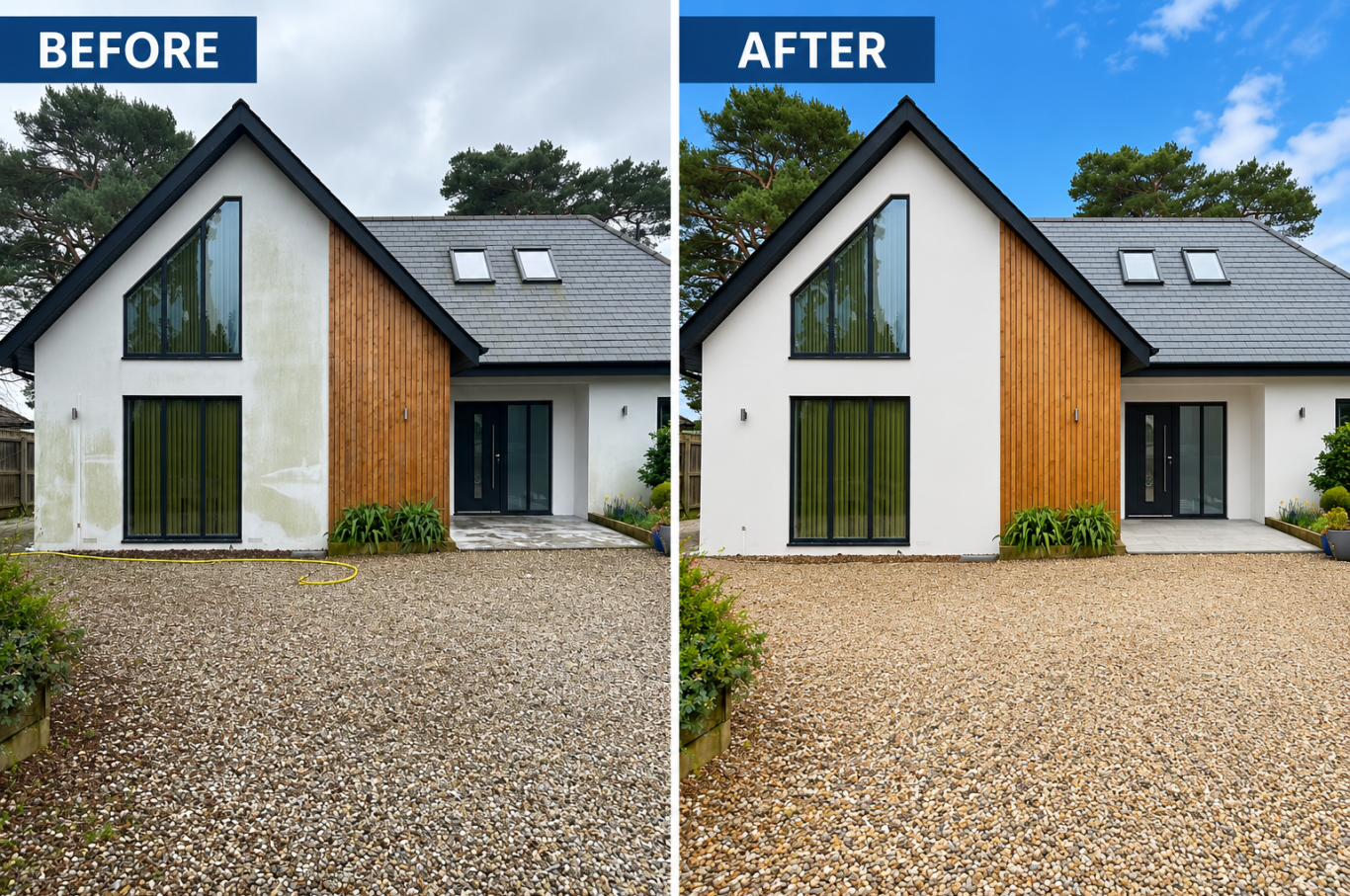
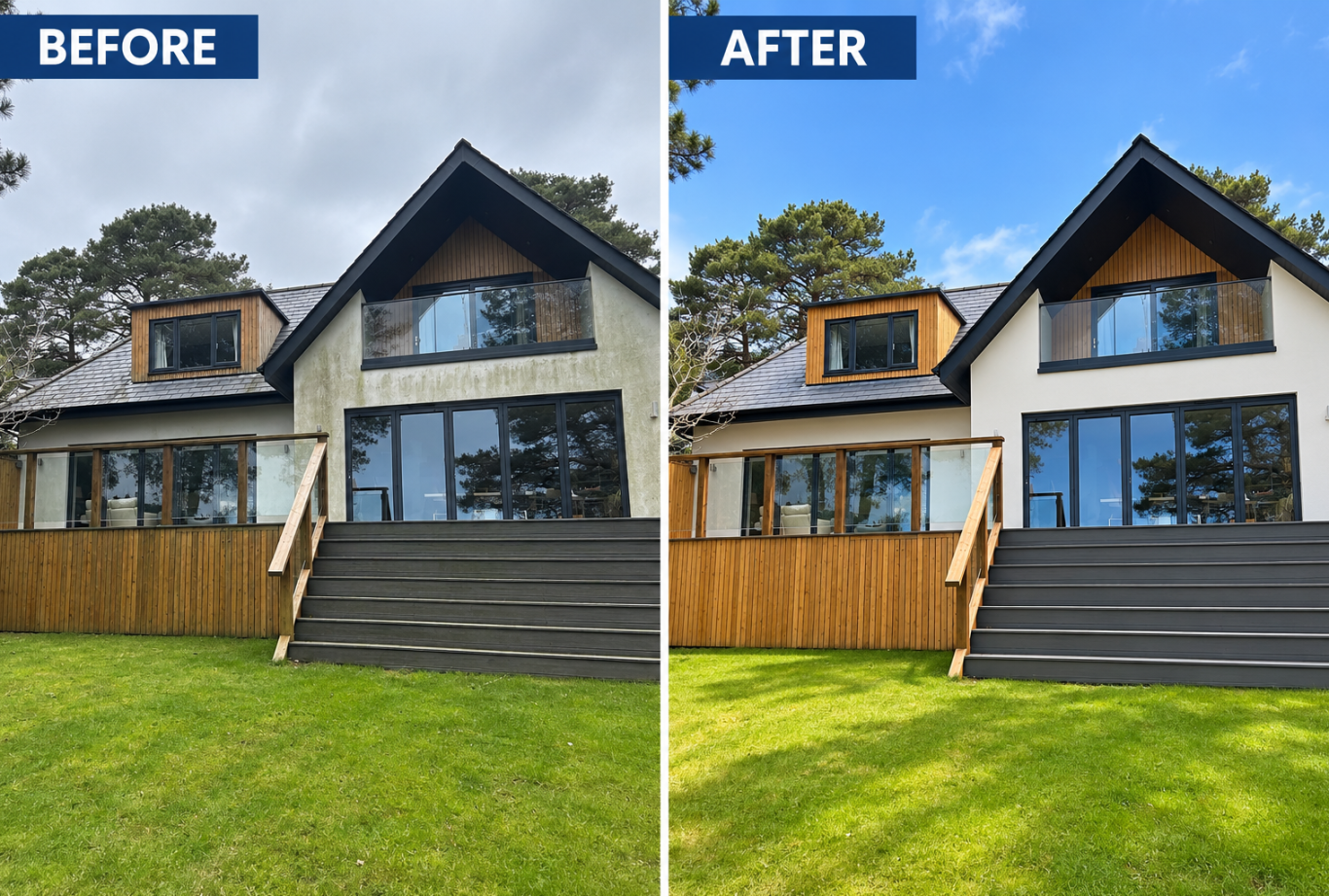
K Rend and other through-coloured renders can develop green, red or black biological staining.
This is commonly associated with algae, fungi and other microorganisms growing on surfaces exposed to moisture.
Aggressive pressure washing can damage render finishes, dislodge material or force water into vulnerable areas.
Soft washing offers an alternative by treating biological contamination without relying on excessive mechanical force.
However, the method and chemicals must be compatible with the specific render system and the render manufacturer's maintenance guidance.
The longevity of soft washing depends on several factors:
The amount of shade surrounding the property.
Exposure to rainfall and moisture.
Nearby trees and vegetation.
The type and condition of the surface.
The cleaning treatment used.
Local environmental conditions.
Some surfaces remain visibly clean for several years, while shaded or damp areas may require more frequent maintenance.
There is no guaranteed period before biological growth returns.
Soft washing can reduce the need for aggressive mechanical cleaning, but it is not automatically environmentally friendly.
Some biocidal cleaning products can be harmful to aquatic organisms, plants and other non-target species.
Professional cleaning should include appropriate chemical selection, controlled application and measures to prevent harmful runoff into surface-water drains, ponds and watercourses.
The main advantages include effective removal or treatment of biological contamination, reduced reliance on high-pressure water and the ability to clean suitable delicate exterior finishes.
When performed correctly, soft washing can improve the appearance of a building and form part of a preventative exterior maintenance programme.
It does not repair damaged render, permanently prevent algae growth or guarantee the removal of every type of stain.
Does soft washing damage render?
Correctly selected products and techniques can clean compatible render systems safely. However, unsuitable chemicals, excessive concentrations or incorrect application can cause damage.
Can soft washing remove black stains?
It can treat many forms of biological black staining. Pollution, mineral deposits and other non-biological stains may require different treatments.
Does soft washing kill algae?
An appropriately authorised biocidal treatment can control algae when used according to its label instructions.
Can you soft wash a roof?
Some roof systems can be treated using appropriate low-pressure techniques, but the roof material, condition, manufacturer guidance and safe access arrangements must be assessed first.
Is soft washing better than jet washing?
For biological contamination on delicate surfaces, soft washing is often preferable. For robust surfaces with heavy physical dirt deposits, pressure washing may be more effective.
"WhatsApp a photo & postcode for a free quote"
Mr Softwash®
Softwash Long Term Protection for 3-5 Years
Soft washing biocides provide long-term protection by
killing organic organisms—such as algae, moss, fungi, and lichen—at their root and leaving a residual film that prevents regrowth.
How Biocide Protection Works
Softwash biocide, specifically DDAC, begins killing algae and spores within 5-60 minutes, but visible results take time. While dramatic improvement is often seen within 14 days, a full "spray-and-leave" clean requires 3–6 months for natural weathering, with severe cases taking up to 12 months. It works gradually, cleaning over weeks as rain washes away dead matter.
Key Takeaways on Timing:
Factors Influencing Speed:
Soft Washing was developed in the USA about 20 years ago and was a way of washing property without the risks associated with using high pressure as in pressure washing. Soft washing is a cleaning process that safely removes organic stains, mildew, and algae from render using a low-pressure washing technique and a mixture of biocides or sodium hypochlorite, surfactants, and water. High pressure damages render, roofs and other surfaces, so Low pressure is used to prevent any damage.
Soft washing or low pressure is used on surfaces that are difficult to clean with pressure washing or might be damaged by high pressure. It's gentle on surfaces, making it ideal for delicate materials.
Soft washing is different from power washing, which uses higher water pressure. Power washing can void a warranty, cause granule loss, and compromise the integrity of roof tiles, damage rendering, patios and other surfaces.
What is the distinction between
Soft Washing and Pressure Washing?
Although the procedures, equipment, pressure, and chemicals used in soft washing, power washing, and pressure washing appear to be identical, they are not. Power washing and pressure washing require much higher water pressure than soft washing, and power washing is usually done with high pressure. To kill mould, mildew, bacteria, algae, fungus, moss, and other bacteria, the Soft Washing method is paired with a biodegradable sanitizing cleaning solution.
Benefits of Soft washing
The modern, technologically advanced, process of soft washing reduces, and even eliminates, the need for jet – or pressure/power – washing in most situations.
Soft washing is the process of using eco-friendly chemicals and low-pressure water to clean the surfaces of buildings and driveways.
Soft washing will not damage your property. It's effectiveness depends upon the cleaning contractor having the skilled knowledge of how to use the correct cleaning product at the correct concentration ratio, using the correct equipment.
High pressure jet washing
Soft washing
Soft washing has many other advantages over jet washing
For long-term maintenance of the exterior surfaces of your property – ensuring it looks great all year round – annual or biannual treatment with a Mr Softwash product is by far the safest and most cost-effective option.
What can be softwashed?
Because of its gentle approach, softwashing is suitable for a wide range of surfaces that could be damaged by high-pressure cleaning. These include:
Mr Softwash is one of the most experienced
Soft washing companies in the UK.
We need your consent to load the translations
We use a third-party service to translate the website content that may collect data about your activity. Please review the details in the privacy policy and accept the service to view the translations.