
Mr Softwash®
The Original Soft Washing Company
"The UK's K Rend & Render Cleaning Specialist"
Mr Softwash®
The Original Soft Washing Company
"The UK's K Rend & Render Cleaning Specialist"
Welcome to The Render Cleaning Hub by Mr Softwash, a specialist information centre for home owners dedicated to understanding, cleaning, restoring and maintaining Render and other modern exterior render finishes.
Whether your Render has developed green algae, black staining, mould, lichen or general discolouration, our guides explain the causes, available cleaning methods and ways to maintain your property's exterior.
With over 30 years of exterior cleaning experience, Mr Softwash combines practical knowledge with specialist soft washing techniques to help homeowners and property professionals make informed decisions about render care.
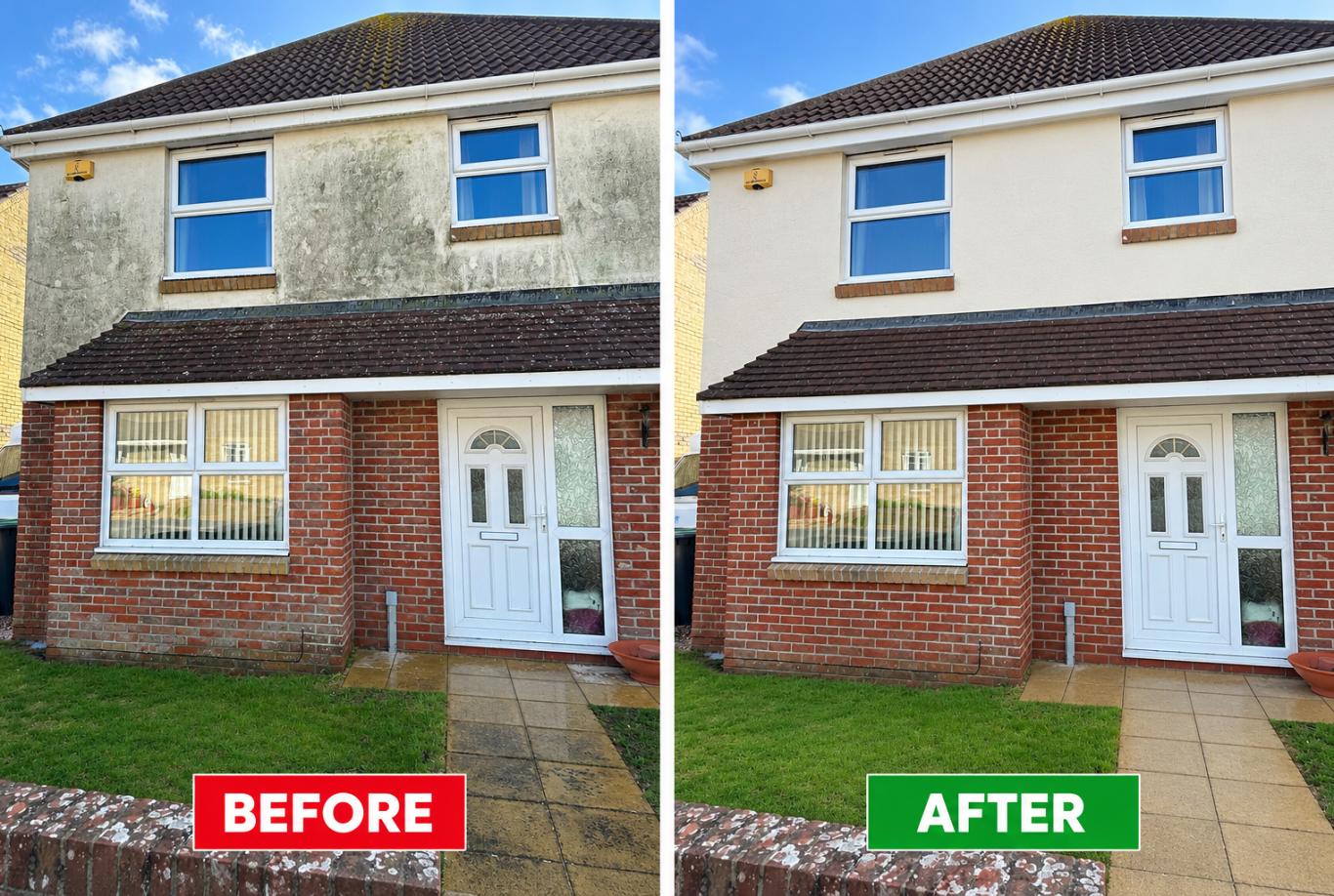
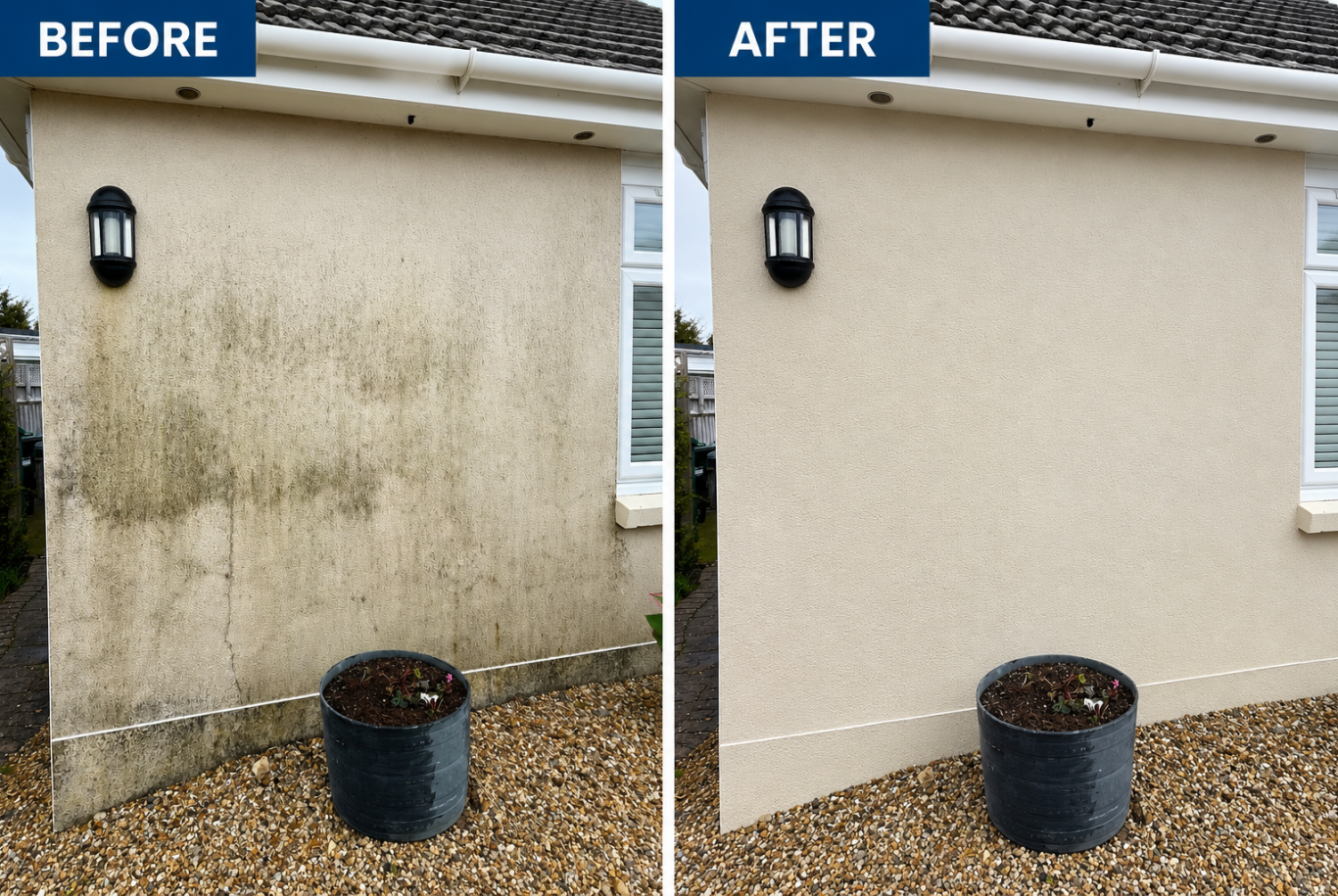
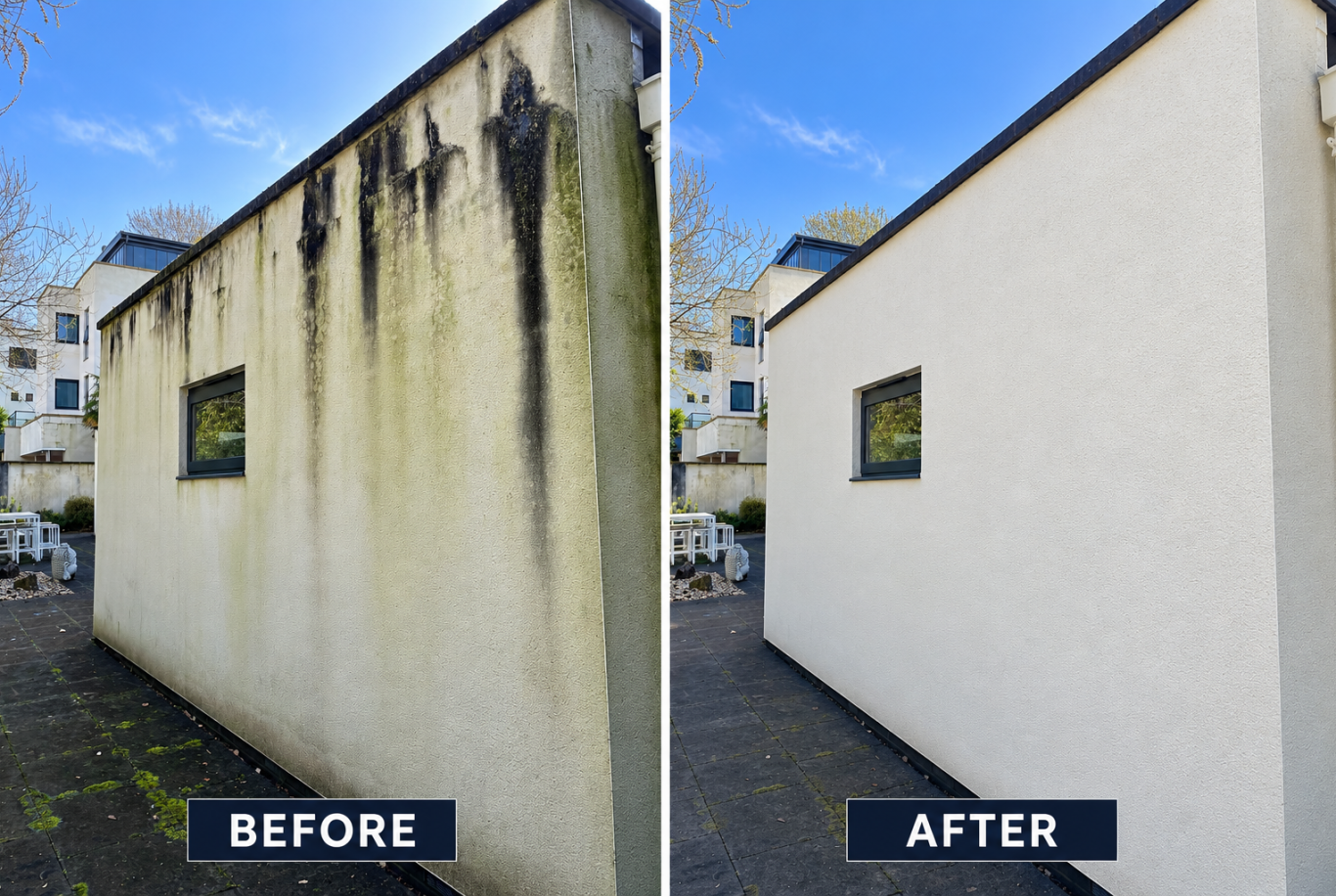
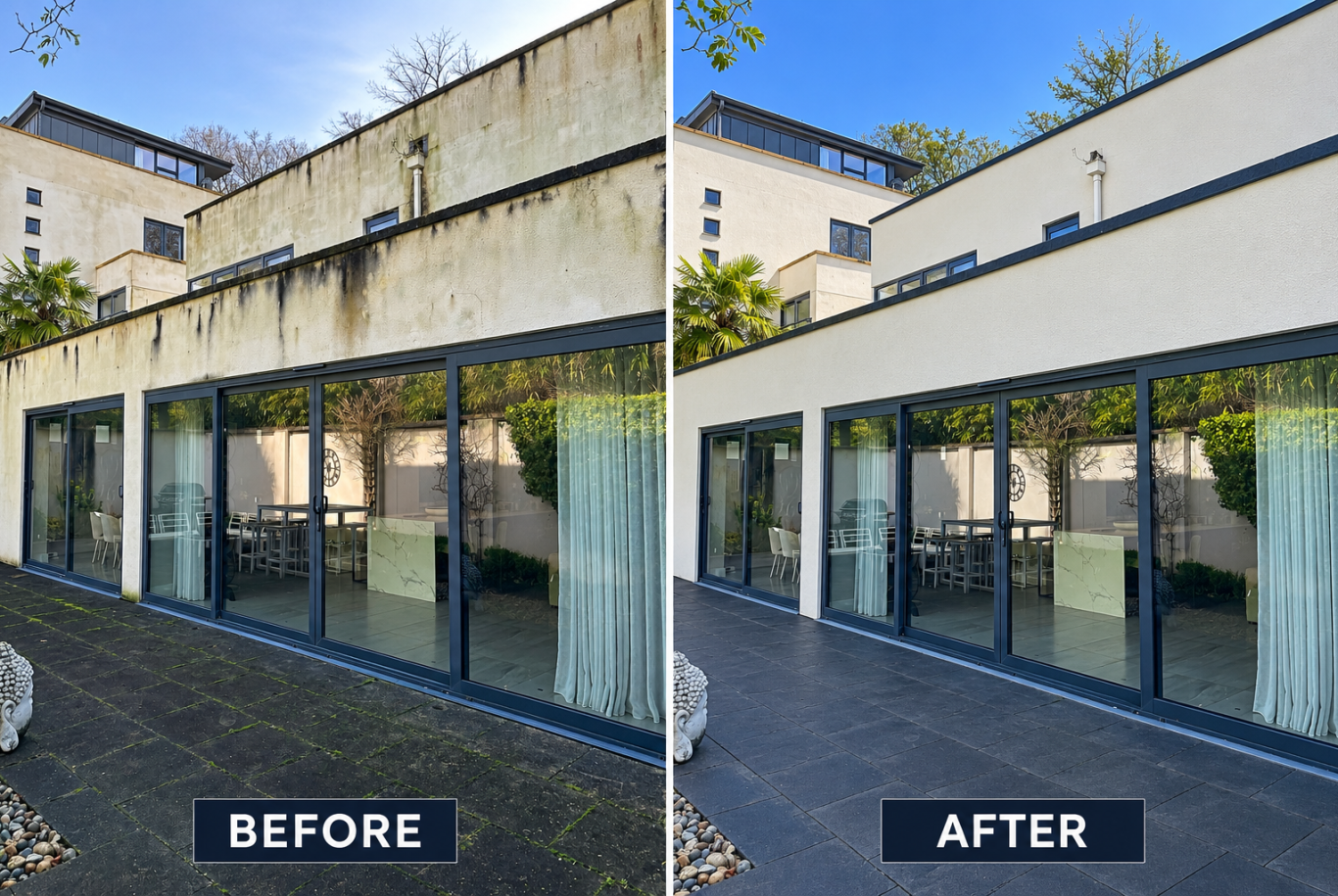
Don't let stained and weathered Render spoil the appearance of your property.
For professional Soft washing in Poole, Dorset, Hampshire & Wiltshire. contact Mr Softwash today for a free online quote.
WhatsApp a photo & postcode for a free quote

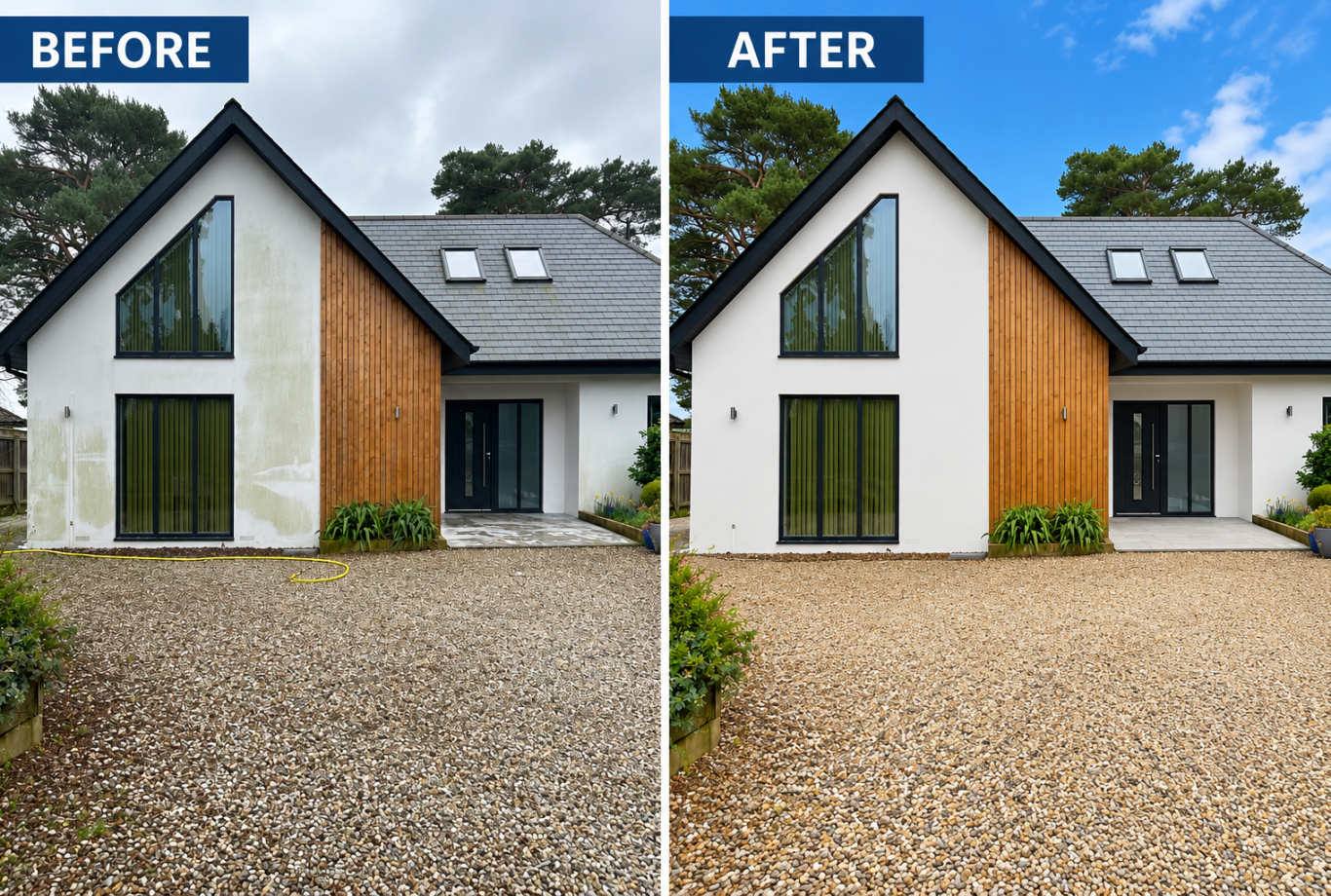
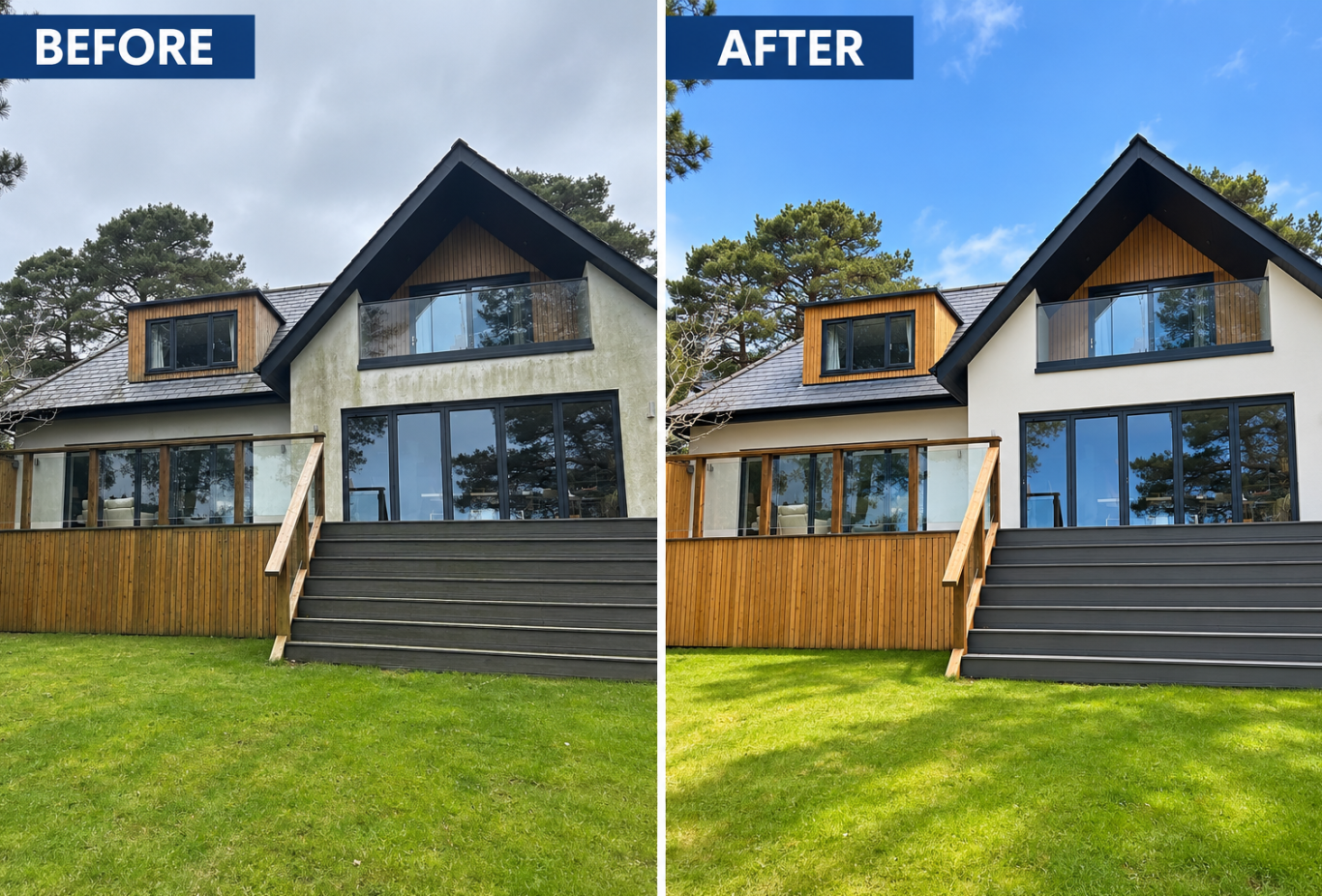
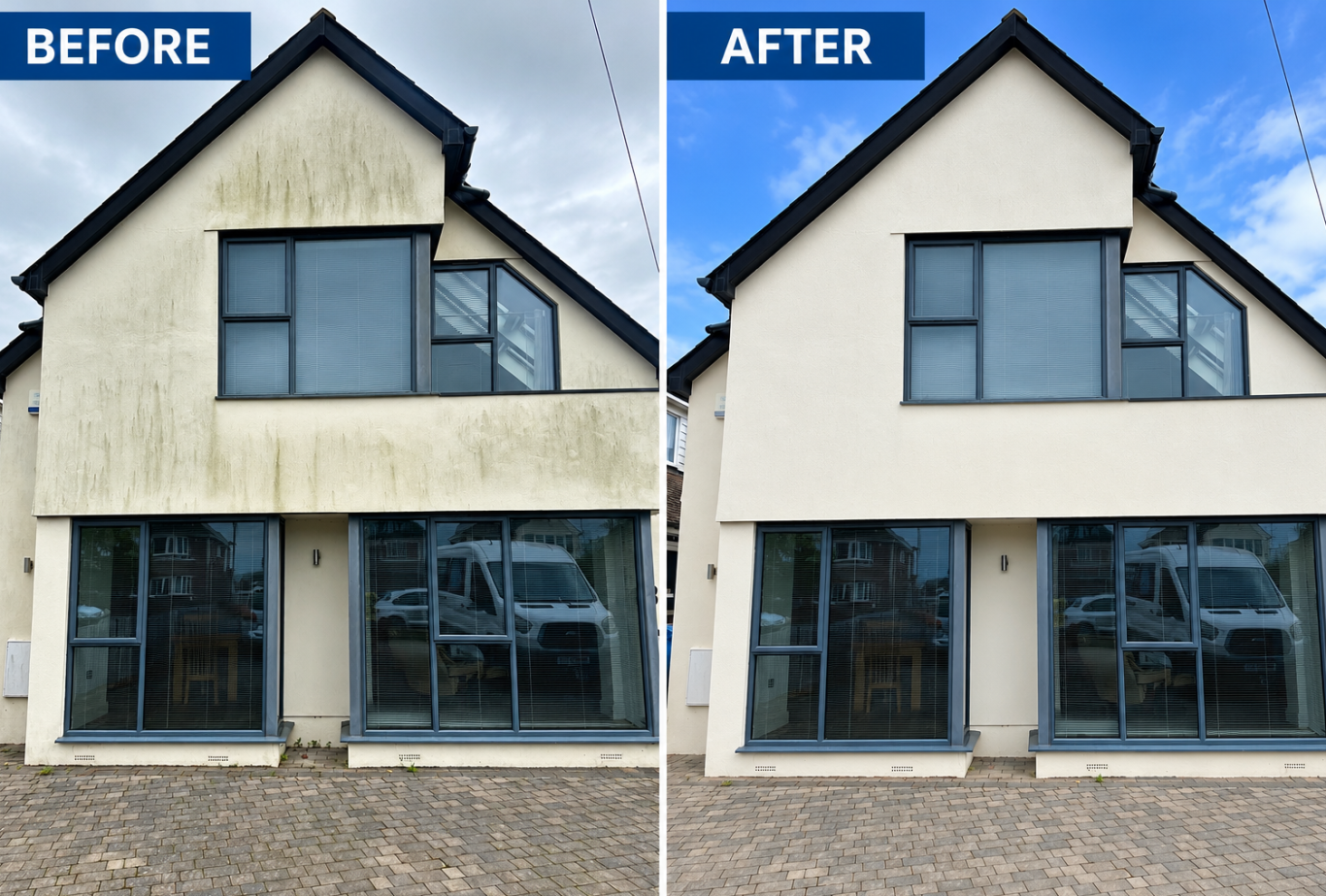
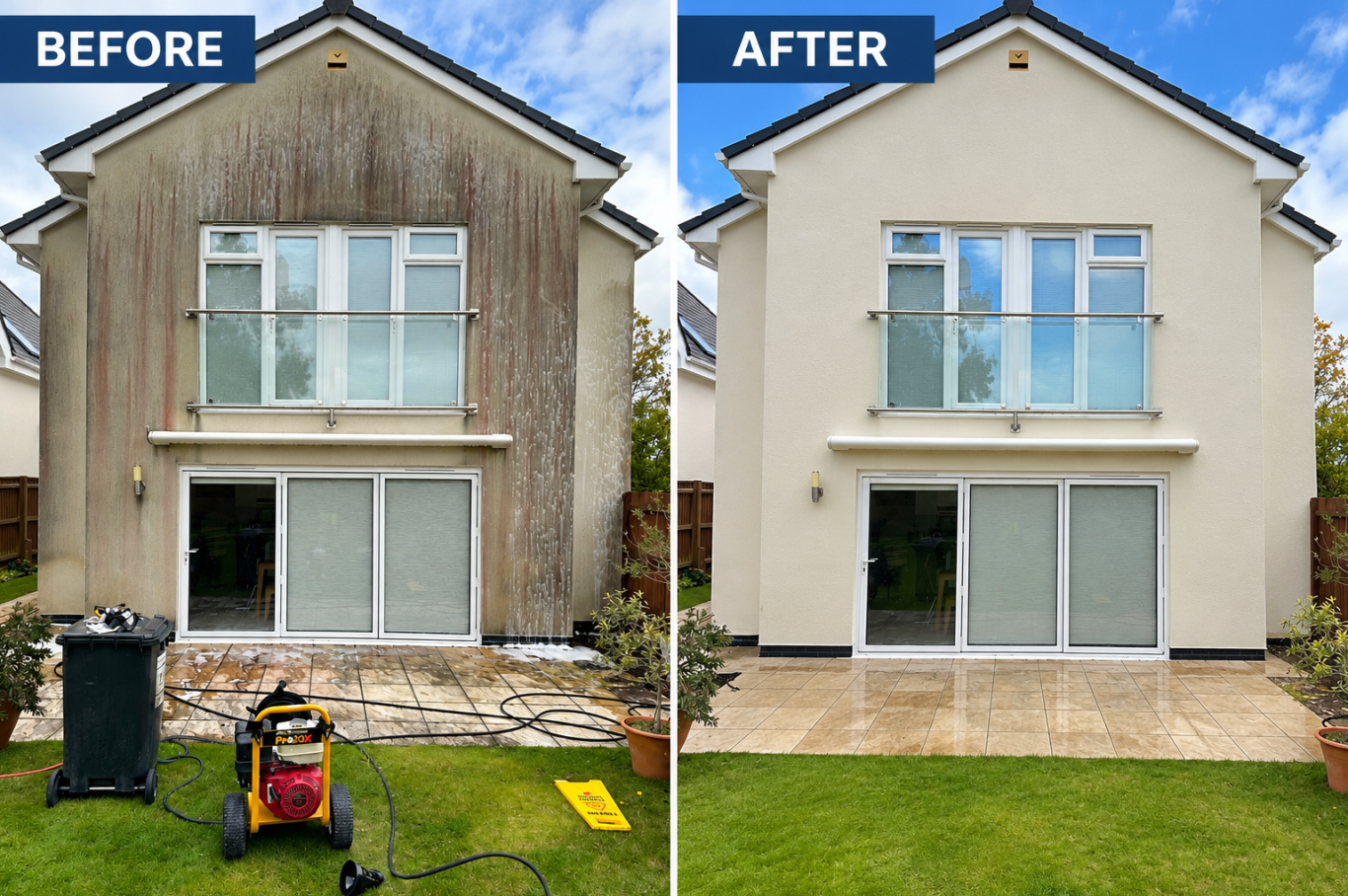

The Complete Home Owners Guide to Render Cleaning:
Methods, Treatments, Costs & Maintenance
Expert Render Cleaning Advice from Mr Softwash – Professional Render Cleaning Specialists in Poole, Bournemouth, Dorset & Hampshire
Render is one of the most popular exterior finishes for residential and commercial properties throughout the UK. It provides an attractive, protective coating that improves the appearance of buildings while helping to shield external walls from the elements.
However, over time, rendered surfaces can become discoloured by green algae, black staining, mould, lichen, atmospheric pollution and general environmental contamination.
Without appropriate maintenance, these contaminants can leave rendered buildings looking tired, neglected and considerably older than they actually are.
The good news is that most types of exterior render can be professionally cleaned and restored without repainting or replacing the existing finish, provided the render remains structurally sound.
At Mr Softwash, we specialise in professional render cleaning using carefully selected soft washing methods and specialist cleaning treatments designed to remove organic contamination while minimising the risk of damage to delicate rendered surfaces.
Based in Poole, Dorset, we provide specialist render cleaning services throughout Bournemouth, Christchurch, Dorset, Hampshire and surrounding areas.
In this comprehensive guide, we explain everything you need to know about render cleaning, including different render types, common staining problems, cleaning methods, chemical treatments, maintenance recommendations and professional cleaning costs.
1. What Is Render Cleaning?
Render cleaning is the process of removing dirt, algae, mould, lichen, biological growth and other contaminants from the external rendered surfaces of buildings.
Unlike traditional brickwork or stonework, many modern render systems have textured, porous or relatively delicate finishes that require specialist cleaning techniques.
The objective of professional render cleaning is not simply to improve appearance. It is also to remove surface contamination, reduce biological regrowth and help preserve the condition of the render.
A suitable cleaning treatment can:
Remove green algae and biological discolouration.
Reduce or remove black staining caused by microorganisms.
Treat mould, mildew and other organic contamination.
Remove accumulated surface dirt and some atmospheric deposits.
Restore the original appearance of many rendered finishes.
Reduce the likelihood of rapid biological regrowth.
Help identify areas requiring repair or maintenance.
Improve the overall kerb appeal of a property.
Important: Not every stain can be removed with the same treatment. Rust, mineral deposits, paint contamination and some deeply embedded discolouration may require specialist procedures or may not be completely removable.
2. Why Does External Render Become Dirty?
Rendered buildings are constantly exposed to environmental conditions that encourage the accumulation of dirt and biological growth.
In coastal areas such as Poole, Bournemouth and Christchurch, buildings can experience a combination of damp conditions, salt-laden air, wind-driven rain and atmospheric contamination.
Several factors contribute to render discolouration.
Green Algae
Green algae is one of the most common problems affecting exterior render.
It thrives on surfaces that remain damp for extended periods, particularly north-facing elevations and areas receiving limited sunlight.
Algae can create green patches, streaks or widespread discolouration across rendered walls.
Although algae growth is often primarily an aesthetic issue, persistent moisture and contamination may indicate underlying drainage or maintenance problems.
Black Staining
Black staining is another common problem affecting rendered properties.
It can result from several sources, including:
Cyanobacteria and other microorganisms.
Dark-coloured algae and fungal growth.
Atmospheric pollution.
Dirt accumulation.
Water runoff carrying contaminants.
Black staining is particularly noticeable on white, cream and light-coloured render.
Some biological black staining responds well to professional soft washing treatments, although results depend on the cause and depth of the discolouration.
Red and Orange Algae
Red, pink and orange staining can occur on rendered buildings where certain pigmented microorganisms establish themselves.
These stains can be particularly visible on light-coloured silicone render, monocouche render and modern insulated render systems.
Correct identification is important because not all coloured staining is biological. Rust and mineral contamination can produce similar appearances.
Mould and Mildew
Mould and mildew may develop where moisture remains present and environmental conditions support fungal growth.
Exterior fungal contamination can cause dark patches and uneven discolouration.
Professional cleaning should address the contamination while also considering whether defective gutters, leaking downpipes or persistent dampness are contributing to the problem.
Lichen
Lichen is a biological association between a fungus and a photosynthetic partner, usually algae or cyanobacteria.
It can form stubborn patches on exterior surfaces.
Because lichen may attach firmly to the render, aggressive scraping or pressure washing can damage the finish.
Specialist treatments may be required, and heavily established growth can take longer to disappear.
Atmospheric Pollution
Properties near busy roads, industrial areas or heavily trafficked environments can accumulate:
Traffic-related deposits.
Airborne particulates.
Soot.
Dust.
General atmospheric grime.
These contaminants may require different cleaning chemistry from that used for algae and mould.
Water Runoff and Moisture Problems
Blocked gutters, leaking downpipes, defective flashings and poorly maintained roof drainage can create persistent staining.
Cleaning can improve the appearance of the wall, but the underlying water problem should be corrected to prevent recurring contamination.
3. Understanding the Different Types of Exterior Render
Before any render cleaning work begins, it is essential to identify the type of render installed on the building.
Different rendering systems have different surface properties, coatings, textures and cleaning requirements.
K Rend
K Rend is a well-known brand of render used extensively on modern residential and commercial buildings.
Its product range includes silicone-based and other specialist render systems.
K Rend finishes can develop green algae, black staining and general environmental discolouration.
Cleaning methods should be selected according to the particular K Rend product, its age and condition, and the manufacturer's guidance.
Related guide: K Rend Cleaning – Methods, Treatments and Maintenance.
Silicone Render
Silicone render is a modern exterior finish designed to offer water-repellent properties while allowing water vapour to pass through the system.
Although silicone render is often marketed as low maintenance, it is not completely resistant to algae or other environmental contamination.
Over time, biological growth may become established, particularly in shaded or damp locations.
Professional cleaning typically involves compatible low-pressure treatments rather than aggressive mechanical cleaning.
Related guide: The Complete Guide to Silicone Render Cleaning.
Monocouche Render
Monocouche render is generally a through-coloured, single-coat cementitious render system.
It is commonly used on modern houses and developments.
Because the colour is incorporated into the render, professional cleaning can often improve its appearance without repainting.
However, some monocouche finishes can be relatively porous or susceptible to surface erosion.
Excessive pressure can remove surface material, alter the texture or produce permanent cleaning marks.
Related guide: Monocouche Render Cleaning and Maintenance.
Acrylic Render
Acrylic render contains polymer binders and is commonly used as a decorative exterior finish.
It can offer flexibility and a wide range of colours and textures.
However, acrylic render may be sensitive to certain chemicals, excessive pressure and inappropriate cleaning procedures.
Any cleaning treatment should be compatible with the specific coating system.
Related guide: The Complete Guide to Acrylic Render Cleaning.
Traditional Sand and Cement Render
Traditional cement-based render is commonly found on older residential and commercial buildings.
It may be painted or left with a natural finish.
Cleaning requirements depend on the condition of the render, its porosity and the presence of paint or other protective coatings.
Older surfaces may contain cracks, hollow areas or weakened sections that require attention before cleaning.
Lime Render
Lime render is often found on historic and traditional buildings.
It is generally more vapour-permeable and can be softer than modern cementitious systems.
Historic lime render requires particularly careful assessment.
Aggressive pressure washing, unsuitable chemicals and excessive saturation may damage the render or affect the building fabric.
Specialist conservation advice may be appropriate before cleaning older or listed buildings.
External Wall Insulation (EWI) Render
External wall insulation systems commonly use thin-coat render applied over insulation boards and reinforcing layers.
These systems require particular care because excessive pressure, impact or inappropriate chemical treatments can damage the finish or underlying components.
Cleaning should follow the system manufacturer's recommendations and any applicable warranty conditions.
4. What Is the Best Method for Cleaning Render?
There is no single cleaning method suitable for every type of render.
The correct approach depends on:
Render composition and surface condition.
Type and severity of contamination.
Age of the render.
Manufacturer's cleaning recommendations.
Previous coatings or treatments.
Accessibility and surrounding materials.
Environmental conditions.
For many modern render systems affected by algae and other organic contamination, professional soft washing is an effective cleaning option.
Soft Washing
Soft washing uses low-pressure application methods combined with carefully selected cleaning solutions to treat biological contamination.
Rather than relying on high-pressure water to remove staining, soft washing uses appropriate chemistry to break down, control or remove contaminants.
Depending on the surface and treatment, the process may involve controlled rinsing or allowing an approved biocidal treatment to work over time.
Benefits of appropriate soft washing include:
Reduced mechanical stress on delicate surfaces.
Effective treatment of many biological contaminants.
Lower risk of pressure-related surface erosion.
Access to textured areas where dirt and growth accumulate.
Potential for longer-lasting biological control when suitable residual treatments are used.
Soft washing is not completely risk-free. Incorrect chemical selection, concentration, application or rinsing can damage surfaces and surrounding materials.
Pressure Washing
Pressure washing uses mechanically delivered water to dislodge surface contamination.
While it can be appropriate for some robust exterior surfaces, high-pressure cleaning is often unsuitable for delicate rendered finishes.
Potential problems include:
Surface erosion.
Loss of decorative texture.
Visible cleaning lines.
Water penetration through defects.
Damage to paint or protective coatings.
Dislodging loose or weakened render.
For these reasons, high-pressure washing should not be treated as the default method for cleaning render.
Steam Cleaning and Controlled Hot-Water Cleaning
Low-pressure steam or temperature-controlled hot-water cleaning can be suitable for certain render surfaces and contamination types.
However, heat-sensitive coatings, thin-coat systems and older render may be vulnerable to thermal or moisture-related damage.
The method should only be selected following an appropriate assessment.
Manual Cleaning
Light manual cleaning using soft brushes and compatible detergents may be suitable for small areas of superficial dirt.
Abrasive brushes, wire brushes and aggressive scrubbing should generally be avoided.
5. How Does Professional Soft Washing Remove Algae from Render?
Soft washing works by combining suitable cleaning chemistry with controlled application techniques.
The process generally involves several stages.
Stage 1 – Surface Inspection
The render is examined to identify its type, condition and contamination.
Particular attention is paid to cracks, defective joints, previous repairs and signs of moisture penetration.
Stage 2 – Identification of Contamination
The staining is assessed to determine whether it is caused by algae, mould, lichen, atmospheric pollution or another source.
This helps establish which treatment is appropriate.
Stage 3 – Protection of Surrounding Areas
Sensitive plants, glazing, metalwork, painted surfaces and other nearby materials are identified and protected as required.
Drainage and chemical runoff must also be considered.
Stage 4 – Application of Cleaning Treatment
A compatible cleaning solution is applied at a controlled rate using suitable low-pressure equipment.
The chemical, concentration and contact time depend on the surface and the contamination.
Stage 5 – Cleaning and Rinsing
Where required, loosened contamination is removed using controlled rinsing or other approved low-impact methods.
Some residual biocidal treatments are designed to remain on the surface, subject to product instructions and environmental restrictions.
Stage 6 – Final Inspection
The cleaned surface is assessed and any remaining staining, damage or areas requiring further treatment are identified.
Some stubborn biological staining may continue to fade after treatment rather than disappearing immediately.
6. What Chemicals Are Used for Render Cleaning?
Professional render cleaning may involve different cleaning products depending on the type of staining and surface material.
Chemical selection should always take account of manufacturer guidance, product labels, environmental requirements and the condition of the render.
Sodium Hypochlorite
Sodium hypochlorite is an oxidising chemical used in certain professional exterior cleaning applications.
It can be effective against many types of algae and organic staining when correctly formulated and applied.
However, it can also:
Discolour incompatible coatings.
Damage certain metals and materials.
Harm vegetation.
Cause chemical burns.
Affect surrounding surfaces.
Create environmental hazards if released improperly.
Sodium hypochlorite must never be mixed with acids or ammonia-containing products because dangerous gases can be released.
Its use on render should be limited to applications where compatibility, safety and legal requirements have been established.
Benzalkonium Chloride (BAC)
Benzalkonium chloride is a quaternary ammonium compound used as an active ingredient in some biocidal formulations.
Certain authorised products containing BAC are designed to control algae and other microorganisms on exterior surfaces.
They may be used in maintenance treatments where permitted by the product's authorisation and label.
Didecyldimethylammonium Chloride (DDAC)
DDAC is another quaternary ammonium compound found in some specialist biocidal products.
It may be used in formulations intended to control biological growth on exterior surfaces.
The suitability of any DDAC-based product depends on its formulation, authorised use and compatibility with the render system.
Specialist Render Cleaning Products
There are also proprietary products developed for particular render types and cleaning applications.
These may contain surfactants, detergents, biocidal active substances or other cleaning agents.
At Mr Softwash, the priority is selecting an appropriate treatment for the surface rather than using one chemical on every building.
All professional treatments should follow the relevant safety data, manufacturer instructions and applicable UK chemical and biocide regulations.
7. Can You Pressure Wash K Rend?
One of the most frequently asked questions about render maintenance is whether K Rend can be pressure washed.
The answer depends on the specific K Rend system, its condition and the manufacturer's instructions.
Although certain systems may permit carefully controlled water cleaning, aggressive high-pressure washing can damage the surface.
Potential damage includes erosion, changes in texture, water penetration and uneven appearance.
For render affected by biological contamination, a suitable low-pressure cleaning treatment is often preferable.
Before cleaning, it is important to establish the exact render system and follow the manufacturer's published maintenance guidance.
Related guide: Can You Pressure Wash K Rend?
8. How to Remove Green Algae from Render
Green algae is one of the most common reasons homeowners arrange professional render cleaning.
It often develops in areas with limited sunlight, high humidity and persistent surface moisture.
The general cleaning approach involves:
Inspecting the render and identifying the contamination.
Checking for cracks, loose coatings and moisture defects.
Selecting a compatible algae treatment.
Protecting adjacent materials and the environment.
Applying the treatment in accordance with its instructions.
Rinsing where required and inspecting the results.
Preventative maintenance can help limit future algae growth, although no treatment can guarantee permanent prevention.
Related guide: How to Remove Green Algae from Render.
9. How to Remove Black Staining from Render
Black staining can be more challenging than green algae because its cause is not always immediately obvious.
Biological staining may respond to specialist soft washing treatments.
However, pollution deposits, mineral staining and permanent coating discolouration may require alternative methods.
The first step is to identify the source.
Where black staining is caused by microorganisms, professional treatment can often produce a significant improvement.
For deeply embedded contamination, multiple treatments or additional time may be required.
Not all black staining can be completely removed without refinishing the surface.
Related guide: Removing Black Staining and Mould from Render.
10. Can You Clean Render Yourself?
Small areas of superficial dirt may be cleaned by homeowners using manufacturer-approved methods.
However, cleaning an entire rendered property presents several challenges.
These include:
Identifying the render system.
Choosing a compatible cleaning product.
Avoiding surface damage.
Working safely at height.
Protecting plants and surrounding materials.
Managing chemical exposure and runoff.
Avoiding damage to windows, seals and metalwork.
For large elevations, persistent biological staining or delicate render systems, professional assessment is generally advisable.
Never experiment with strong chemicals or high-pressure equipment on an unknown render finish.
A small compatibility test in an inconspicuous area is advisable before undertaking any cleaning work.
11. How Much Does Render Cleaning Cost in the UK?
The cost of professional render cleaning varies according to the size, condition and accessibility of the building.
There is no universal price because two properties with similar dimensions may require very different treatments.
Factors influencing cost include:
Property Size
Larger buildings generally require more labour, cleaning solution and equipment.
Type of Render
Some render systems require more specialist treatment or slower cleaning methods.
Severity of Contamination
Light algae growth may be easier to treat than extensive black staining or established lichen.
Building Height and Access
Properties requiring scaffolding, specialist access equipment or additional safety measures may cost more.
Surface Condition
Cracked, damaged or previously coated render may require extra preparation or repair.
Treatment Requirements
Different contaminants may require different cleaning products, additional treatments or return visits.
Location
Travel, access and site-specific requirements can influence the final quotation.
Mr Softwash provides property-specific quotations based on the render type, condition and cleaning requirements.
For an accurate estimate, photographs of the affected elevations can be useful, although some properties will require an on-site inspection.
Related guide: How Much Does K Rend Cleaning Cost?
12. How Often Should Exterior Render Be Cleaned?
There is no fixed cleaning interval suitable for every rendered property.
The frequency depends on the building's location, surrounding vegetation, exposure, orientation and environmental conditions.
As a general maintenance approach, homeowners should inspect rendered elevations at least annually.
Buildings in damp, shaded or heavily vegetated locations may require more frequent attention.
Some properties may remain visually clean for several years, while others experience recurring biological growth much sooner.
Regular inspection and early treatment of contamination can help avoid the need for more intensive cleaning later.
Factors That Encourage Faster Regrowth
North-facing walls.
Overhanging trees.
Limited air circulation.
Persistent dampness.
Leaking gutters.
Poor drainage.
Coastal and exposed environments.
Rough or heavily textured surfaces.
Correcting moisture problems is often just as important as cleaning the visible staining.
13. How to Keep Render Cleaner for Longer
Following professional cleaning, several practical maintenance measures can help reduce the likelihood of rapid discolouration.
Maintain gutters and downpipes
Blocked or leaking drainage systems can cause persistent water staining and damp patches.
Manage surrounding vegetation
Trees, shrubs and climbing plants can reduce airflow and increase surface moisture.
Inspect for cracks
Cracks and defective joints can allow water to enter the render system.
Address persistent dampness
Investigate recurring wet areas rather than repeatedly cleaning the visible staining.
Arrange appropriate maintenance treatments
Where suitable, authorised biocidal maintenance treatments may help control biological regrowth.
Avoid unnecessary pressure washing
Repeated aggressive cleaning can gradually damage vulnerable render surfaces.
Follow the render manufacturer's instructions
Maintenance requirements vary between products and systems.
14. Render Cleaning vs Render Painting
Homeowners sometimes assume that discoloured render must be repainted.
However, where the underlying render is sound and the staining is removable, professional cleaning may provide a more economical alternative.
Render Cleaning
Render Painting
Removes suitable surface contamination
Covers the existing surface with a new coating
Can retain the original through-coloured finish
Changes or refreshes the surface finish
Often requires less preparation than repainting
Usually requires thorough preparation
May avoid unnecessary coating application
Can provide additional protection where specified
Suitable where render is sound and staining is treatable
May be appropriate for permanent discolouration or coating deterioration
Cleaning does not repair structural defects, replace missing render or correct permanent colour loss.
Where render is cracked, delaminated or otherwise defective, repairs may be required before any cleaning or decorating work.
15. Render Cleaning, Repair and Restoration
Not every rendered wall can be restored through cleaning alone.
Some buildings may have defects such as:
Hairline cracks.
Loose or hollow render.
Damaged corners.
Failed sealant joints.
Impact damage.
Previous poor-quality repairs.
Discoloured or deteriorating coatings.
Professional assessment helps distinguish between contamination that can be cleaned and damage requiring repair.
In some cases, the most appropriate solution is a combination of cleaning, localised repair and compatible refinishing.
Repairs should be carried out using materials and techniques suitable for the original render system.
Related guide: K Rend Repair and Restoration.
16. Render Cleaning for Coastal Properties in Dorset and Hampshire
Properties along the south coast can experience particular exterior maintenance challenges.
Poole, Bournemouth, Christchurch and coastal Hampshire are exposed to changing weather conditions, wind-driven rain, salt deposits and seasonal humidity.
Buildings near the coast may develop algae, atmospheric deposits and staining at different rates depending on their orientation and surroundings.
Professional render cleaning can help maintain the appearance of these properties while taking account of their particular exposure conditions.
At Mr Softwash, our local service area includes:
Poole: Hamworthy, Upton, Canford Cliffs, Sandbanks, Parkstone and surrounding areas.
Bournemouth: Southbourne, Boscombe, Westbourne, Winton and surrounding areas.
Christchurch: Highcliffe, Mudeford, Burton and surrounding areas.
Dorset: Wimborne, Ferndown, Broadstone, Wareham and other locations by arrangement.
Hampshire: Selected areas, subject to project requirements and availability.
We work with homeowners and property managers seeking suitable cleaning solutions for modern rendered buildings.
17. Why Choose Mr Softwash for Professional Render Cleaning?
Mr Softwash is a specialist exterior cleaning business based in Hamworthy, Poole, providing professional soft washing and render cleaning services across Dorset and Hampshire.
With over 30 years of industry experience, Steve Taylor brings practical knowledge of exterior cleaning methods, surface contamination and specialist treatment techniques.
Our approach focuses on understanding the surface before selecting a cleaning method.
Our Approach to Render Cleaning
Surface-specific assessment
We recognise that K Rend, silicone render, acrylic render, monocouche render and traditional finishes have different cleaning requirements.
Low-pressure cleaning methods
Where suitable, we use controlled soft washing techniques designed to minimise mechanical damage.
Targeted biological treatments
We select appropriate products for algae, mould and other organic contamination, subject to compatibility and applicable requirements.
Careful property protection
We consider surrounding surfaces, plants, access requirements and environmental protection.
Practical maintenance advice
We help property owners understand the factors contributing to staining and how to maintain their render.
Local expertise
We provide specialist exterior cleaning services across Poole, Bournemouth, Christchurch, Dorset and Hampshire.
18. Frequently Asked Questions About Render Cleaning
What is the best way to clean external render?
The best method depends on the render type, surface condition and contamination. For many modern render systems affected by algae or mould, compatible low-pressure soft washing is an effective option.
Can render be cleaned without pressure washing?
Yes. Many types of render can be cleaned using suitable chemical treatments and low-pressure application methods without aggressive pressure washing.
Will render cleaning remove black stains?
Many biological black stains can be significantly reduced or removed. However, some atmospheric, mineral or permanent stains may require alternative treatment or refinishing.
Can you clean K Rend without damaging it?
Yes, many K Rend finishes can be cleaned safely when the correct method is selected and the render is in suitable condition. The manufacturer's instructions should always be followed.
Does soft washing damage render?
Correctly selected and applied soft washing treatments can minimise the risk of mechanical damage. However, incompatible chemicals or incorrect application can still cause damage.
How long does render cleaning last?
Results vary depending on location, moisture levels, surrounding vegetation and environmental exposure. Biological regrowth may occur sooner on shaded or persistently damp elevations.
Can render cleaning remove red algae?
Some red or orange biological staining can respond to suitable cleaning treatments. Correct identification is essential because rust and mineral stains may look similar.
Can you clean painted render?
Yes, certain painted render surfaces can be cleaned, provided the paint is sound and the cleaning method is compatible with the coating.
Can render cleaning remove lichen?
Lichen can often be treated, although established growth may require additional time or repeated treatment. Aggressive scraping should be avoided.
Is render cleaning cheaper than repainting?
Cleaning is often less expensive than repainting when the render remains sound and the discolouration is removable. Costs depend on the property and the work required.
How often should K Rend be cleaned?
There is no universal interval. Regular inspection and cleaning when biological growth becomes established is generally preferable to waiting until heavy staining develops.
Can render be cleaned in winter?
Some treatments can be undertaken during suitable winter conditions, but low temperatures, frost, heavy rain and adverse weather may affect safety and product performance.
Should render be sealed after cleaning?
Not necessarily. Some render systems are designed to function without additional sealers, and incompatible products may affect breathability, appearance or warranty conditions. Always consult the manufacturer before applying a coating.
Can I use bleach to clean render?
Household bleach and professional sodium hypochlorite formulations are not interchangeable cleaning recommendations. Incorrect use can damage finishes and surrounding materials. Only products suitable for the specific surface and intended application should be considered.
Does render cleaning increase property value?
A clean exterior can improve kerb appeal and presentation, although any effect on property value will depend on the building and local market.
19. Explore Our Specialist Render Cleaning Guides
For more detailed information about specific render types, cleaning methods and maintenance, explore the Mr Softwash resource guides.
Render Types
K Rend Cleaning Guide
Silicone Render Cleaning Guide
Acrylic Render Cleaning Guide
Monocouche Render Cleaning Guide
K Rend Repair and Restoration
Cleaning Methods
Soft Washing Explained
Soft Washing vs Pressure Washing
Can K Rend Be Pressure Washed?
How to Clean K Rend Safely
Staining and Contamination
Removing Green Algae from Render
Removing Black Staining and Mould from Render
Why Does K Rend Go Green?
Lichen and Biological Growth Removal
Costs and Maintenance
K Rend Cleaning Costs
Render Maintenance Guide
Professional Render Cleaning FAQs
These resources form part of the Mr Softwash educational approach to exterior cleaning, helping homeowners understand the different methods available for maintaining rendered properties.
20. Professional Render Cleaning in Poole, Bournemouth, Dorset & Hampshire
If your property is affected by green algae, black staining, mould or general render discolouration, professional cleaning may help restore its appearance without the expense of unnecessary repainting.
At Mr Softwash, we provide specialist exterior render cleaning services using carefully selected treatments suited to the surface and contamination.
Whether your property has K Rend, silicone render, monocouche render, acrylic render or another suitable exterior finish, we can assess the cleaning requirements and recommend an appropriate approach.
Request a Render Cleaning Quotation
Mr Softwash – Specialist Render Cleaning & Soft Washing
Based in Hamworthy, Poole, Dorset.
Telephone: 07742 708970
Website: www.mrsoftwash.co.uk
Service Areas: Poole, Bournemouth, Christchurch, Dorset and Hampshire.
Contact Mr Softwash today to discuss your render cleaning requirements and request a quotation.
Mr Softwash – Professional Exterior Cleaning, Render Cleaning & Soft Washing Specialists.
Give me a quick call, send me an email or WhatsApp
Written Quote
Tell me what you need and I'll send you a free written quote to your phone or by email
We need your consent to load the translations
We use a third-party service to translate the website content that may collect data about your activity. Please review the details in the privacy policy and accept the service to view the translations.