
Mr Softwash®
The Original Soft Washing Company
"The UK's K Rend & Render Cleaning Specialist"
Mr Softwash®
The Original Soft Washing Company
"The UK's K Rend & Render Cleaning Specialist"
Mr Softwash is a highly rated, professional exterior cleaning service based in Hamworthy, Poole, specialising in low-pressure soft washing and modern Patio treatments. Run by Steve Taylor, who brings over 30 years of industry experience, the company provides safe, non-abrasive cleaning alternatives to traditional high-pressure jet washing across Poole, Bournemouth, Dorset, Hampshire, Wiltshire.
What can be softwashed?
Because of its gentle approach, softwashing is suitable for a wide range of surfaces that could be damaged by high-pressure cleaning.
These include:
Don't let stained and weathered Surfaces spoil the appearance of your property.
For professional Soft washing in Poole, Dorset and Hampshire, contact Mr Softwash today for a free online quote.
WhatsApp a photo & postcode for a free quote
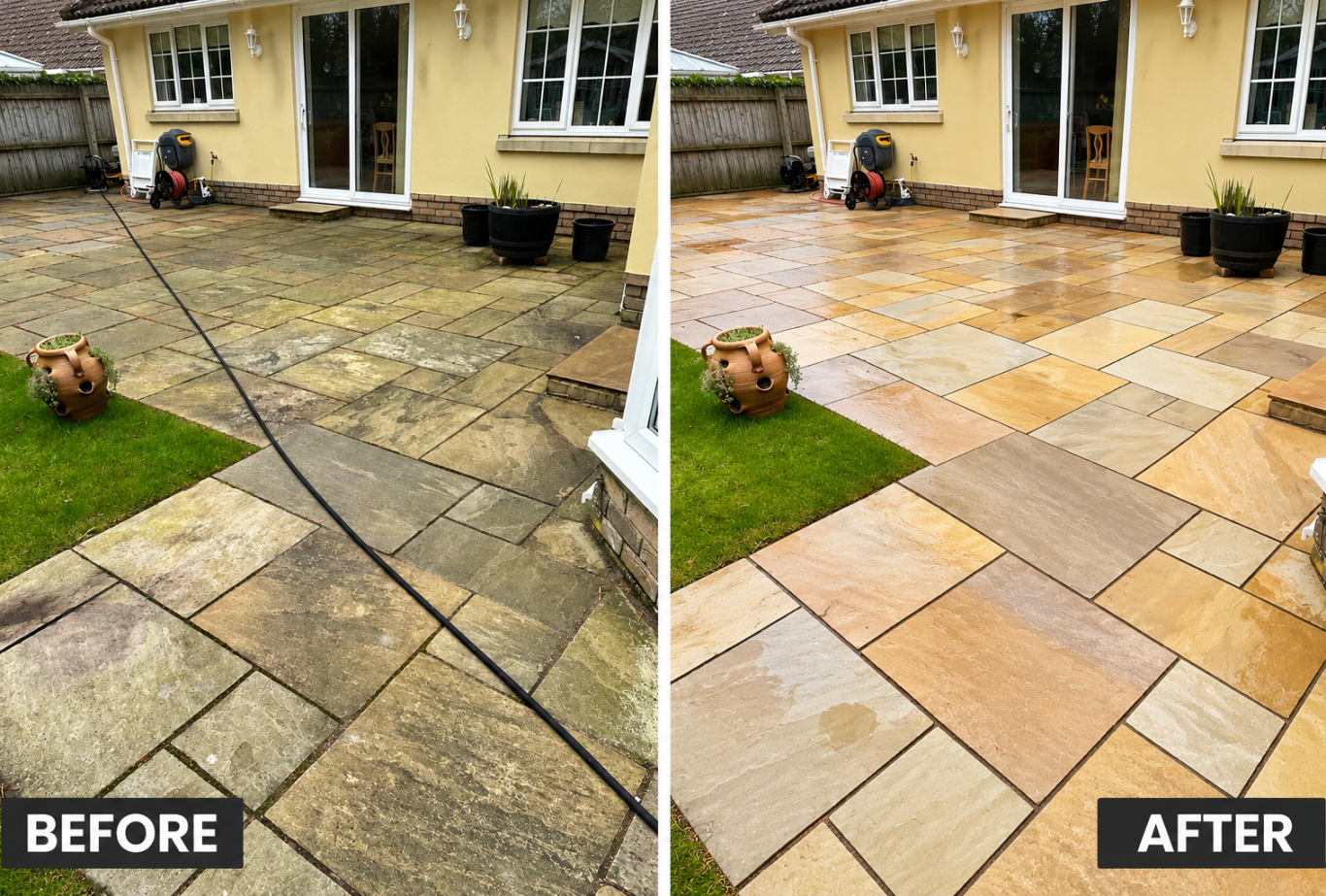
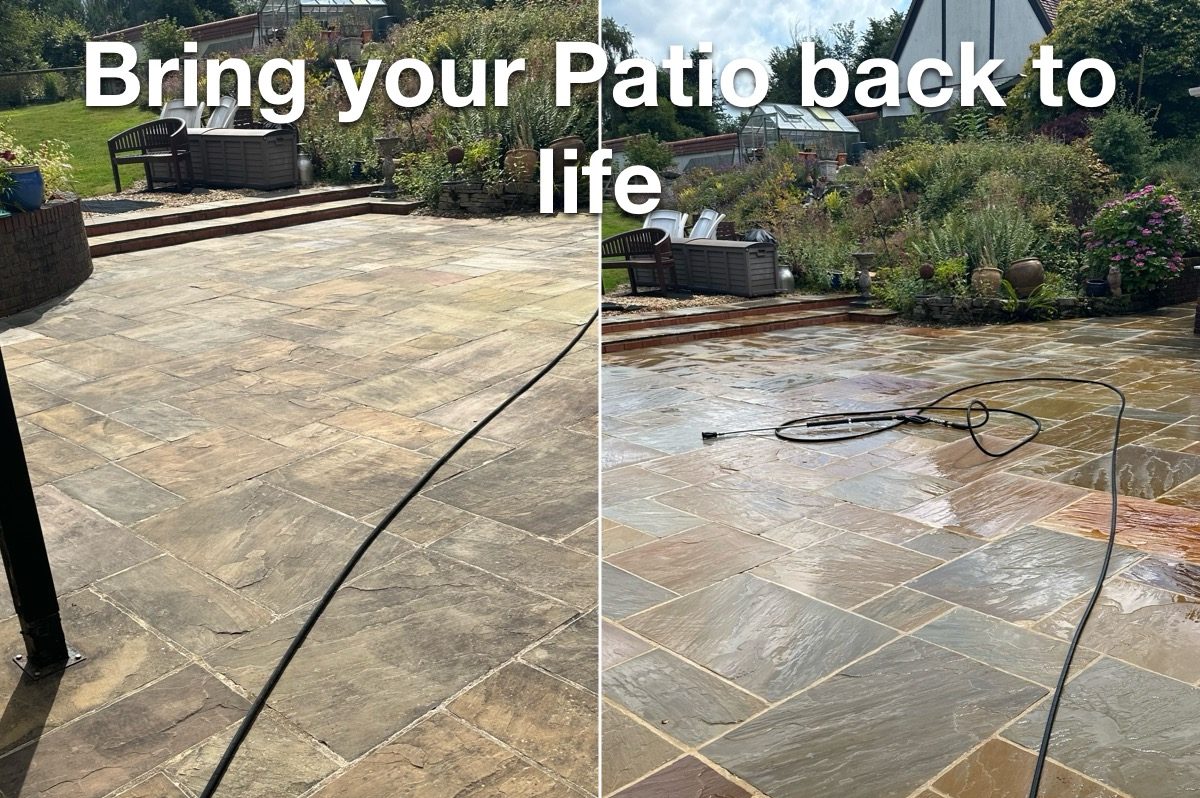
The Complete Guide to Patio Cleaning
Everything You Need to Know About Cleaning, Restoring and Maintaining Your Patio
Patios are an important feature of outdoor spaces, providing attractive and practical areas for relaxing, entertaining and enjoying your garden. However, exposure to the British weather means that even the most carefully maintained patio can gradually become dirty, discoloured and slippery.
Over time, patios accumulate algae, moss, lichen, weeds, dirt, organic debris and atmospheric pollution. These contaminants can affect the appearance of paving, make surfaces slippery and contribute to the deterioration of paving materials and joints.
Regular patio cleaning helps restore the original appearance of outdoor surfaces while improving safety and extending their useful lifespan.
At Mr Softwash, we provide professional patio cleaning services across Poole, Bournemouth, Christchurch, Dorset and Hampshire, using appropriate cleaning techniques for different paving materials.
Whether your patio is constructed from Indian sandstone, limestone, porcelain, concrete, natural stone or block paving, understanding the correct cleaning methods is essential.
This complete guide explains everything you need to know about patio cleaning, including the different types of paving, common staining problems, cleaning methods, equipment, maintenance and professional cleaning services.
1. What Is Patio Cleaning?
Patio cleaning is the process of removing dirt, biological growth, staining and other contaminants from outdoor paving surfaces.
Depending on the paving material and the type of contamination, patio cleaning may involve:
Pressure washing
Soft washing
Manual brushing
Specialist stone cleaning products
Algae and moss treatments
Lichen removal
Oil and grease stain removal
Weed removal
Joint cleaning and maintenance
Appropriate preventative treatments
The objective is not simply to make a patio look cleaner. Effective patio cleaning should remove unwanted contamination without damaging the paving surface, pointing, bedding or surrounding landscaping.
Different patio materials require different approaches.
For example, dense porcelain paving may tolerate carefully controlled pressure washing, while softer natural stone can require a much gentler cleaning process.
The most effective patio cleaning method depends on the paving material, its condition and the contamination present.
2. Why Do Patios Become Dirty?
Patios are constantly exposed to environmental conditions that encourage dirt accumulation and biological growth.
Several factors contribute to patio discolouration.
Algae Growth
Algae are among the most common causes of green and slippery patios.
They thrive in damp conditions, particularly on paving that receives limited sunlight.
Common areas affected include:
North-facing patios
Shaded gardens
Areas beneath trees
Patios surrounded by vegetation
Paving with poor drainage
Areas that remain damp after rainfall
Algae can create a green or dark film across paving surfaces.
When wet, this contamination can become extremely slippery.
Moss Growth
Moss frequently develops in patio joints, cracks and areas where moisture accumulates.
It is particularly common on older patios and paving with deteriorating pointing.
Moss can trap additional moisture and organic debris, creating conditions that encourage further growth.
Lichen
Lichen is a biological growth formed through a relationship between fungi and photosynthetic organisms.
It commonly appears as black, white, grey, yellow or green patches on paving.
Black spot lichen is particularly troublesome because it can become firmly attached to porous paving surfaces.
Standard pressure washing may not completely remove established lichen.
Dirt and Atmospheric Pollution
Airborne dust, soil, vehicle emissions and general environmental pollution gradually accumulate on outdoor paving.
Rainwater can carry these contaminants into the pores and textured surfaces of paving materials.
Organic Staining
Leaves, berries, flowers, soil and other organic materials can produce staining when left on paving.
Tannins from leaves and vegetation are particularly noticeable on lighter natural stone.
Weeds
Weeds can establish themselves in joints containing soil, sand and organic debris.
Their roots may contribute to the deterioration of already weakened joints.
Poor Drainage
Standing water encourages algae and moss growth.
Patios with inadequate falls, blocked drainage channels or uneven paving are particularly vulnerable.
Cleaning can remove contamination, but drainage problems may need separate corrective work.
3. Different Types of Patio Paving
Understanding the material used to construct your patio is one of the most important aspects of choosing the correct cleaning method.
Indian Sandstone Patio Cleaning
Indian sandstone is one of the most popular natural stone paving materials used in UK gardens.
It is available in a variety of colours, including:
Raj Green
Kandla Grey
Autumn Brown
Fossil Mint
Rippon Buff
Modak
Indian sandstone is attractive and durable, but many varieties are porous.
This means moisture and contamination can penetrate the surface.
Common Indian Sandstone Problems
Indian sandstone patios can suffer from:
Green algae
Black spot lichen
Moss
Organic staining
General discolouration
Dirt accumulation
How to Clean Indian Sandstone
Indian sandstone should be cleaned using methods appropriate to its condition and surface finish.
A typical professional cleaning process may include:
Inspecting the paving and pointing.
Removing loose debris.
Applying a suitable cleaning treatment where necessary.
Allowing the treatment to work according to the manufacturer's instructions.
Cleaning using controlled water pressure or a suitable low-pressure method.
Rinsing the paving thoroughly.
Assessing any remaining staining.
Excessive pressure should be avoided because it can damage softer stone, disturb joints and alter the surface texture.
Professional advice: Black spot lichen often requires a specialist treatment rather than pressure washing alone.
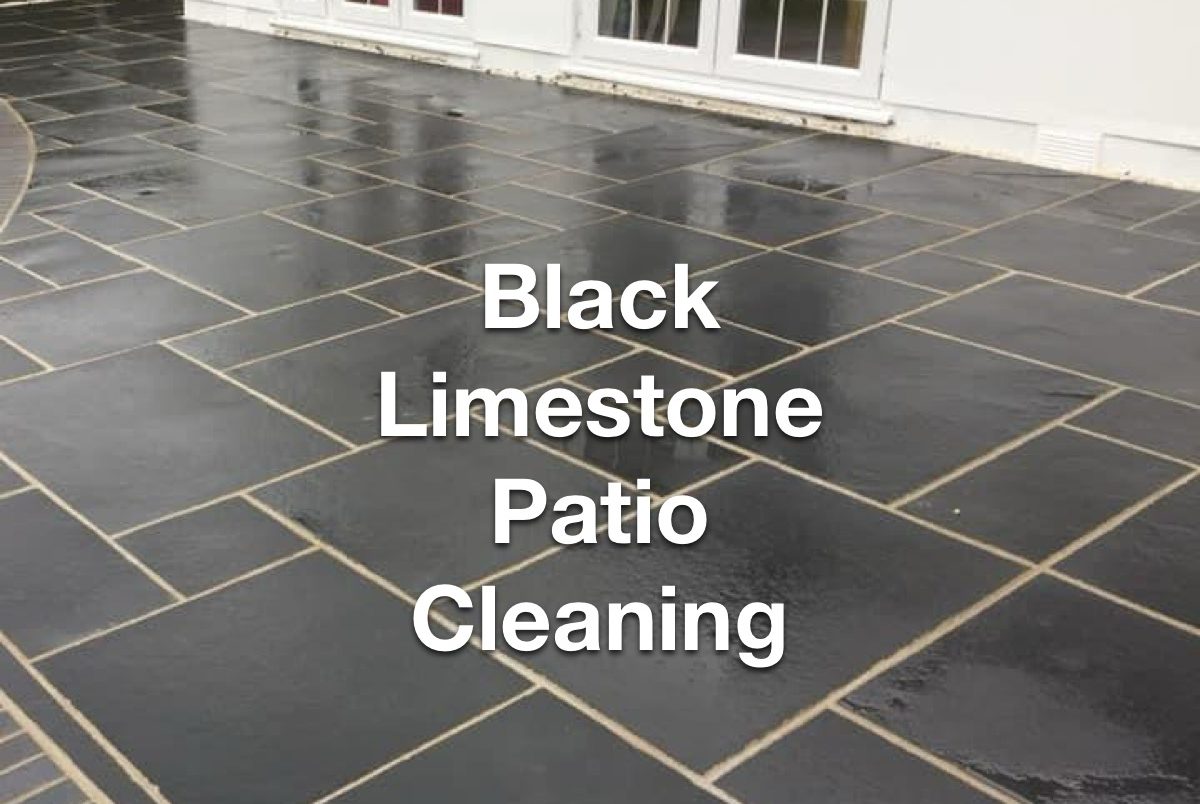
Limestone Patio Cleaning
Limestone is a natural sedimentary stone commonly used for patios.
Popular varieties include black limestone, grey limestone and lighter cream-coloured limestone.
Although limestone creates an attractive finish, it requires particular care during cleaning.
Common Limestone Problems
Limestone patios may experience:
Algae growth
Black spot lichen
Surface staining
General weathering
Colour changes
Damage caused by unsuitable cleaning chemicals
How to Clean Limestone Patios
Limestone is sensitive to acidic substances.
Acidic cleaning products can react with the calcium carbonate in limestone, causing surface etching and permanent damage.
For routine maintenance, use a suitable pH-neutral stone cleaner and a soft brush.
Professional cleaning may involve carefully selected specialist products and controlled rinsing.
Avoid aggressive pressure washing and acidic patio cleaners.
Important: Never use brick acid or other acidic cleaning products on limestone.
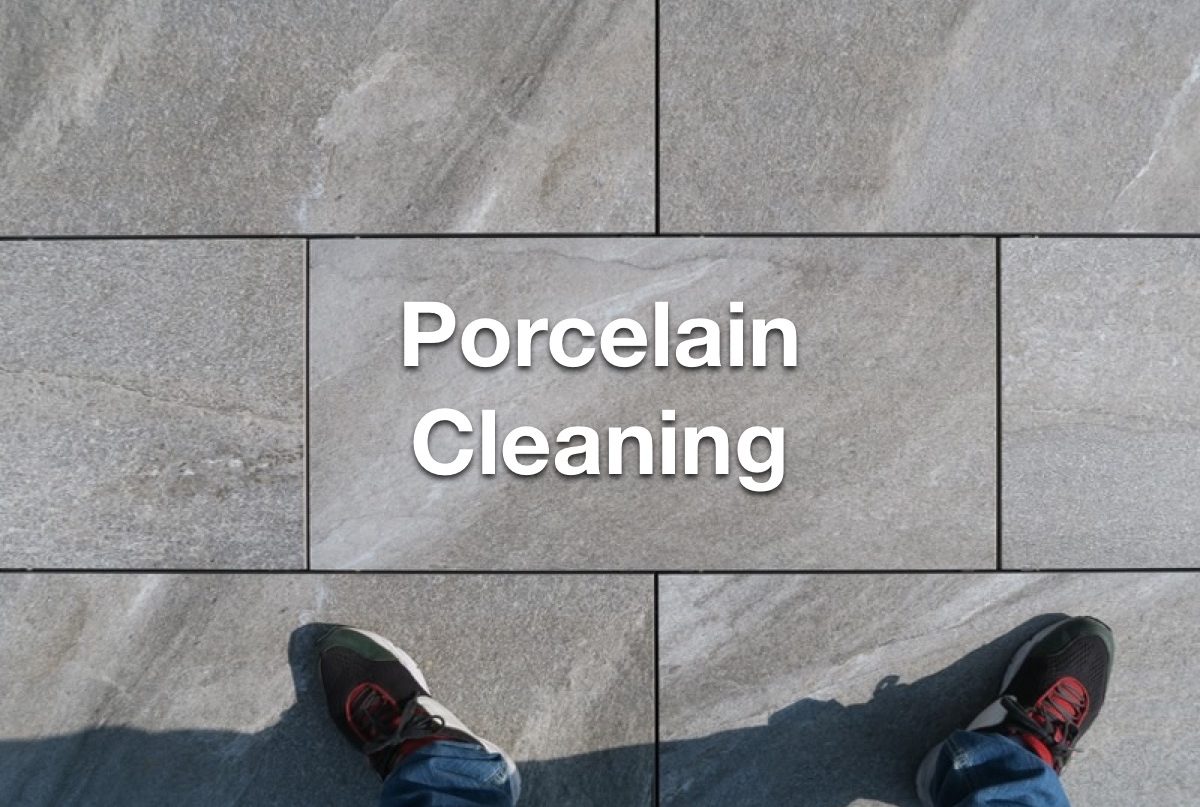
Porcelain Patio Cleaning
Porcelain paving has become increasingly popular because of its contemporary appearance, low porosity and relatively low maintenance requirements.
Porcelain paving is manufactured at high temperatures, producing a dense and durable surface.
Benefits of Porcelain Paving
Low water absorption
Good resistance to many common stains
Durable surface
Wide range of colours and finishes
Relatively straightforward maintenance
However, porcelain patios are not maintenance-free.
Common Porcelain Patio Problems
Porcelain paving can develop:
Surface algae
Dirt accumulation
Organic staining
Grout contamination
General surface deposits
Stubborn marks from outdoor furniture
Textured porcelain surfaces may retain dirt within their surface profile.
How to Clean Porcelain Patios
Routine cleaning usually involves sweeping, applying a suitable cleaner, brushing and rinsing.
More heavily contaminated porcelain patios may benefit from professional pressure washing.
Care must be taken around joints, grout and paving edges.
Avoid abrasive cleaning methods that could damage the surface finish.
Concrete Patio Cleaning
Concrete paving slabs are widely used throughout the UK.
They are relatively affordable, durable and available in numerous designs.
However, concrete is often porous and can accumulate substantial biological contamination.
Common Concrete Patio Problems
Green algae
Moss
Black spot lichen
Dirt accumulation
Oil staining
Surface discolouration
How to Clean Concrete Patios
Concrete patios can often be cleaned using carefully controlled pressure washing.
However, excessive pressure can erode the surface, expose aggregates or create permanent cleaning marks.
Older or weathered concrete paving may require a gentler approach.
Specialist treatments can help remove stubborn biological growth.
Natural Stone Patio Cleaning
Natural stone patios include a wide variety of materials, such as:
Sandstone
Limestone
Slate
Granite
Travertine
Yorkstone
Each stone has different physical and chemical characteristics.
Some materials are relatively dense and durable, while others are porous, softer or sensitive to certain cleaning products.
Before cleaning natural stone, it is important to identify the material and select a compatible cleaning method.
A product suitable for sandstone may not be appropriate for limestone or travertine.
Block Paving Patio Cleaning
Block paving is commonly associated with driveways but is also used for patios, paths and garden seating areas.
Block paving frequently develops moss, algae and weeds between the individual blocks.
Cleaning Block Paving
A professional cleaning process may involve:
Removing weeds and loose debris.
Applying an appropriate cleaning treatment.
Cleaning the paving with controlled pressure.
Rinsing away contamination.
Allowing the surface and joints to dry.
Replacing lost jointing sand where required.
Where conventional kiln-dried sand is used, the joints may need replenishing after cleaning.
Proper joint maintenance helps maintain the stability of the paving.
4. Patio Cleaning Methods Explained
There are several ways to clean a patio.
The most appropriate method depends on the paving material, contamination and surface condition.
Pressure Washing
Pressure washing uses water delivered at elevated pressure to remove dirt, algae and other deposits.
It can be effective for cleaning suitable hard surfaces.
Advantages of Pressure Washing
Removes accumulated dirt
Can produce immediate visual improvements
Effective on many durable paving surfaces
Suitable for larger patio areas
Can remove some surface biological growth
Disadvantages of Pressure Washing
Incorrect pressure washing can:
Damage softer natural stone
Erode concrete surfaces
Dislodge pointing
Remove jointing sand
Create visible cleaning marks
Damage weakened paving edges
Pressure washing may also remove visible algae without adequately treating established biological contamination.
This can allow regrowth.
When Is Pressure Washing Suitable?
Pressure washing may be suitable for sound concrete paving, some sandstone surfaces, porcelain and certain other durable materials.
The pressure, nozzle, working distance and cleaning technique must be selected for the specific surface.
Soft Washing
Soft washing uses low-pressure application and rinsing methods alongside suitable cleaning solutions to remove or treat biological contamination.
Unlike pressure washing, soft washing does not rely primarily on the mechanical force of high-pressure water.
Benefits of Soft Washing
Reduced reliance on high water pressure
Can be suitable for delicate surfaces
Targets biological contamination
Useful for treating algae and other organic growth
Can complement mechanical cleaning
Is Soft Washing Suitable for All Patios?
No.
Cleaning solutions must be compatible with the paving material, sealers, jointing compounds and surrounding environment.
Some chemicals can damage natural stone or cause unwanted discolouration.
Professional assessment is important before using chemical cleaning treatments.
Soft Washing vs Pressure Washing
Pressure washing primarily removes contamination through mechanical action.
Soft washing relies more heavily on suitable cleaning chemistry and controlled application.
In many cases, professional patio cleaning involves a combination of methods.
At Mr Softwash, the priority is selecting an appropriate cleaning process for the surface rather than using one method for every patio.
Manual Patio Cleaning
Manual cleaning involves brushes, water and appropriate cleaning products.
It is particularly useful for:
Small patios
Routine maintenance
Light algae contamination
Delicate paving
Areas unsuitable for pressure washing
A stiff brush may be appropriate for some durable paving materials, but softer brushes should be used on surfaces vulnerable to scratching.
5. How to Clean a Patio: Step-by-Step Guide
If you are planning to clean your patio yourself, following a systematic process can help produce better results while reducing the risk of damage.
Step 1: Identify the Patio Material
Before beginning, determine whether the paving is sandstone, limestone, porcelain, concrete or another material.
This will influence the cleaning products and equipment you can safely use.
If you cannot identify the material, seek professional advice.
Step 2: Inspect the Patio
Check for:
Loose paving slabs
Cracked joints
Damaged pointing
Surface deterioration
Existing sealers
Drainage problems
Stubborn staining
Any defects should be considered before cleaning begins.
Step 3: Remove Loose Debris
Sweep the patio thoroughly.
Remove leaves, soil, moss fragments, twigs and other debris.
Move garden furniture and plant pots where practical.
Step 4: Protect Surrounding Areas
Consider nearby plants, lawns, ponds, pets, painted surfaces and metal fixtures.
Where cleaning products are required, follow all manufacturer instructions for dilution, application, personal protection and environmental precautions.
Prevent cleaning solutions and contaminated runoff from entering surface-water drains, ponds or watercourses.
Step 5: Apply a Suitable Cleaning Product
For light contamination, water and a suitable patio or stone cleaner may be sufficient.
More stubborn biological growth may require a specialist product.
Always check compatibility with the paving material.
Test the product on a small, inconspicuous area before treating the entire patio.
Never mix different cleaning chemicals.
Step 6: Allow the Product to Work
Follow the product manufacturer's recommended contact time.
Do not allow products to dry on the surface unless the instructions specifically permit this.
Step 7: Clean the Surface
Use an appropriate brush or controlled water pressure.
Work methodically across the patio.
Avoid directing concentrated pressure into pointing, joints or vulnerable paving edges.
Step 8: Rinse Thoroughly
Where rinsing is required, remove loosened contamination and cleaning residues in accordance with the product instructions.
Control runoff to avoid damaging surrounding areas.
Step 9: Inspect the Results
Once the patio has dried, inspect it for remaining contamination.
Stubborn stains may require additional treatment.
Avoid repeatedly increasing pressure in an attempt to remove deeply embedded staining.
Step 10: Carry Out Maintenance
After cleaning, inspect the joints and consider whether repairs, repointing or suitable preventative treatments are necessary.
6. How to Remove Green Algae From a Patio
Green algae are one of the most common problems affecting patios in the UK.
They develop rapidly in damp and shaded environments.
Why Is Green Algae a Problem?
Apart from making paving look dirty, algae can create a slippery surface.
This can increase the risk of slips and falls, particularly during wet weather.
Best Methods for Removing Green Algae
Light algae contamination may be removed using a suitable cleaner and brushing.
More established contamination may require professional treatment.
Pressure washing can remove visible growth, while compatible biocidal cleaning products may help control biological contamination.
Improving drainage, removing debris and increasing sunlight exposure where practical can help reduce future growth.
7. How to Remove Black Spots From a Patio
Black spots on patios are frequently caused by lichen.
Black spot lichen is particularly common on sandstone, concrete and other porous paving materials.
It can be difficult to remove because it becomes firmly attached to the surface.
Why Is Black Spot Lichen Difficult to Remove?
Lichen can establish itself within small pores and surface irregularities.
As a result, pressure washing may remove surface contamination without completely eliminating the visible marks.
How to Remove Black Spot Lichen
The most effective approach depends on the paving material and the severity of contamination.
Professional cleaning may involve:
Specialist lichen removal treatments
Controlled application
Appropriate contact times
Gentle mechanical cleaning
Thorough rinsing where required
Additional treatment for persistent contamination
Some black spot staining may require more than one treatment.
Severely weathered or permanently discoloured paving may not return completely to its original appearance.
Important: Avoid aggressive chemical treatments without confirming that they are suitable for the paving material.
8. How to Remove Moss From Patio Joints
Moss frequently develops in joints where moisture and organic debris accumulate.
Removing moss is important for both appearance and maintenance.
Moss Removal Methods
Moss can be removed using appropriate hand tools, brushing or professional cleaning equipment.
Take care not to damage pointing or remove excessive jointing material.
Once the moss has been removed, inspect the joints.
Damaged mortar joints may require repointing, while sand-filled block paving joints may require replacement sand.
Reducing shade, improving drainage and keeping joints clear of organic debris can help discourage regrowth.
9. How to Remove Weeds From a Patio
Weeds commonly grow between paving slabs and blocks.
They establish themselves where seeds collect in soil and organic material.
Removing Patio Weeds
Small weeds can often be removed manually.
Larger weeds may require specialist tools to remove the roots.
Avoid damaging jointing materials during removal.
Once the weeds have been cleared, repair or replenish joints where necessary.
Regular sweeping helps reduce the accumulation of material in which weeds can germinate.
10. Removing Stains From Patio Paving
Different types of patio stains require different treatments.
Using the wrong cleaning product can make staining worse or permanently damage paving.
Oil and Grease Stains
Oil and grease stains may result from barbecues, outdoor cooking equipment, vehicles or garden machinery.
Fresh spills should be absorbed promptly using a suitable absorbent material.
Established stains may require a specialist degreasing product compatible with the paving.
Porous natural stone can absorb oil deeply, making complete removal difficult.
Rust Stains
Rust stains can develop beneath metal garden furniture, plant pots and decorative features.
They often appear as orange or brown marks.
Specialist rust removers may be effective, but many acidic rust-removal products are unsuitable for limestone and other acid-sensitive materials.
Always verify compatibility.
Leaf and Tannin Stains
Leaves and organic debris can leave brown or yellow staining.
These stains are especially noticeable on light-coloured paving.
Prompt removal of leaves can help prevent staining.
Established marks may require a suitable stone-safe cleaner.
Barbecue Stains
Barbecues can cause grease, oil, soot and food stains.
Cleaning methods should be selected according to both the stain and the paving material.
Cement and Mortar Stains
Cement residues can be difficult to remove once hardened.
Acid-based cement removers may damage natural stone and certain paving finishes.
Seek specialist advice before attempting to remove cement contamination.
11. Can You Pressure Wash a Patio?
Yes, many patios can be pressure washed, but not every patio is suitable for high-pressure cleaning.
The main factors to consider are:
Paving material
Surface condition
Age of the patio
Condition of the pointing
Existing surface treatments
Type of contamination
Pressure washing should always be carried out using settings and techniques appropriate to the surface.
Can Pressure Washing Damage a Patio?
Yes.
Excessive pressure can damage paving, erode softer materials and remove jointing compounds.
The risk is particularly significant with weathered concrete, soft sandstone, deteriorating pointing and poorly installed paving.
Professional equipment should be operated by someone familiar with the characteristics of the material being cleaned.
12. Can You Use Bleach to Clean a Patio?
Bleach-based products are sometimes used to remove biological contamination from outdoor surfaces.
However, household bleach is not a universal patio cleaner.
Incorrect use can cause:
Discolouration
Damage to incompatible materials
Harm to plants
Damage to surrounding surfaces
Environmental contamination
Some paving materials, sealers and jointing products may be sensitive to chlorine-based cleaning solutions.
Cleaning products must be selected and used according to their intended purpose, label instructions and applicable safety requirements.
Never mix bleach with acids, ammonia or other cleaning products.
For valuable natural stone patios, professional advice is recommended before using strong chemical treatments.
13. Should You Seal a Patio After Cleaning?
Patio sealing involves applying a suitable protective treatment to the paving surface.
Depending on the product and material, sealing may help reduce water absorption and make certain stains easier to remove.
However, sealing is not always necessary.
Potential Benefits of Patio Sealing
Reduced absorption of some contaminants
Easier routine maintenance
Improved resistance to certain stains
Potential enhancement of paving colour
Protection suited to specific stone types
Potential Disadvantages
Additional cost
Ongoing maintenance requirements
Possible changes to colour or appearance
Risk of trapping moisture
Potential peeling or whitening if incorrectly applied
Possible changes to slip resistance
Not all paving materials require sealing.
Some porcelain paving, for example, is designed to be used without a surface sealer.
Before sealing, ensure the product is compatible with the paving and that the surface meets the manufacturer's requirements for cleanliness and dryness.
14. How Often Should You Clean a Patio?
The ideal cleaning frequency depends on the location, material and surrounding environment.
As a general guide, many patios benefit from a thorough clean approximately once a year.
However, patios in shaded or damp locations may require more frequent attention.
Recommended Maintenance Schedule
Weekly or fortnightly
Sweep away leaves, soil and debris when necessary.
Every few months
Inspect the paving for algae, moss, weeds and staining.
Annually
Consider a more thorough patio clean, particularly after the wetter months.
As required
Treat biological contamination, remove stains and repair damaged joints.
Regular maintenance can reduce the need for intensive cleaning.
15. When Is the Best Time of Year to Clean a Patio?
Patio cleaning can be carried out throughout much of the year, provided weather conditions are suitable.
Spring Patio Cleaning
Spring is a popular time for patio cleaning.
It allows accumulated winter contamination to be removed before the warmer months.
Summer Patio Cleaning
Summer can provide favourable drying conditions.
However, some cleaning products should not be applied in strong sunlight or to excessively hot surfaces.
Autumn Patio Cleaning
Autumn cleaning helps remove leaves, organic staining and accumulated debris.
It can also reduce slippery contamination before winter.
Winter Patio Cleaning
Patio cleaning may still be possible during suitable winter conditions.
However, freezing temperatures, frost and icy surfaces can create safety problems.
Chemical treatments may also be less effective outside their recommended temperature range.
16. Professional Patio Cleaning vs DIY Patio Cleaning
Many homeowners choose to clean their patios themselves.
For small patios with light contamination, DIY cleaning may be practical.
However, heavily contaminated patios and delicate natural stone surfaces can be more challenging.
DIY Patio Cleaning
Professional Patio Cleaning
Suitable for routine maintenance
Suitable for routine and intensive cleaning
Requires access to equipment
Professional equipment provided
Risk of using unsuitable products
Cleaning methods selected for the surface
Can be time-consuming
Often more efficient for larger areas
May struggle with black spot lichen
Specialist treatments may be available
Homeowner manages runoff and safety
Contractor plans appropriate controls
Professional cleaning is particularly worth considering when a patio has extensive black spot lichen, delicate stone, damaged joints or persistent staining.
17. How Much Does Patio Cleaning Cost in the UK?
The cost of professional patio cleaning depends on several factors.
These include:
Total patio area
Type of paving
Severity of contamination
Accessibility
Water availability
Cleaning method required
Specialist stain treatments
Joint repairs or re-sanding
Sealing requirements
Typical Patio Cleaning Costs
As an indicative planning guide, professional patio cleaning may cost approximately £3–£8 per square metre for straightforward work.
Specialist natural stone cleaning, heavy biological contamination, difficult access and additional treatments can increase the price.
Minimum call-out charges may also apply.
These figures are broad estimates rather than confirmed Mr Softwash prices.
Example Patio Cleaning Costs
Patio Size
Illustrative Cleaning Cost
20 m²
£60–£160
30 m²
£90–£240
50 m²
£150–£400
75 m²
£225–£600
100 m²
£300–£800
Actual quotations may differ significantly, particularly for small jobs subject to minimum charges or patios requiring specialist treatment.
For an accurate quotation, contact Mr Softwash with details of your patio.
18. How to Keep Your Patio Clean for Longer
Once a patio has been professionally cleaned, regular maintenance can help preserve its appearance.
Sweep Regularly
Removing leaves, soil and debris reduces the organic material available for biological growth.
Improve Drainage
Standing water encourages algae and moss.
Ensure drainage channels remain clear and investigate persistent pooling.
Reduce Excessive Shade
Where practical, pruning overhanging vegetation may improve airflow and sunlight exposure.
Clean Spills Promptly
Oil, grease, food and other staining substances should be removed as soon as possible.
Maintain Patio Joints
Repair deteriorating mortar joints and replenish sand-filled joints when necessary.
Use Suitable Cleaning Products
Choose products specifically designed for the paving material.
Avoid aggressive chemicals that may damage natural stone.
Consider Preventative Treatments
Suitable professional treatments may help control recurring biological growth.
The treatment must be appropriate for the paving and surrounding environment.
19. Common Patio Cleaning Mistakes
Several common mistakes can result in poor cleaning results or permanent damage.
Using Excessive Pressure
High water pressure can erode paving surfaces and damage joints.
Using Acid on Limestone
Acidic cleaning products can chemically attack limestone and other calcium carbonate-based stones.
Using the Wrong Chemical Treatment
Products suitable for concrete may not be suitable for natural stone.
Ignoring Damaged Pointing
Cleaning patios with deteriorating joints can worsen existing damage.
Failing to Control Runoff
Cleaning solutions and contaminated water can harm surrounding areas if not managed correctly.
Cleaning Without Identifying the Stone
Different paving materials require different cleaning techniques.
Sealing a Damp Patio
Applying an unsuitable sealer or sealing before the paving has dried sufficiently can lead to discolouration and coating failure.
Expecting Every Stain to Disappear
Some stains penetrate deeply or cause permanent changes to the paving.
Professional cleaning can often produce significant improvements, but complete restoration is not always possible.
20. Professional Patio Cleaning in Poole, Bournemouth, Christchurch, Dorset & Hampshire
Why Choose Mr Softwash?
At Mr Softwash, we understand that different patio materials require different cleaning methods.
Our approach focuses on identifying the paving material, assessing the contamination and selecting a suitable cleaning process.
We provide patio cleaning services for a variety of outdoor surfaces, including:
Indian sandstone patios
Limestone patios
Porcelain patios
Concrete paving slabs
Natural stone patios
Block paving patios
Garden pathways
Outdoor seating areas
Residential and commercial paved areas
Patio Cleaning in Poole
We provide patio cleaning services throughout Poole and surrounding areas, helping homeowners maintain attractive and safer outdoor spaces.
Patio Cleaning in Bournemouth
Our patio cleaning services are available across Bournemouth, including properties affected by algae, moss, lichen and general weathering.
Patio Cleaning in Christchurch
We help homeowners in Christchurch restore patios affected by dirt, biological growth and environmental contamination.
Patio Cleaning Across Dorset
Mr Softwash provides patio cleaning services across Dorset, subject to location and project requirements.
Patio Cleaning in Hampshire
We also cover areas of Hampshire, providing appropriate cleaning solutions for a variety of paving materials.
21. Patio Cleaning Frequently Asked Questions
What is the best way to clean a patio?
The best method depends on the paving material and type of contamination.
Routine dirt may be removed using a suitable cleaner and brushing, while more heavily contaminated surfaces may require controlled pressure washing or specialist treatments.
What is the best patio cleaner for black spots?
Black spot lichen often requires a specialist lichen-removal treatment compatible with the paving material.
Ordinary pressure washing may not completely remove established contamination.
Can you pressure wash Indian sandstone?
Indian sandstone can sometimes be pressure washed using carefully controlled settings.
However, excessive pressure can damage softer stone and pointing.
Can you pressure wash porcelain patios?
Many porcelain patios can be cleaned using controlled pressure washing.
Care should be taken around grout, joints and paving edges.
Can you use vinegar to clean a patio?
Vinegar is acidic and can damage limestone, marble, travertine and other acid-sensitive materials.
It should not be considered a universal patio cleaner.
How do you remove green algae from patio slabs?
Green algae can often be removed using an appropriate cleaner and brushing.
More established contamination may require professional cleaning or suitable biological treatments.
How do you remove black lichen from sandstone?
Black lichen may require specialist treatment followed by appropriate cleaning.
Multiple applications may be necessary for stubborn contamination.
How often should a patio be professionally cleaned?
Many patios benefit from professional cleaning approximately once a year, although shaded and damp areas may require more frequent attention.
Does pressure washing remove weeds?
Pressure washing can dislodge weeds and debris from joints, but it may also remove jointing material.
Proper weed removal and joint maintenance are important.
Should I seal my patio after cleaning?
Sealing may be beneficial for certain paving materials, but it is not always necessary.
The decision should depend on the stone type, condition and desired finish.
Can patio cleaning damage pointing?
Yes.
Excessive pressure can dislodge or damage mortar joints and remove sand from block paving.
How long does patio cleaning take?
The time required depends on the patio size, contamination, access and cleaning method.
Small patios may take a few hours, while larger or heavily contaminated areas can require considerably longer.
Will patio cleaning remove all stains?
Not necessarily.
Some stains penetrate deeply into porous paving or cause permanent surface changes.
Professional cleaning can often improve their appearance, but complete removal cannot always be guaranteed.
Is soft washing better than pressure washing?
Neither method is automatically better.
Soft washing can be useful for certain biological contaminants and delicate surfaces, while pressure washing can be effective on suitable durable paving.
The correct choice depends on the surface and contamination.
Can patio cleaning remove slippery algae?
Yes.
Appropriate cleaning can remove or treat algae and improve the condition of the surface.
However, some paving may remain slippery when wet because of its inherent texture or finish.
What is the best time to clean a patio?
Spring is a popular time for patio cleaning, although cleaning can be carried out during other seasons when conditions are suitable.
Can I clean a patio without a pressure washer?
Yes.
Light contamination can often be removed using a brush, water and a suitable cleaning product.
How do you stop moss growing between patio slabs?
Regular cleaning, improved drainage, removal of organic debris and maintaining sound joints can help reduce moss growth.
Can you clean a patio in winter?
Patio cleaning may be possible in mild winter conditions, but freezing temperatures and frost should be avoided.
How much does professional patio cleaning cost?
Costs depend on the patio area, material, condition and cleaning requirements.
A site-specific quotation provides the most accurate price.
22. Patio Cleaning: Final Thoughts
Patio cleaning is an important part of maintaining outdoor spaces.
Over time, algae, moss, lichen, dirt and environmental contamination can affect both the appearance and usability of paving.
Understanding the different types of patio materials and selecting appropriate cleaning methods helps protect paving from unnecessary damage.
Whether you have Indian sandstone, limestone, porcelain, concrete or natural stone paving, regular maintenance can help preserve its appearance and extend its useful lifespan.
While routine cleaning can often be carried out by homeowners, heavily contaminated patios and delicate natural stone surfaces may benefit from professional cleaning.
Choosing the correct cleaning process is essential for achieving effective results without compromising the paving.
23. Contact Mr Softwash for Professional Patio Cleaning
Restore the Appearance of Your Patio With Mr Softwash
Is your patio covered in green algae, moss, black spot lichen or stubborn dirt?
Mr Softwash provides professional patio cleaning services across Poole, Bournemouth, Christchurch, Dorset and Hampshire.
We help homeowners and businesses improve the appearance of their outdoor paving using cleaning methods selected for the surface and contamination.
Whether your patio needs routine maintenance or more intensive cleaning, contact Mr Softwash to discuss your requirements.
Request a Free Patio Cleaning Quote
Mr Softwash – Professional Exterior Cleaning Specialists
Services include:
Patio Cleaning
Driveway Cleaning
Pressure Washing
Soft Washing
K Rend Cleaning
Render Cleaning
Decking Cleaning
Exterior Surface Cleaning
Contact Mr Softwash today to request a free, no-obligation patio cleaning quotation.
Give me a quick call, send me an email or WhatsApp
Written Quote
Tell me what you need and I'll send you a free written quote to your phone or by email
We need your consent to load the translations
We use a third-party service to translate the website content that may collect data about your activity. Please review the details in the privacy policy and accept the service to view the translations.