
Mr Softwash®
The Original Soft Washing Company
"The UK's K Rend & Render Cleaning Specialist"
Mr Softwash®
The Original Soft Washing Company
"The UK's K Rend & Render Cleaning Specialist"
Mr Softwash is a highly rated, professional exterior cleaning service based in Hamworthy, Poole, specialising in low-pressure soft washing and modern driveway treatments. Run by Steve Taylor, who brings over 30 years of industry experience, the company provides safe, non-abrasive cleaning alternatives to traditional high-pressure jet washing across Poole, Bournemouth, Dorset, Hampshire, Wiltshire.
What can be softwashed?
Because of its gentle approach, softwashing is suitable for a wide range of surfaces that could be damaged by high-pressure cleaning.
These include:
Don't let stained and weathered Surfaces spoil the appearance of your property.
For professional Soft washing in Poole, Dorset and Hampshire, contact Mr Softwash today for a free online quote.
WhatsApp a photo & postcode for a free quote
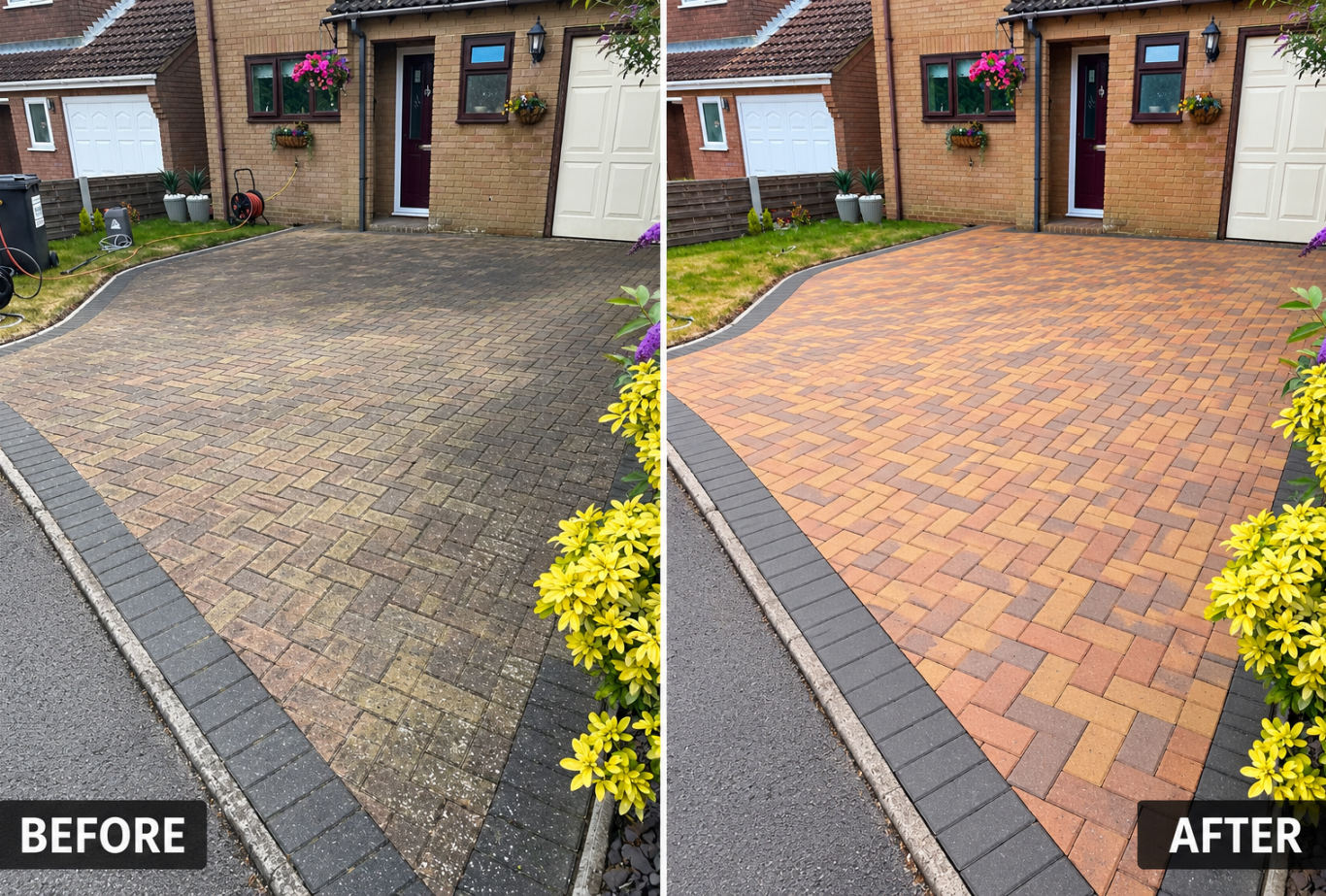
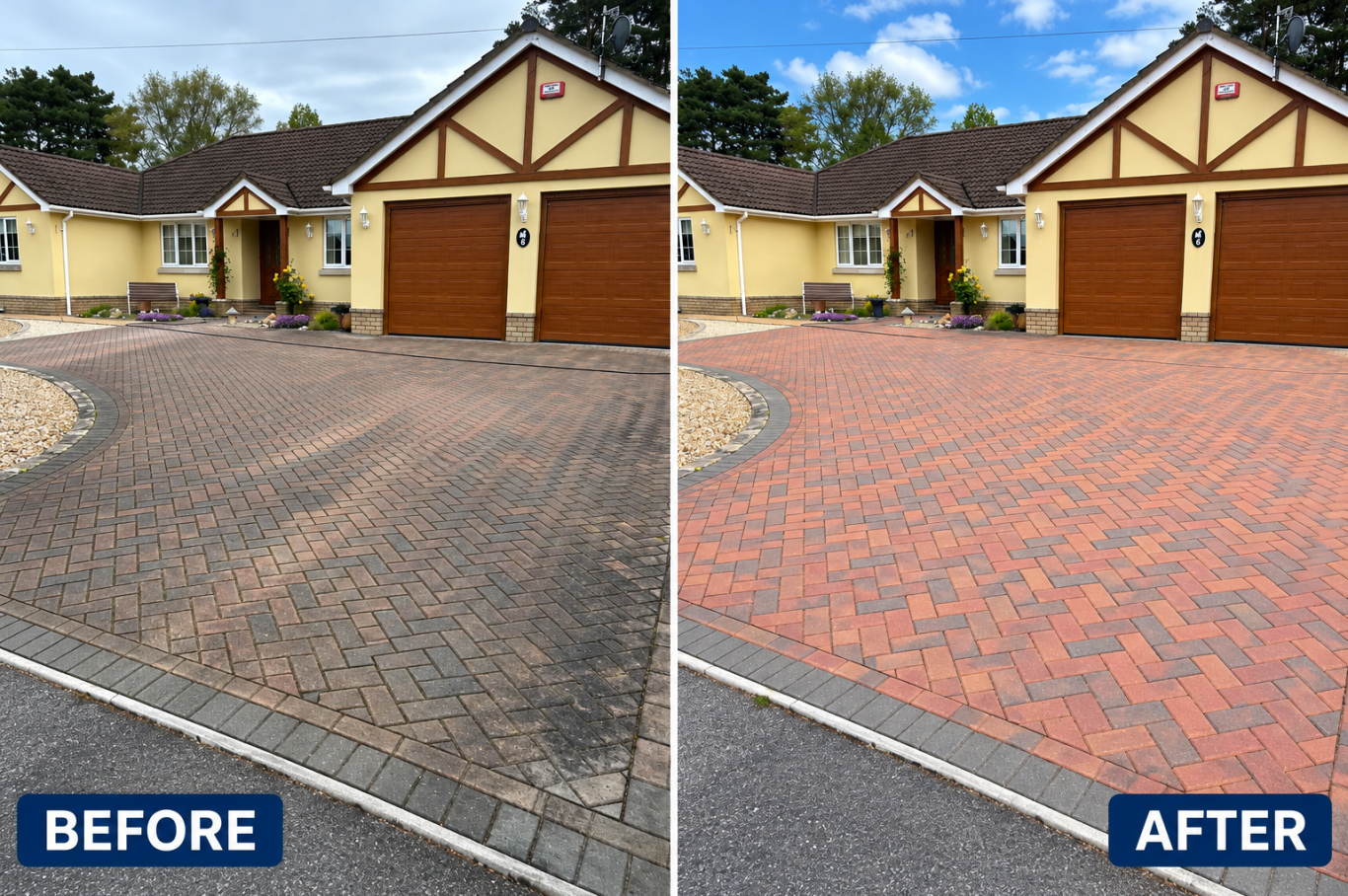
Driveway Cleaning: The Complete Guide to Cleaning, Restoring and Maintaining Your Driveway
Professional Driveway Cleaning Advice from Mr Softwash
Your driveway is one of the first things people notice when approaching your property. Over time, even the most attractive driveway can become discoloured by dirt, algae, moss, weeds, oil stains and general environmental contamination.
Regular driveway cleaning helps maintain the appearance of your property, reduces potentially slippery biological growth and protects the condition of your driveway surface.
However, not all driveways should be cleaned in the same way.
Block paving, concrete, tarmac, natural stone and resin-bound driveways have different characteristics and require suitable cleaning methods to prevent unnecessary damage.
At Mr Softwash, we understand the importance of selecting the appropriate cleaning technique for each surface.
This comprehensive guide explains everything you need to know about driveway cleaning, including:
The different types of driveway surfaces.
The most effective driveway cleaning methods.
Pressure washing versus soft washing.
How to remove moss, algae and weeds.
Cleaning oil stains and stubborn marks.
How to clean block paving, concrete, tarmac and resin driveways.
Driveway cleaning costs.
How often driveways should be cleaned.
Common driveway cleaning mistakes.
Professional driveway cleaning and maintenance.
Whether you are maintaining a domestic driveway or managing a larger commercial surface, this guide will help you understand how to keep it clean, attractive and in good condition.
1. What Is Driveway Cleaning?
Driveway cleaning is the process of removing accumulated dirt, organic growth, stains and other contaminants from a driveway surface.
Depending on the driveway material and its condition, cleaning may involve pressure washing, soft washing, specialist detergents, manual treatment or a combination of methods.
Professional driveway cleaning aims to restore the appearance of the surface without causing unnecessary damage.
What Does Driveway Cleaning Remove?
Common driveway contaminants include:
Algae
Green, brown or dark biological growth that develops on damp driveway surfaces.
Moss
Moss frequently grows between block paving joints and in shaded areas where moisture remains for extended periods.
Lichen
Lichen can produce stubborn white, grey, yellow or black marks on paving, concrete and natural stone.
Weeds
Weeds commonly establish themselves in the joints of block paving and other paved surfaces.
Dirt and Mud
Vehicle movements, foot traffic, rainfall and surrounding landscaping contribute to the accumulation of dirt.
Oil and Grease
Vehicles can leave oil, fuel and grease stains that penetrate porous driveway materials.
Tyre Marks
Repeated vehicle movements can produce dark tyre marks, particularly on lighter surfaces.
Atmospheric Pollution
Traffic emissions, airborne particles and general environmental pollution can gradually discolour driveways.
Removing these contaminants can significantly improve the appearance of a driveway.
2. Why Is Driveway Cleaning Important?
Driveway cleaning provides several benefits beyond improving appearance.
2.1 Improves Kerb Appeal
A clean driveway can transform the appearance of a property.
Driveways often occupy a substantial proportion of the front garden, making their condition particularly noticeable.
Removing dirt, algae and staining can help restore the original appearance of paving and complement the surrounding property.
2.2 Reduces Slippery Surfaces
Algae and moss can become slippery when wet.
This is particularly relevant on sloping driveways, shaded areas and frequently used pedestrian routes.
Removing biological growth can help reduce slip hazards, although cleaning does not eliminate every risk.
2.3 Helps Maintain Driveway Condition
Regular maintenance can prevent excessive accumulations of moss, weeds and debris.
For block paving, keeping joints in good condition is particularly important.
Weeds and moss can contribute to deterioration where joints are already compromised.
2.4 Improves the Appearance of Older Driveways
Many driveways become discoloured gradually.
Homeowners sometimes assume that the original paving colour has permanently faded when much of the change is caused by surface contamination.
Professional cleaning can reveal a substantial improvement without the expense of replacing the driveway.
However, cleaning cannot reverse permanent fading, erosion or structural damage.
2.5 Supports Property Maintenance
A clean, well-maintained driveway contributes to the overall presentation of a property.
This can be particularly beneficial when preparing a house for sale, welcoming visitors or maintaining commercial premises.
3. Understanding Different Driveway Materials
Before cleaning any driveway, it is essential to identify the surface material.
Different driveway types require different cleaning methods, pressures and treatments.
Using an unsuitable technique can result in surface damage, loss of jointing material or deterioration of protective finishes.
3.1 Block Paving Driveways
Block paving is one of the most common driveway surfaces in the UK.
It typically consists of individual concrete or clay blocks laid on a prepared foundation.
The joints between blocks are commonly filled with kiln-dried sand or another specified jointing material.
Common Block Paving Problems
Block paving frequently develops:
Moss between joints.
Weeds and grass growth.
Green algae.
Black lichen spots.
Oil stains.
General dirt and discolouration.
Loss of jointing sand.
How Is Block Paving Cleaned?
Professional block paving cleaning usually involves several stages.
Stage 1: Inspection
The driveway is inspected for damaged blocks, loose paving, drainage issues and the condition of the joints.
Stage 2: Surface Preparation
Loose debris, leaves and larger weeds are removed.
Stage 3: Cleaning
Suitable pressure washing equipment is used where appropriate to remove dirt and contamination.
Pressure must be controlled to avoid unnecessary surface erosion and excessive removal of jointing sand.
Stage 4: Biological Treatment
Where necessary, a suitable treatment may be applied to address remaining algae, moss or lichen.
Stage 5: Re-Sanding
After the driveway has dried sufficiently, lost jointing sand can be replaced using an appropriate material.
Why Is Re-Sanding Important?
Jointing sand helps maintain the integrity of conventional block paving.
If too much sand is removed during cleaning and not replaced, blocks may become less stable and weeds can establish themselves more easily.
Mr Softwash recommends assessing the condition of block paving joints following cleaning and replacing lost jointing material where required.
4. Concrete Driveway Cleaning
Concrete driveways are durable and widely used for residential and commercial properties.
However, concrete is often porous and can accumulate dirt, algae, oil and other contaminants.
Common Concrete Driveway Problems
Green algae.
Black staining.
Oil and grease marks.
Tyre marks.
Dirt accumulation.
Lichen.
Discolouration.
How to Clean a Concrete Driveway
Concrete driveways can often be cleaned using controlled pressure washing.
However, the appropriate method depends on the age, strength, finish and condition of the concrete.
Older or deteriorating concrete may be more vulnerable to surface damage.
Decorative, coloured, stamped or sealed concrete may also require a gentler approach.
Can Concrete Be Pressure Washed?
Yes, many sound concrete driveways can be pressure washed.
However, excessive pressure or an inappropriate nozzle can damage the surface, expose aggregate or create permanent cleaning marks.
For this reason, the cleaning method should always be matched to the specific concrete finish.
Removing Algae from Concrete
Algae can often be removed using a combination of suitable cleaning solutions and controlled washing.
Where biological growth is extensive, an appropriate biocidal treatment may help address remaining contamination.
All treatments should be selected and applied in accordance with product instructions and environmental requirements.
5. Resin Driveway Cleaning
Resin-bound driveways have become increasingly popular throughout Dorset and Hampshire.
They provide an attractive, relatively low-maintenance surface with a wide range of colours and aggregate finishes.
However, resin driveways still require cleaning.
What Is a Resin-Bound Driveway?
A resin-bound driveway is constructed by mixing aggregate with a specialist resin binder before laying the mixture as a continuous surface.
Many resin-bound systems are designed to be permeable, allowing water to pass through the surface into a suitable sub-base.
Common Resin Driveway Problems
Resin-bound surfaces can develop:
Green algae.
Moss.
Dirt and grime.
Tyre marks.
Oil stains.
Organic staining from leaves.
Discolouration.
Blocked surface pores.
How Should Resin Driveways Be Cleaned?
Resin-bound driveways generally require a gentler cleaning approach than conventional concrete or block paving.
A suitable process may include:
Removing loose debris.
Sweeping the surface with a soft brush.
Applying a compatible cleaning solution where required.
Allowing the recommended treatment time.
Gently agitating stubborn contamination.
Rinsing using an appropriate low-pressure method.
Checking that drainage remains effective.
Can You Pressure Wash a Resin Driveway?
Some resin-bound systems can tolerate carefully controlled pressure washing.
However, excessive pressure can dislodge aggregate, damage the resin binder or affect the appearance of the surface.
The manufacturer's cleaning recommendations should always take priority.
Mr Softwash recommends a surface-specific approach to resin driveway cleaning rather than automatically using high-pressure washing.
How Often Should Resin Driveways Be Cleaned?
Many resin driveways benefit from routine sweeping and periodic washing.
The frequency of professional cleaning depends on factors such as shade, tree cover, traffic and biological growth.
For a more detailed explanation, read our guide to resin driveway cleaning and maintenance.
6. Tarmac Driveway Cleaning
Tarmac driveways are common throughout the UK.
They are generally durable but can be vulnerable to inappropriate cleaning methods and certain chemicals.
Common Tarmac Problems
Tarmac driveways may suffer from:
Moss growth.
Algae.
General dirt.
Oil contamination.
Surface fading.
Loose aggregate.
Cracking and deterioration.
Can You Pressure Wash Tarmac?
Pressure washing tarmac requires particular care.
Excessive pressure can dislodge aggregate and damage an already weakened surface.
Older tarmac may be especially vulnerable.
A lower-pressure cleaning approach, combined with a suitable cleaning solution where appropriate, may be preferable.
How to Remove Moss from Tarmac
Loose moss can be removed carefully using a suitable brush.
Remaining biological growth may be treated using a product approved for the intended surface and application.
Avoid aggressive scraping or high-pressure jetting that could damage the tarmac.
Can Oil Stains Be Removed from Tarmac?
Oil stains can be difficult to remove from tarmac.
Petroleum-based products can soften or damage bituminous surfaces.
Cleaning should therefore involve a compatible product and careful assessment.
Some stains may be permanent, particularly where oil has penetrated or damaged the binder.
7. Natural Stone Driveway Cleaning
Natural stone driveways can include sandstone, limestone, granite, slate and other paving materials.
Each stone has different physical and chemical characteristics.
This makes correct cleaning particularly important.
Sandstone Driveways
Sandstone is often porous and may absorb moisture and contaminants.
Aggressive pressure washing can damage softer sandstone surfaces.
A controlled cleaning process is generally recommended.
Limestone Driveways
Limestone is sensitive to acidic cleaning products.
Acid-based cleaners can react with the stone and cause permanent etching.
Only compatible products should be used.
Granite Driveways
Granite is generally harder and more resistant to abrasion than many other natural stones.
However, the condition of the surface, pointing and finish must still be considered.
Slate Driveways
Slate may be vulnerable to surface damage or delamination depending on its type and condition.
A gentle approach is often appropriate.
Professional Natural Stone Cleaning
Before cleaning natural stone, identify:
The stone type.
The surface finish.
The condition of the joints.
Existing sealers or coatings.
The nature of the contamination.
The suitability of the proposed cleaning solution.
A small test area is advisable before undertaking extensive cleaning.
8. Pressure Washing vs Soft Washing Driveways
Two commonly discussed driveway cleaning methods are pressure washing and soft washing.
Although both can be effective, they work differently.
What Is Pressure Washing?
Pressure washing uses pressurised water to remove dirt, biological growth and surface contamination.
It can be effective on suitable hard surfaces such as sound concrete and many conventional block paving driveways.
Advantages of Pressure Washing
Removes accumulated dirt.
Can produce immediate visual improvements.
Suitable for many hard driveway surfaces.
Can remove substantial surface contamination.
Useful for preparing certain surfaces for further maintenance.
Disadvantages of Pressure Washing
Excessive pressure can damage surfaces.
Jointing sand may be displaced.
Some coatings and finishes can be affected.
Biological growth may return if underlying conditions remain favourable.
Incorrect techniques can create visible cleaning marks.
What Is Soft Washing?
Soft washing is a cleaning approach that uses relatively low-pressure application methods together with suitable cleaning solutions to address dirt and biological contamination.
The cleaning solution performs much of the work rather than relying primarily on mechanical water pressure.
Advantages of Soft Washing
Reduces reliance on high-pressure water.
Can be suitable for some delicate surfaces.
Can help treat biological contamination.
May complement conventional pressure washing.
Allows a surface-specific cleaning approach.
Disadvantages of Soft Washing
Not every cleaning solution is suitable for every driveway.
Some ingrained dirt requires mechanical cleaning.
Chemicals require careful handling.
Runoff must be controlled.
Certain treatments require additional dwell time or follow-up.
Which Method Is Best?
The most appropriate method depends on the driveway material and the contamination present.
Driveway Type
Typical Cleaning Approach
Block paving
Controlled pressure washing and joint maintenance
Concrete
Controlled pressure washing or compatible specialist cleaning
Resin-bound
Gentle washing and compatible cleaning products
Tarmac
Low-pressure cleaning and suitable treatments
Sandstone
Carefully controlled washing and stone-compatible products
Limestone
Gentle cleaning with non-acidic compatible products
Granite
Controlled cleaning appropriate to the finish
Decorative concrete
Surface-specific cleaning to protect coatings and finishes
The best driveway cleaning method is the one that removes contamination effectively while protecting the surface.
9. How to Remove Moss from a Driveway
Moss is one of the most common driveway maintenance problems in the UK.
It thrives in damp, shaded conditions and frequently develops between paving joints.
Why Does Moss Grow on Driveways?
Moss growth is encouraged by:
Persistent moisture.
Shaded areas.
Poor drainage.
Accumulated organic debris.
Limited sunlight.
Damp paving joints.
How to Remove Driveway Moss
The appropriate method depends on the driveway material.
Step 1: Remove Loose Moss
Carefully remove loose moss using a suitable brush or hand tool.
Step 2: Clean the Surface
Use a cleaning method appropriate for the driveway.
Step 3: Treat Remaining Growth
Where necessary, apply a suitable product specifically authorised for the intended use.
Step 4: Address Contributing Conditions
Improve drainage where possible and remove accumulated leaves and debris.
Step 5: Maintain the Driveway
Regular sweeping and periodic cleaning can help reduce future growth.
Does Moss Grow Back?
Yes.
Moss can return when moisture and shade remain favourable.
Regular maintenance can help control regrowth, but no cleaning method can guarantee permanent moss prevention.
10. How to Remove Algae from Driveways
Algae commonly appears as green, brown or dark discolouration.
It frequently develops in damp areas and may become slippery when wet.
Why Does Algae Grow on Driveways?
Common contributing factors include:
High moisture levels.
Shaded surfaces.
Poor drainage.
Damp weather.
Organic debris.
Limited air circulation.
How Is Driveway Algae Removed?
Algae can often be removed using suitable washing methods and compatible cleaning products.
The correct treatment depends on the driveway surface.
Porous materials may require different cleaning methods from resin-bound or coated surfaces.
How Can Algae Regrowth Be Reduced?
Keeping the driveway clear of leaves and debris, improving drainage and undertaking regular maintenance can help reduce algae growth.
11. How to Remove Black Spots from Driveways
Black spots are a common problem on block paving, concrete and natural stone.
Some stubborn black spots are caused by lichen, although other forms of staining can produce a similar appearance.
What Is Black Spot Lichen?
Lichen is a biological association involving fungi and photosynthetic organisms.
Certain lichens form dark, tightly attached growth on paving surfaces.
They can be difficult to remove because they adhere strongly to the substrate.
Will Pressure Washing Remove Black Spots?
Pressure washing may remove some visible contamination.
However, stubborn lichen can remain attached even after conventional washing.
Excessively increasing water pressure to remove remaining spots can damage the driveway.
What Is the Best Way to Remove Black Spots?
A suitable surface-compatible treatment may be needed.
The appropriate product and method depend on the paving material, the severity of the contamination and any existing coatings.
Results can vary, and heavily established lichen may require repeat treatment.
12. How to Remove Oil Stains from Driveways
Oil stains are among the most difficult driveway contaminants.
Motor oil, hydraulic fluid and other petroleum products can penetrate porous materials.
Why Are Oil Stains Difficult to Remove?
Concrete, block paving and natural stone can absorb oil below the surface.
Once absorbed, the oil may remain even after the surface has been washed.
How to Clean Fresh Oil Stains
For a fresh spill:
Prevent the oil from spreading.
Use a suitable absorbent material.
Collect and dispose of contaminated material appropriately.
Apply a compatible driveway degreaser if suitable.
Follow the manufacturer's instructions.
Prevent contaminated wash water from entering surface-water drains.
Can Old Oil Stains Be Removed?
Older oil stains may require specialist degreasers, poultice treatments or repeated cleaning.
Complete removal is not always possible.
Important: Oil Stains on Resin and Tarmac
Resin-bound and tarmac surfaces require particular care.
Some solvents and aggressive degreasers can damage binders or protective finishes.
Always confirm product compatibility before treatment.
13. How to Remove Weeds from Block Paving
Weeds commonly establish themselves between paving blocks.
They may grow from seeds deposited in the joints by wind, birds or surrounding vegetation.
Why Do Weeds Grow Between Blocks?
Weeds can establish themselves where organic material and moisture accumulate in the joints.
Missing or deteriorating jointing sand may make the problem worse.
How to Remove Driveway Weeds
Small weeds can often be removed manually.
For larger areas, suitable mechanical removal methods may be used.
Where chemical weed control is considered, only products authorised for the specific location and intended use should be applied.
Preventing Weed Growth
Maintaining joints, removing debris and regularly sweeping the driveway can help reduce weed establishment.
Re-sanding conventional block paving after cleaning is an important part of maintaining the surface.
14. The Professional Driveway Cleaning Process
Professional driveway cleaning involves more than simply washing the surface with a pressure washer.
A structured approach helps achieve consistent results while reducing the risk of damage.
Step 1: Driveway Inspection
The driveway is assessed to identify:
Surface material.
General condition.
Biological contamination.
Oil stains.
Damaged paving.
Loose joints.
Drainage arrangements.
Existing coatings.
Nearby plants and sensitive areas.
Step 2: Selecting the Cleaning Method
The cleaning technique is chosen according to the driveway material and contamination.
This may involve pressure washing, low-pressure cleaning, suitable detergents or a combination of methods.
Step 3: Preparing the Area
Loose debris is removed.
Nearby surfaces, plants and drainage points are assessed, and appropriate protective measures are taken.
Step 4: Applying Cleaning Treatments
Where necessary, a compatible cleaning product is applied according to the manufacturer's instructions.
Not every driveway requires chemical treatment.
Step 5: Surface Cleaning
The driveway is cleaned using suitable equipment and controlled techniques.
The aim is to remove contamination without unnecessary abrasion or damage.
Step 6: Rinsing and Wastewater Management
The surface is rinsed where required.
Wash water, chemicals and removed contaminants must be managed appropriately to prevent pollution.
Step 7: Inspection
The cleaned surface is inspected to identify any remaining contamination or areas requiring additional attention.
Step 8: Joint Maintenance
For conventional block paving, jointing material may need to be replenished after the surface has dried.
Step 9: Optional Additional Treatments
Depending on the surface and its condition, further maintenance may include suitable biological treatments or sealing.
These should only be undertaken when appropriate for the specific material.
15. Driveway Cleaning Costs in the UK
The cost of professional driveway cleaning varies considerably.
There is no single price that applies to every driveway.
Several factors influence the final quotation.
What Affects Driveway Cleaning Prices?
Driveway Size
Larger driveways generally require more time and resources.
Driveway Material
Some surfaces require specialist cleaning methods or products.
Level of Contamination
Heavy moss, algae, lichen and oil staining can increase the work involved.
Access
Restricted access or difficult working conditions may affect the cost.
Drainage and Wastewater Control
Some properties require additional measures to manage cleaning water and contamination.
Re-Sanding
Block paving may require replacement jointing sand after cleaning.
Additional Treatments
Specialist stain removal, biological treatments and sealing may be priced separately.
How Much Does Driveway Cleaning Cost Per Square Metre?
Professional driveway cleaning is often priced according to surface area, but square-metre rates vary with location, surface condition, job size and the services included.
Small driveways may also be subject to a minimum service charge.
For an accurate quotation, the driveway should be assessed rather than relying on a generic national price.
Is Professional Driveway Cleaning Worth It?
Professional cleaning can be worthwhile when a driveway has extensive contamination, difficult staining or a surface that requires specialist care.
It may improve the appearance of an existing driveway at a substantially lower cost than replacement, provided the surface remains structurally sound.
16. How Often Should You Clean Your Driveway?
The ideal cleaning frequency depends on the driveway material, location and surrounding environment.
Many residential driveways benefit from a thorough clean approximately every 12–24 months, although this is a general maintenance guide rather than a fixed requirement.
Driveways in shaded, damp or heavily wooded locations may require more frequent attention.
Factors Affecting Cleaning Frequency
Shade
Driveways receiving little sunlight may remain damp for longer.
Trees
Overhanging trees contribute leaves, organic debris and staining.
Drainage
Poor drainage encourages prolonged moisture retention.
Vehicle Use
Frequent vehicle movements contribute tyre marks, dirt and oil contamination.
Driveway Material
Porous surfaces may retain contamination differently from non-porous or coated surfaces.
Previous Maintenance
Regular sweeping and prompt stain removal can reduce the need for intensive cleaning.
Recommended Maintenance Schedule
Maintenance Task
Suggested Frequency
Remove leaves and debris
Weekly or as needed
Inspect for weeds and moss
Monthly
Remove fresh oil stains
As soon as possible
Gentle routine washing
As required
Professional driveway cleaning
Often every 12–24 months
Inspect block paving joints
After cleaning and periodically
Check drainage
Regularly, especially after heavy rainfall
Assess sealing condition
According to surface and product guidance
17. Should You Seal a Driveway After Cleaning?
Driveway sealing involves applying a compatible protective product to a suitable surface.
Sealers are available for certain types of concrete, block paving and natural stone.
However, not every driveway should be sealed.
Potential Benefits of Driveway Sealing
Depending on the product and surface, sealing may:
Reduce absorption of some contaminants.
Make routine cleaning easier.
Enhance or preserve surface appearance.
Provide some resistance to staining.
Help protect certain finishes.
Potential Disadvantages
Inappropriate sealing can cause problems, including:
Discolouration.
Patchy finishes.
Trapped moisture.
Reduced surface permeability.
Slippery finishes.
Peeling or coating failure.
Should Resin Driveways Be Sealed?
Resin-bound driveways should not automatically be treated with conventional paving sealers.
The correct maintenance approach depends on the original resin system and the manufacturer's recommendations.
Should Block Paving Be Sealed?
Some block paving systems can benefit from suitable sealing products.
However, the blocks must be clean and adequately dry, and the product must be compatible with the paving and jointing material.
Sealing is an optional maintenance treatment, not an essential part of every driveway clean.
18. Common Driveway Cleaning Mistakes
Incorrect cleaning techniques can cause permanent damage.
Understanding common mistakes helps homeowners avoid unnecessary repairs.
Using Excessive Pressure
High-pressure water can erode concrete, damage softer stone and dislodge jointing materials.
Using the Wrong Cleaning Chemicals
Some products can stain, etch or damage driveway surfaces.
Acidic cleaners are particularly unsuitable for acid-sensitive materials such as limestone.
Pressure Washing Resin Too Aggressively
Excessive pressure may loosen aggregate or damage the resin binder.
Failing to Replace Jointing Sand
Block paving may require re-sanding after cleaning.
Ignoring missing jointing material can contribute to maintenance problems.
Ignoring Drainage
Cleaning water containing dirt, oil or chemicals must not be allowed to cause pollution.
Using Household Bleach Without Assessing the Risks
Household bleach is not a universal driveway cleaner.
It can damage plants, affect some materials and create environmental hazards if used or disposed of incorrectly.
Never mix bleach with acids, ammonia or other cleaning chemicals.
Cleaning Damaged Surfaces Aggressively
Cracked concrete, deteriorating tarmac and loose paving may require repair before intensive cleaning.
Expecting Every Stain to Disappear
Some staining penetrates deeply into porous materials.
Professional cleaning can often improve these marks, but complete removal cannot always be guaranteed.
19. Driveway Cleaning in Winter
Winter conditions can make driveway cleaning more challenging.
Low temperatures, persistent moisture and reduced daylight can affect cleaning and drying times.
Can Driveways Be Cleaned in Winter?
Driveways can sometimes be cleaned during suitable winter weather.
However, cleaning should be avoided where freezing conditions could create ice or damage vulnerable surfaces.
Winter Driveway Maintenance Tips
Remove accumulated leaves.
Keep drainage channels clear.
Monitor moss and algae growth.
Avoid washing when freezing temperatures are expected.
Use de-icing products only where suitable for the driveway material.
Check for loose paving or damaged joints.
Winter maintenance is particularly important on sloping driveways and pedestrian access routes.
20. Driveway Cleaning in Spring and Summer
Spring and summer can be suitable periods for more extensive driveway maintenance.
Warmer conditions often allow surfaces to dry more readily.
Spring Driveway Cleaning
Spring cleaning can help remove contamination accumulated during autumn and winter.
Common tasks include:
Removing moss and algae.
Cleaning block paving.
Clearing drainage channels.
Replacing missing jointing sand.
Inspecting paving for winter damage.
Summer Driveway Maintenance
Summer can be useful for cleaning and undertaking certain follow-up treatments.
However, extremely hot surfaces can cause cleaning solutions to dry too quickly.
Cleaning products should always be applied within the temperature and weather conditions specified by the manufacturer.
21. DIY Driveway Cleaning vs Professional Driveway Cleaning
Many homeowners undertake basic driveway maintenance themselves.
Routine sweeping, removing leaves and cleaning small stains can often be completed without specialist equipment.
However, extensive contamination or delicate surfaces may require professional attention.
DIY Driveway Cleaning
Advantages
Suitable for routine maintenance.
Can reduce costs for small tasks.
Allows immediate attention to fresh spills.
Useful for regular sweeping and debris removal.
Limitations
Domestic equipment may be less efficient for large areas.
Incorrect pressure can damage paving.
Specialist stains may be difficult to remove.
Chemical selection requires care.
Wastewater management can be challenging.
Professional Driveway Cleaning
Advantages
Surface-specific cleaning techniques.
Suitable specialist equipment.
Experience with different paving materials.
More efficient cleaning of larger areas.
Access to appropriate stain-removal methods.
Assessment of jointing and maintenance requirements.
When Should You Consider Professional Cleaning?
Professional cleaning may be particularly useful when:
The driveway is heavily contaminated.
Large areas of moss or lichen are present.
Oil staining is extensive.
The driveway contains delicate natural stone.
The surface is resin-bound.
Block paving requires cleaning and re-sanding.
Previous cleaning attempts have been unsuccessful.
22. Environmentally Responsible Driveway Cleaning
Driveway cleaning should be undertaken with consideration for the surrounding environment.
Cleaning wastewater can contain sediment, oil, detergents and other contaminants.
Protecting Drains and Watercourses
Surface-water drains may discharge into local watercourses.
Contaminated cleaning water should not be allowed to enter these systems.
The appropriate wastewater management method depends on the cleaning process, contaminants and drainage arrangements.
Using Cleaning Chemicals Responsibly
Cleaning products should be selected according to the surface and intended application.
Users must follow the product label, safety instructions and applicable legal requirements.
Protecting Plants and Landscaping
Nearby plants and landscaped areas may be sensitive to cleaning products.
Suitable protection and runoff control should be considered before treatment.
Reducing Unnecessary Chemical Use
Not every driveway requires chemical cleaning.
Mechanical cleaning, routine maintenance and carefully selected treatments can help minimise unnecessary product use.
At Mr Softwash, we believe effective driveway cleaning should balance cleaning performance, surface protection and environmental responsibility.
23. Driveway Cleaning in Poole, Bournemouth, Christchurch, Dorset and Hampshire
Driveways throughout Dorset and Hampshire experience a range of environmental conditions.
Coastal locations, shaded residential areas, tree cover and periods of damp weather can all contribute to driveway contamination.
Driveway Cleaning in Poole
Properties in Poole feature a wide variety of driveway materials, including block paving, concrete, resin-bound surfacing and natural stone.
Regular cleaning can help remove accumulated dirt, algae, moss and staining.
Driveway Cleaning in Bournemouth
Bournemouth properties often feature established gardens, mature trees and shaded driveways.
These conditions can encourage moss, algae and organic staining.
A suitable maintenance programme can help keep driveway surfaces clean and presentable.
Driveway Cleaning in Christchurch
Driveways in Christchurch can experience biological growth, general weathering and contamination from surrounding vegetation.
Surface-specific cleaning helps address these problems while protecting the paving material.
Driveway Cleaning Across Dorset
From residential block paving to larger concrete driveways, properties throughout Dorset require different cleaning approaches.
Choosing the correct method is particularly important for decorative surfaces and natural stone.
Driveway Cleaning in Hampshire
Properties throughout Hampshire may experience similar driveway maintenance issues, including moss, algae, weeds and traffic-related staining.
Regular maintenance can help preserve appearance and reduce the accumulation of contamination.
Mr Softwash Driveway Cleaning
Mr Softwash provides specialist exterior cleaning expertise, with an emphasis on choosing appropriate cleaning techniques for different surfaces.
For driveway cleaning enquiries in Poole, Bournemouth, Christchurch, Dorset and Hampshire, contact Mr Softwash to discuss your surface and cleaning requirements.
24. Driveway Cleaning Frequently Asked Questions
What Is the Best Way to Clean a Driveway?
The best cleaning method depends on the driveway material.
Sound concrete and conventional block paving can often be cleaned using controlled pressure washing.
Resin-bound driveways, tarmac and delicate natural stone may require gentler techniques.
Can You Pressure Wash Block Paving?
Yes.
Block paving can generally be pressure washed when suitable equipment and techniques are used.
However, excessive pressure can damage blocks and remove jointing sand.
Re-sanding may be necessary after cleaning.
Can You Pressure Wash a Resin Driveway?
Some resin-bound driveways can tolerate carefully controlled pressure washing.
However, the manufacturer's cleaning instructions should always be followed.
Excessive pressure can damage the resin binder or dislodge aggregate.
Can You Pressure Wash Tarmac?
Tarmac can be vulnerable to damage from high-pressure water.
Gentler cleaning methods are often preferable, particularly on older or deteriorating surfaces.
How Do You Remove Moss from Block Paving?
Moss can be removed using suitable manual or mechanical methods.
Where appropriate, a compatible treatment may be used to address remaining biological growth.
The condition of the paving joints should also be checked.
What Removes Black Spots from Driveways?
Some black spots are caused by lichen.
Specialist surface-compatible treatments may be required because lichen can remain attached after ordinary washing.
Does Pressure Washing Remove Oil Stains?
Pressure washing may remove surface oil contamination, but oil that has penetrated porous materials can be difficult to extract.
Suitable degreasers or specialist treatments may improve results.
How Long Does Driveway Cleaning Take?
Cleaning time depends on the driveway size, material, level of contamination and accessibility.
A small residential driveway may take several hours, while larger or heavily contaminated areas may require longer.
Drying, re-sanding and additional treatments may extend the overall process.
How Long Does a Clean Driveway Stay Clean?
This depends on shade, moisture, traffic, surrounding vegetation and maintenance.
Biological growth can return when conditions remain favourable.
Regular sweeping and periodic cleaning can help maintain results.
Is Soft Washing Better Than Pressure Washing?
Neither method is universally better.
Pressure washing can be effective for removing dirt from suitable hard surfaces.
Soft washing can be useful for treating biological contamination on surfaces where lower-pressure methods are preferable.
The correct approach depends on the driveway.
Should I Seal My Driveway After Cleaning?
Not necessarily.
Some driveway surfaces may benefit from compatible sealing products.
Others, particularly certain resin-bound systems, may not require or be suitable for conventional sealers.
Can Driveway Cleaning Damage Paving?
Yes, if inappropriate equipment, pressure or chemicals are used.
Correct surface identification and cleaning methods are essential.
How Often Should Block Paving Be Cleaned?
Many block paving driveways benefit from professional cleaning approximately every 12–24 months.
Heavily shaded or contaminated driveways may need more frequent maintenance.
Can Driveway Cleaning Remove Weeds Permanently?
No cleaning method can guarantee permanent weed prevention.
Regular maintenance, appropriate jointing and removal of accumulated debris can help reduce regrowth.
Can You Clean a Driveway Without Chemicals?
Yes.
Some driveway contamination can be removed through sweeping, brushing and controlled washing.
However, certain biological growth and stubborn stains may require suitable specialist treatments.
Can You Clean a Driveway in Winter?
Yes, when weather conditions are suitable.
Cleaning should be avoided when freezing conditions could create hazards or damage the surface.
Is Professional Driveway Cleaning Worth the Money?
Professional driveway cleaning can improve the appearance of a property, address extensive contamination and reduce the risk of damage caused by unsuitable DIY techniques.
It can be particularly worthwhile for large driveways and specialist surfaces.
25. Why Choose Mr Softwash for Driveway Cleaning?
Driveway cleaning requires an understanding of different materials, contamination types and cleaning methods.
At Mr Softwash, we recognise that every driveway is different.
Our approach to exterior cleaning is based on selecting suitable methods for the surface rather than relying on excessive water pressure.
Surface-Specific Cleaning
Different driveway materials require different cleaning techniques.
Understanding these differences helps protect the surface while achieving effective cleaning results.
Knowledge of Biological Contamination
Moss, algae and lichen are common problems on UK driveways.
Identifying the type of contamination helps determine the most appropriate treatment.
Professional Exterior Cleaning Expertise
Mr Softwash focuses on exterior cleaning methods designed to remove contamination while considering the condition of the underlying surface.
Local Knowledge
Properties throughout Poole, Bournemouth, Christchurch, Dorset and Hampshire experience different environmental conditions.
Understanding these conditions can help inform appropriate driveway maintenance.
A Focus on Long-Term Maintenance
Effective driveway care involves more than achieving an immediate visual improvement.
Routine maintenance, suitable cleaning methods and attention to drainage and jointing can help keep driveways in better condition.
26. Driveway Cleaning: Final Advice
A clean driveway can make a significant difference to the appearance of your property.
However, achieving good results requires more than simply applying high-pressure water.
Different materials need different cleaning techniques.
Block paving may require controlled pressure washing and re-sanding.
Concrete can often be cleaned mechanically, provided its condition and finish are suitable.
Resin-bound driveways generally benefit from gentler cleaning methods.
Tarmac and natural stone require particular care to avoid unnecessary surface damage.
Regular maintenance can help reduce moss, algae, weeds and accumulated dirt, while professional cleaning can address more extensive contamination.
The key is to select a cleaning method that is appropriate for the surface.
Professional Driveway Cleaning Advice from Mr Softwash
Looking for professional driveway cleaning in Poole, Bournemouth, Christchurch, Dorset or Hampshire?
Mr Softwash can help you understand the most suitable approach to cleaning and maintaining your driveway.
Whether your driveway is affected by moss, algae, black spots, weeds, oil stains or general discolouration, selecting the correct cleaning method is essential.
Contact Mr Softwash
For driveway cleaning advice or to discuss your exterior cleaning requirements, visit:
Mr Softwash — Professional Exterior Cleaning and Soft Washing Specialists.
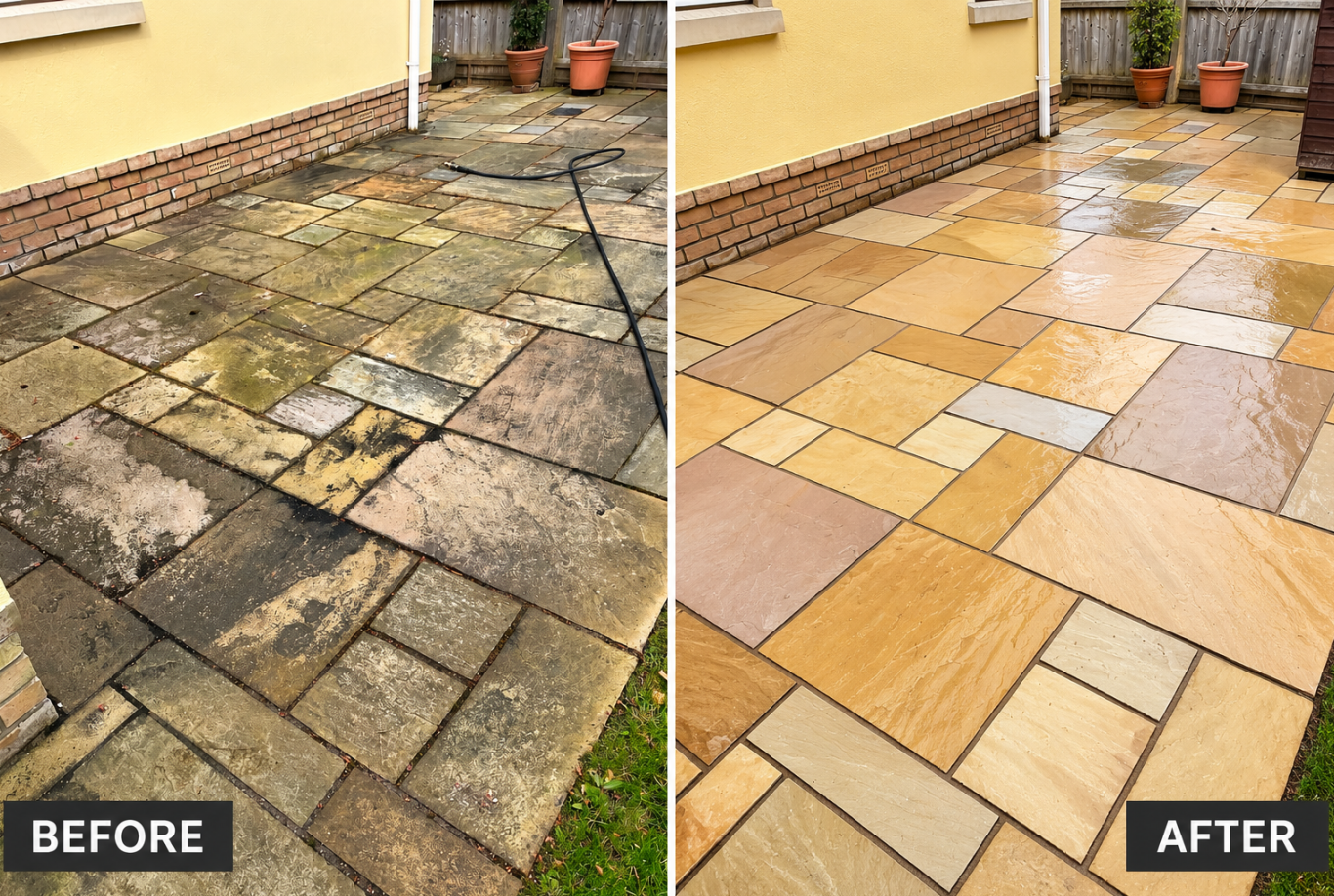
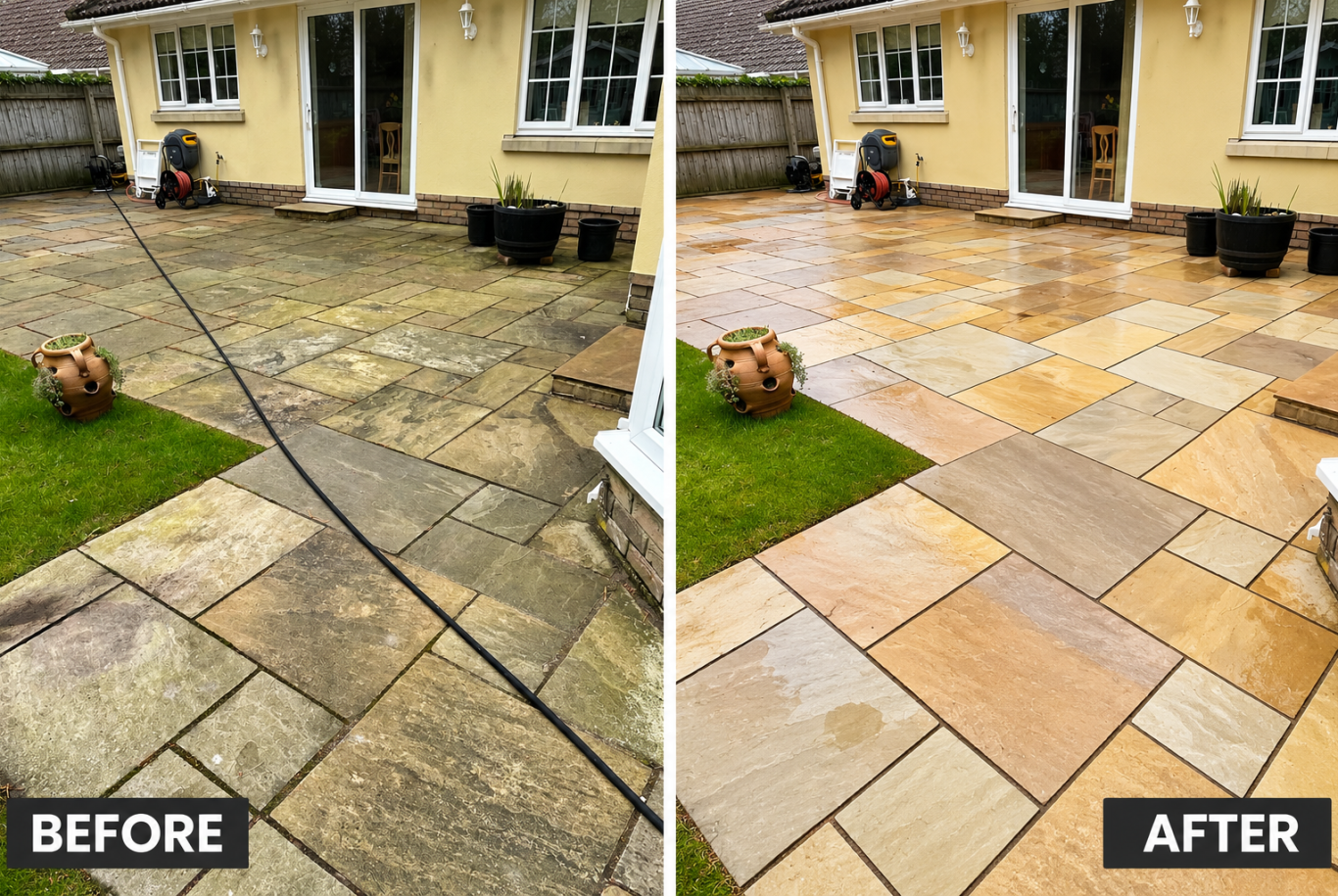
Give me a quick call, send me an email or WhatsApp
Written Quote
Tell me what you need and I'll send you a free written quote to your phone or by email
We need your consent to load the translations
We use a third-party service to translate the website content that may collect data about your activity. Please review the details in the privacy policy and accept the service to view the translations.