
Mr Softwash®
The Original Soft Washing Company
"The UK's K Rend & Render Cleaning Specialist"
Mr Softwash®
The Original Soft Washing Company
"The UK's K Rend & Render Cleaning Specialist"
Mr Softwash is a highly rated, professional exterior cleaning service based in Hamworthy, Poole, specialising in low-pressure soft washing and modern render treatments. Run by Steve Taylor, who brings over 30 years of industry experience, the company provides safe, non-abrasive cleaning alternatives to traditional high-pressure jet washing across Poole, Bournemouth, Dorset, Hampshire, Wiltshire.
The Complete Guide to Stonework Cleaning
Professional Natural Stone Cleaning, Soft Washing, Stain Removal and Maintenance
Stonework is one of the most attractive, durable and versatile materials used in buildings, gardens and outdoor spaces throughout the UK.
From traditional limestone walls and sandstone patios to granite paving, natural stone façades, decorative masonry and historic buildings, stone provides character, strength and a timeless appearance.
However, despite its durability, stonework is constantly exposed to environmental conditions that can affect its appearance and long-term condition.
Rainfall, moisture, algae, moss, lichen, atmospheric pollution, dirt and mineral deposits can gradually cause stone surfaces to become stained, discoloured and weathered.
Some stone surfaces are particularly porous, allowing moisture and contaminants to penetrate the material.
Incorrect cleaning techniques can also cause significant damage.
At Mr Softwash, we understand that different types of stone require different cleaning methods. Our approach to exterior cleaning focuses on identifying the surface, understanding the contamination and selecting appropriate cleaning techniques.
This comprehensive guide explains everything you need to know about stonework cleaning, including the different types of stone, common staining problems, cleaning methods, specialist treatments, sealing, maintenance and the benefits of professional stone cleaning.
1. What Is Stonework Cleaning?
Stonework cleaning is the process of removing dirt, biological growth, pollution deposits, staining and unwanted surface contaminants from natural or manufactured stone.
The objective is to improve the appearance of the stone while preserving its surface, structure and natural characteristics.
Professional stone cleaning may involve:
Soft washing
Low-pressure water cleaning
Controlled pressure washing
Specialist stone cleaning solutions
Algae removal
Moss removal
Lichen treatment
Black spot removal
Rust stain removal
Mineral deposit removal
Manual cleaning
Specialist conservation techniques
The most appropriate method depends on the type of stone, its porosity, surface finish, condition and the contamination present.
Not all stone surfaces can be cleaned using the same method.
For example, dense granite paving may tolerate cleaning techniques that would damage soft limestone or weathered sandstone.
Understanding these differences is essential for safe and effective stone cleaning.
2. Why Does Stonework Become Dirty?
Exterior stonework is constantly exposed to the British climate.
Rainfall, humidity, airborne pollution and biological organisms gradually affect the appearance of natural stone.
Several factors contribute to staining and discolouration.
Algae Growth
Algae are among the most common contaminants found on exterior stone surfaces.
They thrive in damp environments, particularly where sunlight is limited.
Green algae frequently develop on:
North-facing stone walls
Shaded patios
Garden pathways
Stone steps
Retaining walls
Decorative stonework
Areas beneath trees
Surfaces near vegetation
Algae can produce green, brown or dark discolouration.
On stone paving, biological growth can also contribute to slippery conditions.
Appropriate cleaning can remove algae and improve the appearance of affected stonework.
Moss Growth
Moss commonly grows on damp stone surfaces, particularly in shaded gardens.
It is frequently found on:
Sandstone patios
Stone garden walls
Paving joints
Stone steps
Retaining walls
Decorative masonry
Moss retains moisture and can conceal defects in joints or damaged stone surfaces.
Heavy growth may require careful physical removal followed by an appropriate biological treatment.
Lichen Growth
Lichen is a biological growth formed through a relationship between fungi and photosynthetic organisms.
It can appear as:
White patches
Grey crusts
Yellow staining
Green growth
Dark spots
Black deposits
Lichen often adheres strongly to stone surfaces.
Established lichen can be difficult to remove without damaging the underlying material.
Professional treatment may involve specialist biocidal products, controlled application and repeat treatments.
Atmospheric Pollution
Stonework can accumulate airborne pollution from traffic, industry and general environmental exposure.
Common deposits include:
Carbon particles
Soot
Vehicle emissions
Airborne dust
Smoke residues
General environmental dirt
These contaminants may produce black or grey staining.
Pollution staining is particularly noticeable on light-coloured limestone and sandstone.
Moisture and Damp
Persistent moisture is one of the main causes of biological contamination.
Common contributing factors include:
Leaking gutters
Defective drainage
Poor surface runoff
Shaded areas
Vegetation
Water penetration
Ground moisture
Cleaning can improve the appearance of affected stonework, but underlying moisture problems should also be addressed.
3. Understanding the Different Types of Natural Stone
Before cleaning stonework, it is essential to identify the stone.
Different stone types have different levels of hardness, porosity and chemical resistance.
Sandstone
Sandstone is widely used for patios, garden walls, pathways and building façades.
It is a sedimentary rock composed primarily of sand-sized mineral particles.
Sandstone is available in a range of colours, including:
Buff
Beige
Grey
Brown
Red
Yellow
Multi-coloured
Common Sandstone Cleaning Problems
Sandstone can develop:
Green algae
Black spot lichen
Moss
Organic staining
Atmospheric pollution deposits
Mineral discolouration
Some sandstone is relatively porous and can absorb moisture.
Aggressive pressure washing may erode softer sandstone or damage its surface.
Recommended approach: Gentle cleaning, suitable biological treatments and carefully controlled rinsing where appropriate.
Limestone
Limestone is a sedimentary rock composed predominantly of calcium carbonate.
It is commonly used for:
Building façades
Garden walls
Patios
Steps
Decorative stonework
Architectural features
Limestone can be particularly sensitive to acidic cleaning products.
Common Limestone Cleaning Problems
Algae
Moss
Lichen
Black pollution staining
Organic deposits
Mineral staining
Important Limestone Cleaning Advice
Acidic cleaners should not be used on limestone unless a specialist has established that a particular treatment is suitable.
Acids react with calcium carbonate and can permanently etch or damage the surface.
The safest approach generally involves pH-compatible cleaning products and low-impact techniques.
Granite
Granite is a hard igneous rock commonly used for paving, steps, kerbs and architectural features.
It is generally dense and durable.
Common Granite Cleaning Problems
Algae
Moss
Lichen
General dirt
Rust staining
Organic deposits
Granite can often tolerate more intensive cleaning than softer sedimentary stones.
However, the surface finish, joints and condition must still be considered.
Polished, flamed and textured granite surfaces may require different cleaning approaches.
Slate
Slate is a fine-grained metamorphic rock commonly used for roofing, paving, cladding and decorative stonework.
It has a distinctive layered structure.
Common Slate Cleaning Problems
Green algae
Moss
Lichen
Dirt accumulation
Mineral deposits
Some slate surfaces can delaminate or flake when subjected to inappropriate mechanical cleaning.
High-pressure washing should not be assumed safe.
Gentle cleaning and compatible treatments are generally preferable.
Marble
Marble is a metamorphic rock commonly used for decorative architectural features, steps and specialist paving.
It is composed mainly of recrystallised carbonate minerals.
Marble is sensitive to acids.
Common Marble Cleaning Problems
Organic staining
Algae
Surface dirt
Pollution deposits
Water-related marks
Marble requires specialist cleaning products that will not etch or dull its finish.
Abrasive techniques can also cause permanent surface damage.
Travertine
Travertine is a form of limestone frequently used for patios, terraces and decorative paving.
It often contains natural pores and cavities.
Common Travertine Cleaning Problems
Algae
Dirt accumulation
Organic staining
Contamination within surface pores
Mineral deposits
Travertine requires careful cleaning because aggressive pressure can damage its surface or dislodge filler from its natural cavities.
Acidic cleaning products should be avoided.
Yorkstone
Yorkstone is a traditional British sandstone widely used for paving, pathways and architectural features.
It is particularly common in period properties and traditional landscapes.
Common Yorkstone Cleaning Problems
Algae
Moss
Black spot lichen
Pollution deposits
Organic staining
Older Yorkstone paving may have weathered surfaces that are vulnerable to aggressive cleaning.
A gentle, conservation-conscious approach is often appropriate.
Portland Stone
Portland stone is a limestone widely associated with British architecture.
It is used in historic buildings, architectural details, façades and monuments.
Portland stone can accumulate atmospheric pollution and biological growth.
Because it is a carbonate stone, inappropriate acidic cleaning can damage the surface.
Historic Portland stone should be cleaned using carefully selected conservation methods.
4. Natural Stone vs Manufactured Stone
Not all stonework is natural stone.
Manufactured stone products are also widely used in gardens and buildings.
These include:
Reconstituted stone
Cast stone
Concrete paving designed to resemble stone
Manufactured stone cladding
Decorative architectural stone products
Manufactured stone may contain cement, aggregates, pigments and surface coatings.
Its cleaning requirements can differ significantly from natural stone.
Some manufactured products have delicate decorative finishes that can be damaged by high-pressure washing or incompatible chemicals.
Before cleaning, the material should be identified and the manufacturer's recommendations checked.
5. The Different Methods of Cleaning Stonework
Several methods can be used to clean stonework.
The most suitable technique depends on the material and contamination.
Method 1: Soft Washing Stonework
What Is Soft Washing?
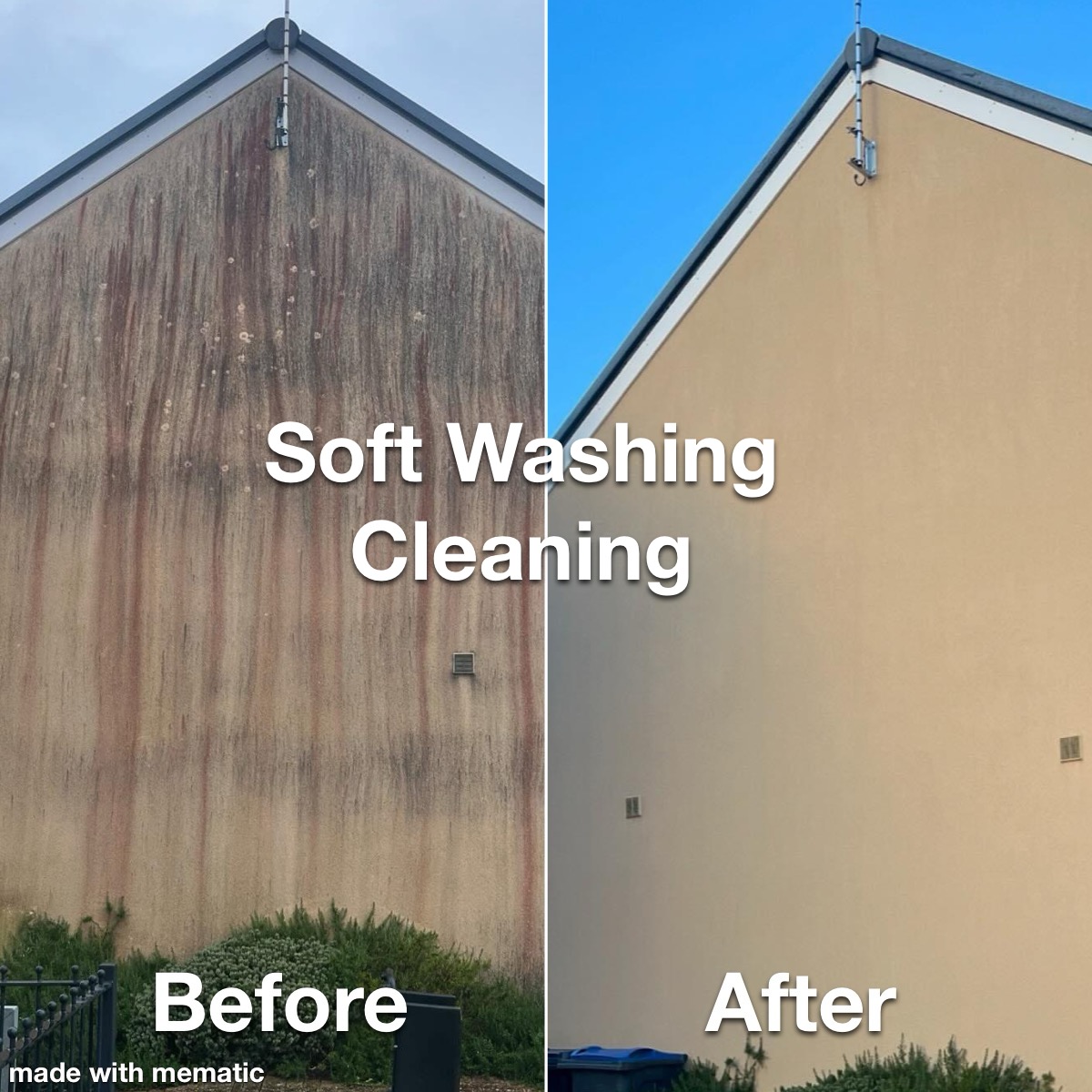
Soft washing is an exterior cleaning technique that uses low-pressure application of appropriate cleaning solutions to remove or treat biological contamination.
Unlike conventional pressure washing, soft washing does not rely primarily on high-pressure water.
Instead, suitable cleaning products are used to break down or control contaminants.
Soft washing may be appropriate for:
Algae
Moss
Lichen
Organic staining
Certain biological deposits
How Does Soft Washing Work?
A professional soft washing process typically involves several stages.
Step 1: Stone Identification
The stone type, surface finish and condition are assessed.
Step 2: Contamination Assessment
The cause of staining is identified.
Step 3: Surface Preparation
Loose debris and excessive biological growth may be removed.
Step 4: Cleaning Solution Application
A suitable stone-compatible treatment is applied using controlled equipment.
Step 5: Treatment Period
The cleaning solution is allowed to work according to its instructions.
Step 6: Rinsing or Further Treatment
The surface is rinsed or treated further where required.
Step 7: Final Inspection
The results are assessed and additional treatment considered if necessary.
Benefits of Soft Washing Stonework
Soft washing can provide several advantages:
Reduced reliance on high-pressure water
Effective treatment of many biological contaminants
Lower risk of mechanical surface damage when correctly performed
Suitable for many delicate exterior surfaces
Can treat biological growth within textured stone
May help delay regrowth when an appropriate residual treatment is used
However, soft washing is not suitable for every type of stone or stain.
Chemical compatibility must always be assessed.
6. Can You Pressure Wash Natural Stone?
One of the most frequently asked questions about stone cleaning is:
Can natural stone be pressure washed?
The answer depends on the stone.
Some dense, durable stone surfaces can tolerate controlled pressure washing.
Others can be permanently damaged.
Potential Risks of Pressure Washing Stone
Incorrect pressure washing can cause:
Surface erosion
Loss of natural texture
Damage to pointing
Removal of jointing material
Increased surface roughness
Water penetration
Damage to decorative finishes
Delamination of layered stone
Which Stones Are More Vulnerable?
Particular care is required with:
Soft sandstone
Limestone
Travertine
Weathered Yorkstone
Historic stonework
Delaminating slate
When Might Pressure Washing Be Suitable?
Controlled pressure washing may be suitable for sound, durable stone paving where the material and construction can tolerate the process.
The operator should consider:
Stone hardness
Surface finish
Existing damage
Water pressure
Nozzle selection
Working distance
Jointing condition
Drainage
There is no universal pressure setting suitable for all natural stone.
The correct cleaning method should preserve the stone rather than simply remove dirt as quickly as possible.
7. How to Remove Green Algae From Stonework
Green algae are particularly common on outdoor stone surfaces throughout Dorset and Hampshire.
The region's damp climate can encourage biological growth on shaded walls, patios and pathways.
Why Does Stone Turn Green?
Algae thrive where moisture remains available.
Common contributing factors include:
Shaded locations
Persistent rainfall
Poor drainage
Nearby vegetation
Limited airflow
Porous stone surfaces
How Is Green Algae Removed?
Professional cleaning may involve:
Inspecting the stone.
Identifying the contamination.
Removing loose debris.
Applying a suitable stone-compatible algae treatment.
Allowing the product to work.
Rinsing where required.
Assessing the result.
Will Green Algae Return?
Algae can return when environmental conditions remain favourable.
Reducing shade, improving drainage and maintaining the surface can help limit future growth.
8. How to Remove Black Spot From Natural Stone
Black spot is one of the most persistent problems affecting natural stone patios and paving.
It is particularly common on sandstone, limestone and other porous outdoor surfaces.
What Is Black Spot?
The term black spot is commonly used to describe dark, firmly attached biological staining, often associated with crustose lichens.
However, not every black mark on stone is biological.
Black staining may also result from pollution, mineral deposits or other contaminants.
Correct identification is essential.
Why Is Black Spot Difficult to Remove?
Established lichen can adhere strongly to the stone surface.
Its growth may extend into surface irregularities and pores.
This makes removal more difficult than ordinary surface dirt.
Can Pressure Washing Remove Black Spot?
Pressure washing may remove some visible deposits, but established black spot can remain.
Increasing the pressure to remove stubborn marks may damage softer stone.
How Is Black Spot Removed?
A professional treatment may involve:
Stone identification
Assessment of the black staining
A small test area
Application of a compatible specialist treatment
Appropriate treatment time
Controlled rinsing
Repeat treatment where necessary
Some staining may remain after treatment, particularly where the stone has undergone permanent discolouration.
Can Black Spot Be Prevented?
It may not be possible to prevent black spot completely.
However, maintaining the surface, reducing persistent moisture and addressing biological growth early can help limit its development.
9. How to Remove Moss From Stonework
Moss commonly grows on damp stone surfaces, particularly in shaded areas.
It is frequently found on:
Stone walls
Patios
Pathways
Steps
Paving joints
Retaining walls
Professional Moss Removal
The cleaning process may include:
Initial Inspection
The stone and jointing are assessed.
Careful Physical Removal
Heavy moss growth is removed using suitable non-damaging tools.
Biological Treatment
An appropriate treatment may be applied to control remaining growth.
Final Assessment
The surface is checked for residual contamination and maintenance issues.
Why Remove Moss?
Moss can retain moisture and contribute to slippery conditions on paving and steps.
It may also conceal damaged joints and surface defects.
10. How to Remove Lichen From Stone
Lichen can appear as black, grey, white, green or yellow patches.
It often adheres firmly to the surface.
Why Is Lichen Difficult to Clean?
Lichen may become established within the surface texture of stone.
Aggressive scraping can damage softer materials.
Professional Lichen Removal
Suitable methods may include:
Specialist biocidal treatments
Controlled application
Appropriate treatment periods
Gentle rinsing
Repeat applications
Gradual natural weathering
Not all lichen disappears immediately following treatment.
Some deposits may gradually detach as the treated biological material deteriorates.
11. How to Remove Black Stains From Stonework
Black staining can have several causes.
Common sources include:
Atmospheric pollution
Soot
Biological growth
Organic deposits
Moisture-related staining
Metal-related deposits
Biological Black Staining
Certain biological deposits respond to appropriate biocidal treatments.
Pollution Staining
Carbon and soot deposits may require specialist stone cleaning products.
Why Correct Identification Matters
A cleaning product designed for algae may have little effect on carbon staining.
Similarly, aggressive cleaning of biological deposits can damage the stone unnecessarily.
Professional assessment helps determine the most suitable treatment.
12. How to Remove Rust Stains From Natural Stone
Rust stains commonly appear as orange, reddish-brown or dark brown marks.
They may originate from:
Metal garden furniture
Railings
Steel fixtures
Corroding fixings
Metal planters
Iron-containing minerals
Rust stains can penetrate porous stone.
Professional Rust Removal
Specialist stone-compatible rust removers may be required.
However, many conventional rust removers contain acids.
These can damage limestone, marble, travertine and other carbonate stones.
The cleaning product must be suitable for the specific material.
A small test area is essential.
13. How to Remove Oil and Grease From Stone
Oil and grease stains commonly affect stone patios, driveways and outdoor cooking areas.
Sources include:
Vehicles
Barbecues
Cooking oils
Garden machinery
Outdoor furniture
Porous stone can absorb oil, making removal difficult.
Cleaning Oil Stains
Fresh spills should be absorbed promptly using an appropriate absorbent material.
Established stains may require specialist stone-safe degreasers or poultice treatments.
A poultice is a material designed to draw certain contaminants from porous surfaces.
The effectiveness depends on the stone and the depth of penetration.
Some deeply absorbed stains may not be completely removable.
14. How to Remove White Stains From Stone
White staining can result from several different processes.
These include:
Efflorescence
Lime deposits
Calcium deposits
Hard-water staining
Construction residues
What Is Efflorescence?
Efflorescence occurs when moisture carries soluble salts through masonry.
As the water evaporates, salts crystallise on the surface.
How Is Efflorescence Removed?
Light deposits may sometimes be removed with gentle dry brushing.
More persistent staining requires careful assessment.
Can Acid Remove White Deposits?
Some mineral deposits respond to acidic cleaners.
However, acids can damage limestone, marble, travertine and other calcium carbonate-based stones.
Never assume that an acid cleaner is suitable for natural stone.
Persistent white staining may indicate an underlying moisture problem.
15. Cleaning Sandstone Patios
Sandstone is one of the most popular natural stone paving materials used in UK gardens.
It is available in a wide variety of colours and finishes.
However, sandstone can be vulnerable to biological contamination.
Common Sandstone Patio Problems
Green algae
Black spot
Moss
Lichen
Organic staining
Dirt accumulation
Recommended Cleaning Approach
A suitable process may include:
Identifying the sandstone.
Checking the condition of the paving.
Removing loose debris.
Applying a compatible cleaning treatment.
Allowing the treatment to work.
Rinsing carefully where required.
Assessing the result.
Soft washing can be effective for many types of biological contamination.
However, sandstone varies considerably in hardness and porosity.
The cleaning method should be selected accordingly.
16. Cleaning Limestone Patios
Limestone patios can provide an attractive, contemporary appearance.
However, limestone is chemically sensitive.
Common Limestone Problems
Algae
Black spot
Moss
Organic staining
Surface discolouration
Important Cleaning Considerations
Limestone should not be cleaned using ordinary acidic patio cleaners.
Acid can react with the stone and permanently damage its surface.
Appropriate pH-compatible products and gentle techniques are generally preferable.
17. Cleaning Granite Patios and Paving
Granite is a hard and durable natural stone.
It is commonly used for:
Patios
Steps
Pathways
Driveways
Commercial paving
Granite can accumulate algae, moss, lichen and general dirt.
Although it is generally more resistant to mechanical cleaning than softer stone, pressure and chemical compatibility must still be assessed.
Polished granite may require different treatment from textured outdoor granite.
18. Cleaning Stone Garden Walls
Stone garden walls are exposed to moisture, vegetation and environmental contamination.
Common problems include:
Moss
Algae
Lichen
Black staining
Dirt accumulation
Mineral deposits
Older walls may contain lime mortar or have weathered stone surfaces.
Professional Stone Wall Cleaning
Before cleaning, the wall should be inspected for:
Loose stones
Damaged pointing
Structural movement
Persistent dampness
Surface deterioration
Fragile or unstable masonry may require repair before cleaning.
Gentle methods are often preferable for older stone walls.
19. Cleaning Stone Building Façades
Stone façades can accumulate pollution and biological growth over many years.
Cleaning large building elevations requires careful planning.
Factors include:
Stone type
Building age
Existing surface condition
Height and access
Pollution deposits
Mortar condition
Water penetration
Architectural details
Historic stone façades may require specialist conservation cleaning.
The objective should be to remove harmful or unwanted contamination without damaging the original stone.
Some natural weathering and patina may be appropriate to retain.
20. Cleaning Historic Stonework
Historic stone buildings require a conservation-led approach.
Older stone may be softer, more porous or more heavily weathered than modern materials.
Traditional buildings may also contain lime mortar.
Potential Risks of Incorrect Cleaning
Loss of original surface material
Erosion
Damage to carvings
Removal of historic finishes
Increased water absorption
Damage to mortar joints
Permanent discolouration
Appropriate Cleaning Methods
Depending on the building, suitable techniques may include:
Gentle manual cleaning
Specialist low-pressure water cleaning
Carefully selected conservation products
Controlled cleaning trials
Specialist masonry conservation methods
Listed buildings and protected structures may require relevant permissions and specialist advice.
For historic masonry, cleaning should prioritise preservation rather than achieving an artificially new appearance.
21. What Chemicals Are Used for Stonework Cleaning?
Different cleaning products are used for different types of contamination.
Biocidal Treatments
Biocidal products may be used to control algae, moss and other biological growth.
Some formulations contain quaternary ammonium compounds, including:
Benzalkonium chloride (BAC)
Didecyldimethylammonium chloride (DDAC)
These ingredients are found in certain biocidal products.
Their suitability depends on the formulation, authorised use and the type of stone.
Sodium Hypochlorite-Based Products
Sodium hypochlorite is used in some professional exterior cleaning formulations.
It may be effective against certain types of organic staining and biological contamination.
However, it can damage or discolour incompatible materials.
Its use requires careful assessment and appropriate safety precautions.
Sodium hypochlorite must never be mixed with acids or ammonia-containing products.
Specialist Stone Cleaners
Specialist products may be used for:
Oil stains
Rust deposits
Mineral staining
Carbon deposits
Cement residues
Organic contamination
The product must be compatible with the stone.
Chemical Safety
Professional cleaning should follow relevant UK safety and environmental requirements.
These include:
COSHH assessments
Product label instructions
Safety data sheets
Appropriate personal protective equipment
Protection of surrounding vegetation
Wastewater management
Prevention of chemical runoff into drains and watercourses
Biocidal products must be used in accordance with applicable UK authorisation and labelling requirements.
22. Should Natural Stone Be Sealed After Cleaning?
Stone sealing is a common topic in exterior cleaning.
However, not every stone surface requires sealing.
What Is a Stone Sealer?
A stone sealer is a treatment designed to reduce the penetration of certain liquids or contaminants.
Different sealers work in different ways.
Common categories include:
Penetrating impregnators
Water-repellent treatments
Surface coatings
Colour-enhancing sealers
Potential Benefits
A suitable treatment may help:
Reduce water absorption
Limit certain types of staining
Make routine maintenance easier
Protect against some contaminants
Potential Disadvantages
Unsuitable sealers may:
Change the appearance of the stone
Create uneven finishes
Reduce moisture evaporation
Trap existing moisture
Become slippery in certain conditions
Require periodic reapplication
Is Sealing Always Recommended?
No.
The decision should depend on the stone type, moisture conditions, intended use and manufacturer guidance.
Older and historic stonework requires particular caution.
Stone should not automatically be sealed simply because it has been cleaned.
23. How Often Should Stonework Be Cleaned?
There is no universal cleaning schedule for all stone surfaces.
The frequency depends on:
Stone type
Location
Shade
Rainfall
Drainage
Vegetation
Surface use
Level of contamination
A shaded sandstone patio may require attention more frequently than a sunny granite terrace.
Recommended Maintenance
Inspect stonework periodically for:
Algae growth
Moss accumulation
Black spot
Damaged joints
Persistent dampness
Blocked drainage
Surface deterioration
Early intervention can prevent contamination from becoming heavily established.
24. DIY Stone Cleaning vs Professional Stone Cleaning
Some light dirt can be removed using simple maintenance methods.
However, specialist staining and delicate stonework may require professional assessment.
DIY Stone Cleaning
For suitable, sound stone surfaces, light dirt may be removed using:
A soft brush
Clean water
A manufacturer-approved stone cleaner
Gentle rinsing
Always test a small area first.
Avoid:
Unverified chemical mixtures
Acidic cleaners on carbonate stone
Aggressive wire brushing
Excessive pressure
Abrasive techniques
Unnecessary saturation
Professional Stone Cleaning
Professional cleaning may be advisable for:
Large patios
High-level stonework
Extensive black spot
Established lichen
Historic masonry
Pollution staining
Difficult mineral deposits
Sensitive natural stone
The main advantage is the ability to assess the material and choose an appropriate method.
25. How Much Does Stonework Cleaning Cost in the UK?
The cost of professional stonework cleaning varies depending on the project.
Factors include:
Stone Type
Different stones require different levels of care.
Area Size
Larger surfaces generally require more time and materials.
Contamination
Heavy lichen, black spot and specialist staining can increase the work required.
Access
High-level façades and difficult locations may require specialist equipment.
Cleaning Method
Soft washing, controlled water cleaning and specialist stain removal have different costs.
Surface Condition
Fragile or damaged stone may require additional precautions.
Additional Treatments
Repeat cleaning, specialist stain removal and optional sealing may affect the final price.
Request a Stone Cleaning Quote
At Mr Softwash, we can discuss your stonework, identify the cleaning requirements and provide a quotation based on the individual project.
26. Common Stone Cleaning Mistakes
Incorrect cleaning can permanently damage natural stone.
Common mistakes include:
Using Acid on Limestone
Acid reacts with calcium carbonate and can etch limestone, marble and travertine.
Excessive Pressure Washing
High-pressure water can erode softer stone and damage joints.
Using the Wrong Cleaning Product
Different stains require different treatments.
Ignoring Stone Porosity
Porous stone may absorb water and cleaning products more readily.
Aggressive Scrubbing
Abrasive tools can scratch or damage delicate surfaces.
Cleaning Damaged Stonework
Loose or deteriorating masonry should be assessed before cleaning.
Ignoring Moisture Problems
Cleaning does not resolve drainage defects or persistent dampness.
Applying Sealer Without Assessment
Unsuitable sealing can interfere with moisture movement.
27. Benefits of Professional Stonework Cleaning
Professional stone cleaning can provide several advantages.
Improved Appearance
Removing dirt and biological growth can restore the natural colour and character of stonework.
Enhanced Kerb Appeal
Clean stone façades, patios and garden walls can improve the overall presentation of a property.
Biological Contamination Removal
Appropriate treatments can remove or control algae, moss and lichen.
Reduced Slippery Surface Contamination
Removing algae and moss from paving can help reduce contamination associated with slippery conditions.
Better Visibility of Surface Defects
Cleaning may reveal damaged joints, cracks and other maintenance issues.
Preservation of Natural Stone
Selecting an appropriate method can reduce the risk of unnecessary cleaning damage.
Easier Maintenance
Regular inspection and suitable cleaning can prevent heavy contamination from becoming established.
28. Stonework Cleaning in Poole, Bournemouth, Christchurch, Dorset and Hampshire
At Mr Softwash, we provide exterior cleaning services for residential and commercial properties across our service area.
Natural stone throughout Dorset and Hampshire is exposed to rainfall, humidity, coastal conditions and biological contamination.
These conditions can encourage algae, moss and lichen growth on outdoor stone surfaces.
Our approach focuses on identifying the stone and selecting an appropriate cleaning technique.
Stonework Cleaning in Poole
Stone patios, garden walls, steps and decorative masonry in Poole can become affected by algae, moss, lichen and environmental staining.
Mr Softwash provides professional exterior cleaning solutions for suitable stone surfaces.
Stonework Cleaning in Bournemouth
Bournemouth properties feature a wide variety of natural stone paving and decorative masonry.
We assess the surface and contamination before recommending an appropriate cleaning method.
Stonework Cleaning in Christchurch
Stonework in Christchurch can experience biological growth, moisture-related staining and general environmental contamination.
Appropriate cleaning can improve its appearance while helping preserve the material.
Stonework Cleaning Across Dorset
Mr Softwash provides exterior cleaning services across Dorset, subject to location and project requirements.
We can assess suitable natural stone surfaces and discuss appropriate cleaning options.
Stonework Cleaning in Hampshire
We also serve suitable properties across parts of Hampshire.
Whether dealing with algae-covered paving, moss-covered walls or stained exterior stonework, we can discuss the cleaning requirements.
29. Frequently Asked Questions About Stonework Cleaning
What Is the Best Way to Clean Natural Stone?
The best method depends on the type of stone and contamination.
Soft washing is often effective for biological growth, while specialist treatments may be required for mineral and pollution staining.
Can You Soft Wash Natural Stone?
Yes. Many natural stone surfaces can be soft washed using compatible products and controlled application methods.
However, sensitive materials require careful assessment.
Can Pressure Washing Damage Natural Stone?
Yes. Excessive pressure can erode softer stone, damage joints and alter surface finishes.
How Do You Remove Green Algae From Stone?
Green algae can often be treated using an appropriate stone-compatible biological cleaning product.
What Removes Black Spot From Sandstone?
Established black spot may require specialist treatment and repeat applications.
The correct method depends on the stone and the cause of the staining.
Can You Remove Lichen From Stone?
Yes, although established lichen can be difficult to remove.
Gentle specialist treatments may be required.
Can You Use Bleach on Natural Stone?
Household bleach should not be assumed suitable.
Some professional cleaning products contain sodium hypochlorite, but their use requires careful assessment of the stone and surrounding materials.
Can You Use Vinegar on Natural Stone?
Vinegar is acidic and can damage limestone, marble, travertine and other carbonate stones.
It should not be used as a general natural stone cleaner.
How Do You Clean Limestone Without Damaging It?
Use compatible, non-acidic cleaning methods and avoid excessive mechanical force.
Delicate or historic limestone should be assessed by a specialist.
Should Sandstone Be Sealed After Cleaning?
Not necessarily.
Sealing depends on the stone's condition, moisture behaviour and intended use.
How Long Does Stone Cleaning Last?
Results depend on exposure, moisture, shade and the type of contamination.
Biological growth may return over time.
Can Stone Cleaning Remove All Stains?
Not always.
Some staining may have penetrated deeply or permanently altered the stone.
Is Professional Stone Cleaning Worth It?
Professional cleaning can improve the appearance of stonework while reducing the risk associated with unsuitable DIY methods.
30. Why Choose Mr Softwash for Stonework Cleaning?
At Mr Softwash, we understand that exterior cleaning requires more than simply applying water pressure.
Natural stone varies considerably in hardness, porosity, texture and chemical resistance.
Our approach focuses on assessing the surface and selecting an appropriate cleaning method.
Our Approach
Stone Identification
We consider the type and condition of the material.
Contamination Assessment
We assess whether staining is biological, mineral, atmospheric or another type of deposit.
Appropriate Cleaning Methods
We select techniques according to the requirements of the surface.
Careful Treatment
We aim to remove contamination while minimising unnecessary damage.
Practical Maintenance Advice
We can discuss measures that may help reduce future contamination.
Our Exterior Cleaning Services
Mr Softwash also provides a range of exterior cleaning services, including:
K Rend cleaning
Silicone render cleaning
Acrylic render cleaning
Brickwork cleaning
Soft washing
Pressure washing
Patio cleaning
Driveway cleaning
Decking cleaning
Cladding cleaning
Resin driveway cleaning
31. Professional Stonework Cleaning – Contact Mr Softwash
Dirty, stained or algae-covered stonework can significantly affect the appearance of a property.
Whether you have green algae on sandstone paving, black spot on a natural stone patio, moss-covered garden walls or pollution staining on exterior masonry, selecting the correct cleaning method is essential.
At Mr Softwash, we provide professional exterior cleaning services across Poole, Bournemouth, Christchurch, Dorset and parts of Hampshire.
We assess the surface and contamination before recommending an appropriate cleaning approach.
Restore the Appearance of Your Stonework
If your stonework is affected by algae, moss, lichen, black spot or unsightly staining, contact Mr Softwash to discuss your requirements.
Mr Softwash – Professional Exterior Cleaning Specialists
Website: www.mrsoftwash.co.uk
Services: Stonework Cleaning | Natural Stone Cleaning | Soft Washing | Patio Cleaning | Exterior Surface Cleaning
Areas Covered: Poole | Bournemouth | Christchurch | Dorset | Hampshire
Contact Mr Softwash today to request a stonework cleaning quotation.
Conclusion: The Importance of Correct Stonework Cleaning
Natural stone is a durable and attractive material that can provide many years of service when properly maintained.
However, algae, moss, lichen, pollution and moisture-related staining can gradually affect its appearance.
The most effective cleaning method depends on identifying the stone, understanding the contamination and selecting a suitable treatment.
Soft washing can be an effective solution for many types of biological growth, while specialist masonry cleaning may be required for mineral deposits, rust staining and atmospheric pollution.
Aggressive pressure washing, incompatible chemicals and abrasive techniques should be avoided where they could damage the surface.
With appropriate cleaning and ongoing maintenance, stonework can retain its natural appearance and remain an attractive feature of a property for many years.
For professional stonework cleaning in Poole, Bournemouth, Christchurch, Dorset and Hampshire, contact Mr Softwash.


I Make Everything Quick and Easy for You....
Get in Touch
Give me a quick call or send me an email
Written Quote
Tell me what you need and I'll send you a free written quote to your phone or by email
Arrange a Date
If you're happy with the quote, we can arrange a date which suits you.
The Quote is a free no obligation quote.
No follow up calls, No pressure, you choose if you want to proceed.
We need your consent to load the translations
We use a third-party service to translate the website content that may collect data about your activity. Please review the details in the privacy policy and accept the service to view the translations.