
Mr Softwash®
The Original Soft Washing Company
"The UK's K Rend & Render Cleaning Specialist"
Mr Softwash®
The Original Soft Washing Company
"The UK's K Rend & Render Cleaning Specialist"
Mr Softwash is a highly rated, professional exterior cleaning service based in Hamworthy, Poole, specialising in low-pressure soft washing modern render & resin driveway treatments. Run by Steve Taylor, who brings over 30 years of industry experience, the company provides safe, non-abrasive cleaning alternatives to traditional high-pressure jet washing across Poole, Bournemouth, Dorset, Hampshire, Wiltshire.
Why Softwash Resin Driveways?
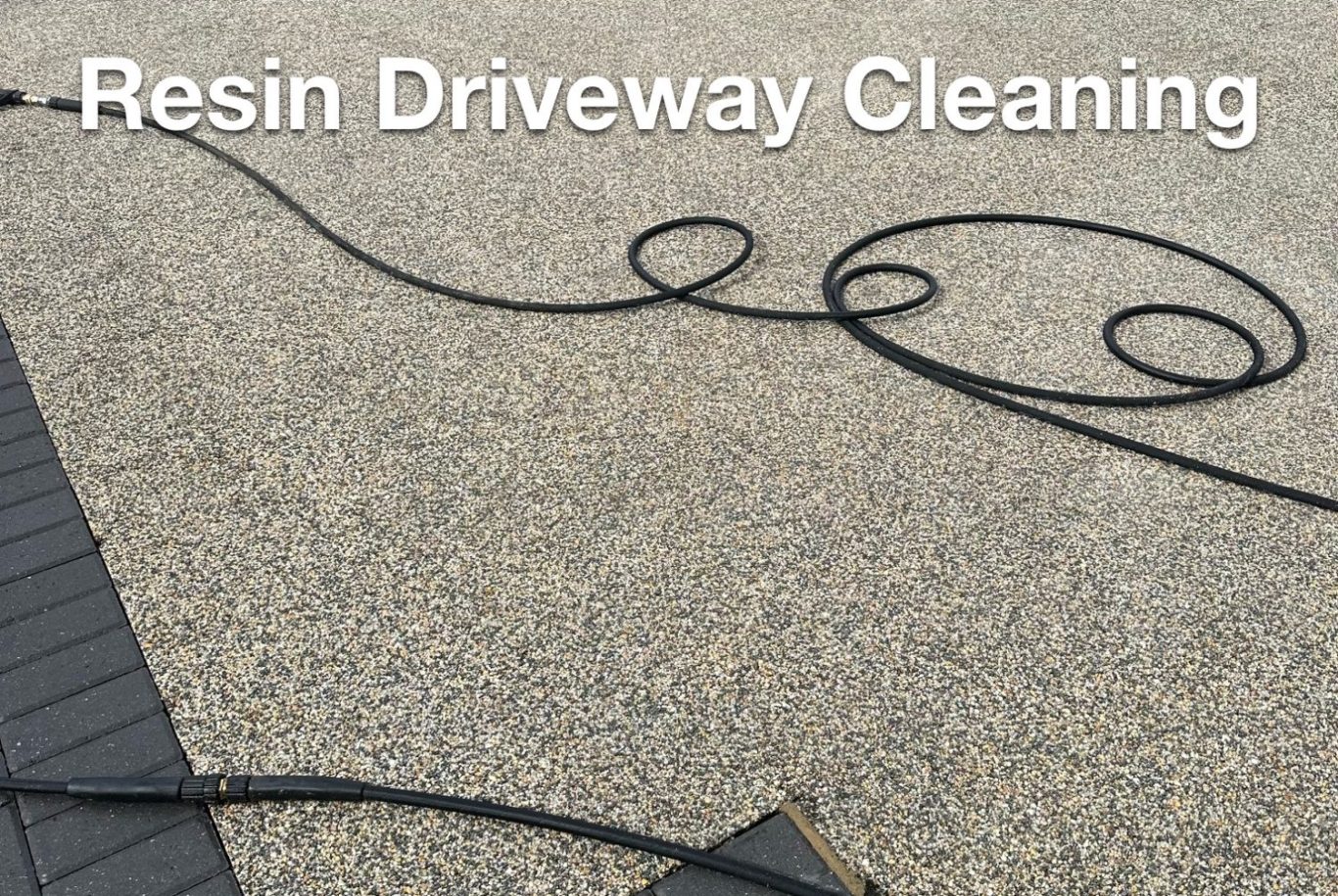
Because of the delicate make up of resin driveways, it is important not to use high pressure or heat on resin driveways otherwise they can be marked and damaged.
Can You Softwash a Resin Driveway?
Yes. Soft washing can be an effective method of cleaning suitable resin-bound driveways, particularly where algae and organic contamination are present.
Soft washing combines carefully selected cleaning products with low-pressure application.
Potential advantages include:
Don't let stained and weathered Surfaces spoil the appearance of your property.
For professional Soft washing in Poole, Dorset and Hampshire, contact Mr Softwash today for a free online quote.
WhatsApp a photo & postcode for a free quote
Mr Softwash®
The Complete Guide to Cleaning Resin Driveways & Patios
How to Clean, Restore and Maintain Resin Bound Surfaces
Resin bound driveways and patios have become increasingly popular throughout the UK, offering an attractive, durable and relatively low-maintenance alternative to traditional paving, block paving and concrete.
However, although resin bound surfaces are often described as low maintenance, they are certainly not maintenance-free.
Over time, resin driveways and patios can become affected by algae, moss, lichen, weeds, dirt, tyre marks, oil stains and general environmental contamination.
Without appropriate cleaning and maintenance, these deposits can spoil the appearance of the surface, create slippery conditions and potentially contribute to premature deterioration.
At Mr Softwash, we specialise in professional exterior cleaning, including the careful cleaning and maintenance of resin bound driveways, patios and other outdoor surfaces throughout Poole, Bournemouth, Christchurch, Dorset and surrounding areas.
This comprehensive guide explains everything you need to know about resin driveway and patio cleaning, including the safest cleaning methods, common problems, suitable cleaning products and how to maintain your resin surfaces.
1. What Is a Resin Bound Driveway?
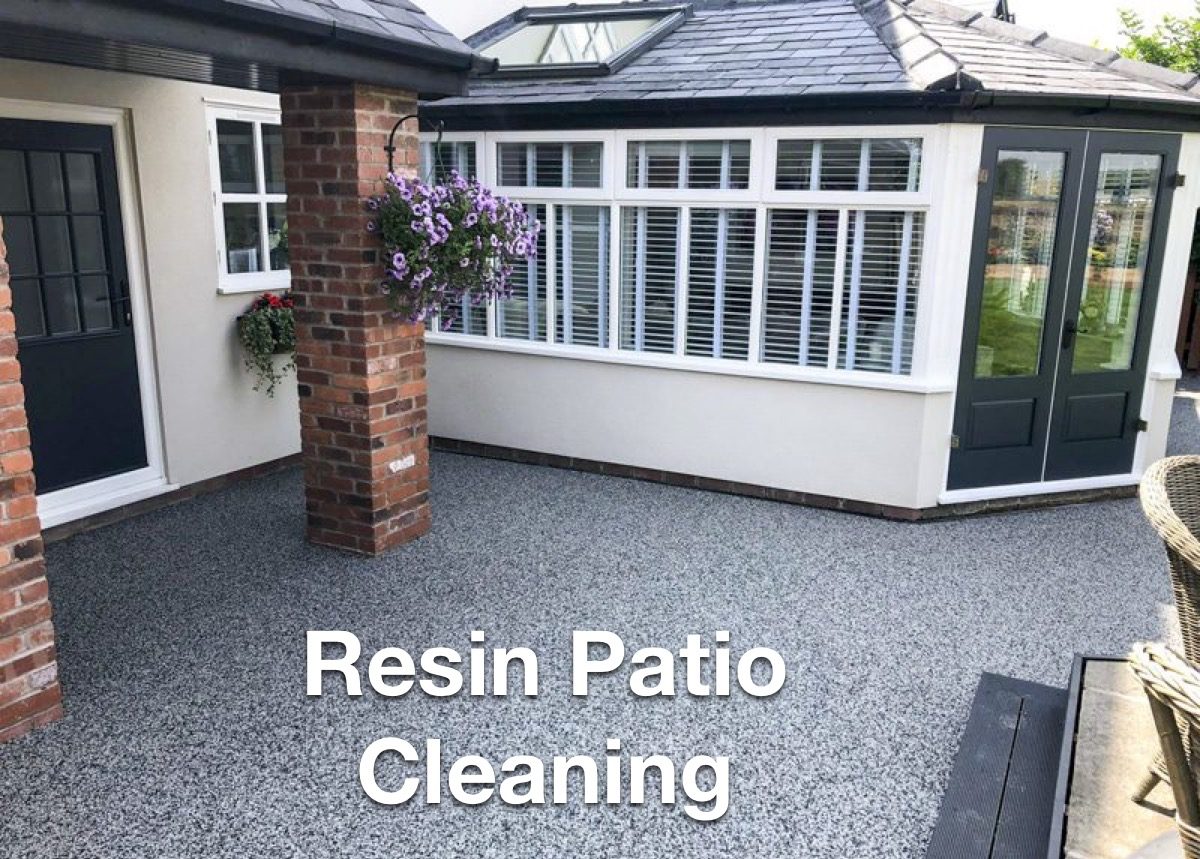
A resin bound driveway is a decorative outdoor surface created by mixing natural aggregates with a specialist resin binder before applying the mixture to a prepared base.
The resulting surface is smooth, attractive and typically permeable when installed using a suitable aggregate specification and permeable sub-base.
Resin bound surfaces are commonly used for:
Residential driveways
Garden patios
Pathways and walkways
Courtyards
Commercial entrances
Outdoor seating areas
Landscaping projects
Pedestrian access routes
The appearance of resin bound paving depends on the aggregates selected, with colours ranging from golden gravel and natural stone to grey, silver, cream and darker decorative finishes.
Benefits of Resin Bound Surfaces
Properly installed resin bound driveways and patios offer several advantages.
Attractive appearance: Resin bound surfaces provide a consistent decorative finish without the joints found in conventional block paving.
Permeability: Many resin bound systems allow rainwater to drain through the surface, provided the complete construction is designed to be permeable.
Durability: Quality resin bound systems can withstand regular pedestrian and vehicle traffic when correctly installed.
Low maintenance: Resin bound surfaces generally require less routine maintenance than some traditional paving systems.
Weed resistance: The seamless construction reduces opportunities for weeds to establish, although airborne seeds can still germinate in accumulated dirt and organic matter.
Despite these advantages, regular cleaning remains essential to preserve the appearance and performance of the surface.
2. Resin Bound vs Resin Bonded: Understanding the Difference
Before cleaning any resin driveway or patio, it is important to establish whether the surface is resin bound or resin bonded.
Although the names sound similar, the two systems are constructed differently.
Resin Bound Surfaces
Resin bound paving is produced by mixing aggregate and resin before application.
This creates a relatively smooth, seamless surface in which the stones are held together by the resin binder.
Resin bound surfaces are commonly permeable, allowing rainwater to pass through interconnected spaces between the aggregates.
Resin Bonded Surfaces
Resin bonded paving is created by applying resin to a prepared surface and scattering loose aggregate over the resin.
This produces a rougher, textured finish resembling loose gravel.
Resin bonded surfaces are generally non-permeable and may be more susceptible to aggregate loss if cleaned aggressively.
Why Does This Matter When Cleaning?
The distinction is important because different resin systems may require different cleaning methods.
High-pressure washing, aggressive brushing and unsuitable chemicals can damage resin bonded surfaces or dislodge loose aggregates.
Even resin bound surfaces can suffer damage if cleaned incorrectly.
Mr Softwash recommends identifying the surface type and following the manufacturer's cleaning instructions before undertaking any cleaning treatment.
3. Why Do Resin Driveways and Patios Become Dirty?
Resin driveways and patios are constantly exposed to the British weather.
Rainfall, damp conditions, falling leaves, airborne pollution and biological growth gradually affect their appearance.
Several types of contamination are particularly common.
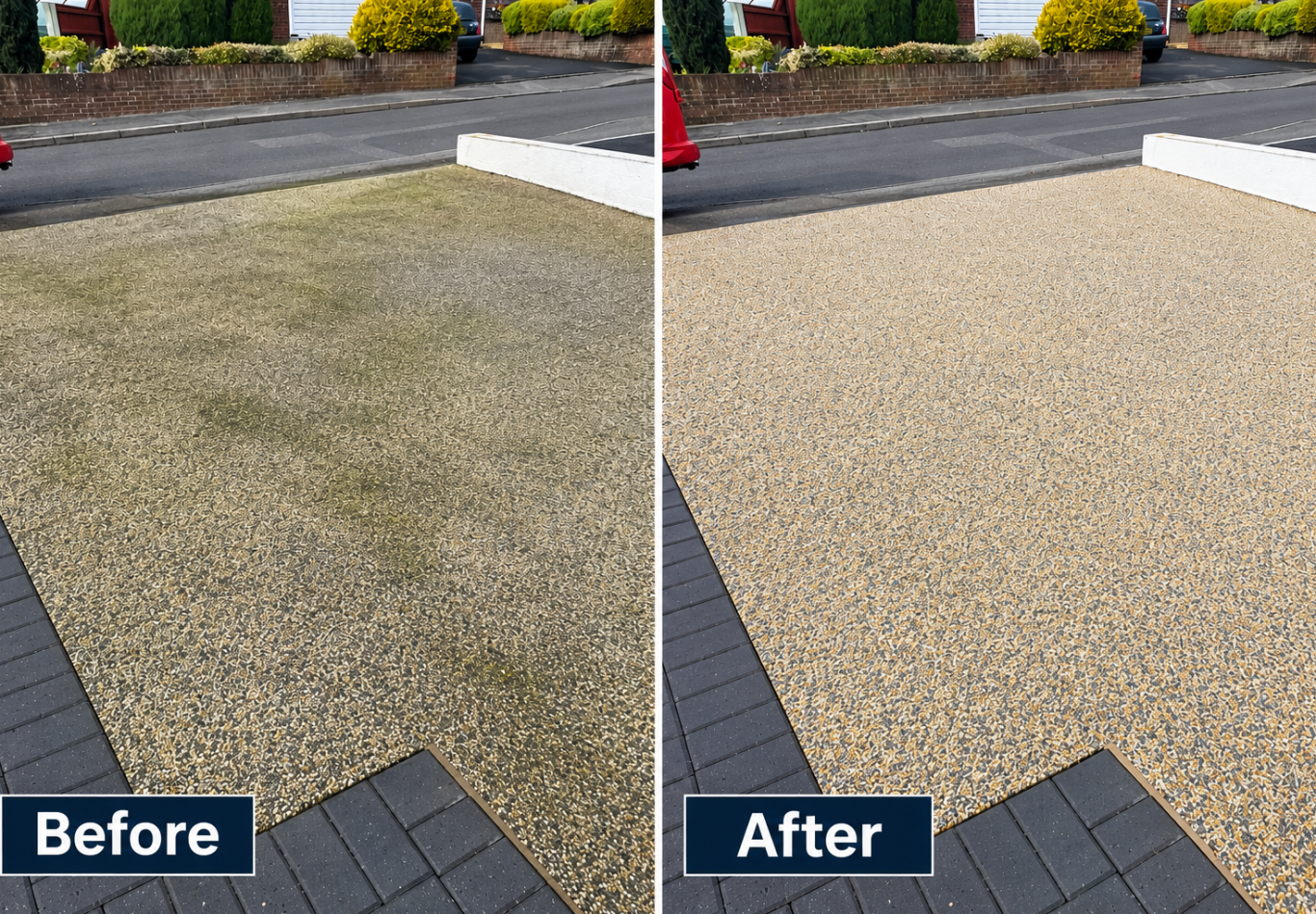
Algae Growth
Algae is one of the most common problems affecting resin driveways and patios.
Green algae frequently develops in shaded or damp locations where moisture remains on the surface for extended periods.
Typical areas include:
North-facing driveways
Shaded patios
Areas beneath trees
Driveways surrounded by hedges
Poorly drained sections
Areas receiving limited sunlight
Algae can create green discolouration and may make surfaces slippery when wet.
Moss Growth
Moss tends to establish itself where moisture and organic debris accumulate.
Although resin bound paving has fewer joints than traditional block paving, moss can still grow in surface contamination and around edges.
If left untreated, moss can trap moisture and gradually spread across the surface.
Lichen Growth
Lichen is a combination of fungi and photosynthetic organisms that can attach to exposed outdoor surfaces.
It often appears as:
Small black spots
Grey patches
White or pale circular marks
Yellow or orange growth
Lichen can be particularly persistent because it adheres firmly to surface textures.
Removing established lichen may require specialist treatment and additional time.
Dirt and Atmospheric Pollution
General dirt, dust, traffic pollution and airborne particles gradually accumulate on resin surfaces.
Lighter-coloured resin driveways can show this contamination more readily.
Oil and Grease Stains
Vehicle oil leaks, fuel spills and other automotive contaminants can cause localised staining.
On patios, grease from barbecues and outdoor cooking equipment can create similar problems.
Tyre Marks
Repeated vehicle movements can leave dark tyre marks on resin driveways.
These marks may be particularly noticeable on cream, golden or light-grey resin finishes.
Organic Staining
Leaves, berries, flowers and other organic materials can leave discolouration when allowed to remain on the surface.
Regular removal of organic debris helps prevent staining and reduces conditions favourable to algae and moss.
4. How to Clean a Resin Driveway Safely
Cleaning a resin driveway requires an approach that removes contamination without damaging the resin binder or decorative aggregates.
The safest cleaning method depends on the surface condition, age, installation quality and manufacturer's recommendations.
For routine maintenance, gentle cleaning is generally preferable.
Step 1: Inspect the Resin Surface
Before cleaning, inspect the driveway or patio for signs of damage.
Look for:
Loose aggregates
Cracks or splits
Areas of delamination
Worn patches
Standing water
Surface discolouration
Existing repairs
Signs of resin deterioration
Damaged areas may require professional assessment before cleaning.
Step 2: Remove Loose Debris
Begin by removing leaves, twigs, soil and other loose debris.
A soft-bristled broom or suitable leaf blower can be used.
Avoid stiff wire brushes, metal scrapers and aggressive mechanical cleaning equipment.
These can scratch the surface or dislodge aggregates.
Step 3: Apply Water and a Suitable Cleaner
For lightly soiled resin surfaces, warm water and a mild, manufacturer-approved detergent may be sufficient.
Use a soft-bristled brush to gently loosen dirt.
Always check that the cleaning product is compatible with the particular resin system.
Avoid using strong solvents, concentrated acids or other aggressive chemicals unless expressly approved by the surface manufacturer.
Step 4: Gently Agitate the Surface
Where necessary, gently brush the affected area to loosen surface contamination.
Avoid excessive scrubbing or abrasive cleaning pads.
Step 5: Rinse Thoroughly
Rinse the surface with clean water, using a garden hose or another gentle rinsing method.
Ensure cleaning residues are removed and that runoff is managed appropriately.
Step 6: Allow the Surface to Dry
Allow the resin surface to dry naturally.
Once dry, inspect the results and identify any remaining stains or biological contamination.
Persistent algae, lichen or embedded dirt may require specialist cleaning.
Important: Always follow the original installer's or resin manufacturer's maintenance guidance. Cleaning methods suitable for one resin system may not be appropriate for another.
5. Can You Pressure Wash a Resin Driveway?
One of the most frequently asked questions about resin driveway maintenance is:
Can you pressure wash a resin bound driveway?
The answer is that some resin bound surfaces can be cleaned using carefully controlled pressure washing, but the process must be approached with caution.
Pressure washing is not automatically suitable for every resin installation.
Excessive water pressure, concentrated jets and inappropriate nozzle selection can potentially damage the resin binder, loosen aggregates or expose existing weaknesses.
Potential Risks of Pressure Washing
Incorrect pressure washing can cause:
Aggregate displacement
Surface erosion
Damage to weakened resin
Removal of loose decorative stones
Localised surface deterioration
Damage around edges and repairs
Safe Pressure Washing Considerations
Where the resin manufacturer permits pressure washing, the operator should use a suitable low-impact technique.
Important considerations include:
Water pressure: Use only the pressure permitted by the manufacturer. There is no universally safe pressure setting for all resin surfaces.
Nozzle selection: Avoid concentrated pencil jets and aggressive rotary nozzles.
Working distance: Maintain an appropriate distance from the surface.
Water temperature: Avoid excessive heat unless the system manufacturer specifically permits it.
Surface condition: Do not pressure wash loose, damaged or deteriorating resin without professional assessment.
Test cleaning: Always test the proposed method on a small, inconspicuous area.
Is Soft Washing Better Than Pressure Washing?
For many resin surfaces affected by algae and organic contamination, a carefully selected low-pressure cleaning method can reduce the need for aggressive mechanical cleaning.
However, soft washing chemicals must be compatible with the resin binder, aggregates and surrounding materials.
Professional assessment is important before selecting either method.
At Mr Softwash, we believe the cleaning process should be selected to suit the surface rather than applying the same pressure or chemicals to every driveway.
6. Soft Washing Resin Driveways and Patios
Soft washing is an exterior cleaning approach that uses low-pressure application techniques and suitable cleaning solutions to address biological contamination.
It is widely used on exterior surfaces affected by algae, mould and other organic growth.
When treating resin bound driveways and patios, the choice of cleaning solution is particularly important.
Not all soft washing chemicals are suitable for resin surfaces.
Some products may cause discolouration, affect the binder or damage adjacent materials.
Benefits of a Suitable Low-Pressure Cleaning Approach
When compatible with the surface, low-pressure cleaning can offer several advantages.
Reduced mechanical impact: Lower water pressure reduces the risk associated with aggressive jet washing.
Targeted biological treatment: Suitable products can help address algae and other organic contamination.
Careful surface cleaning: Cleaning can be adapted to the condition of the resin.
Less aggressive agitation: Some contamination can be treated without extensive scrubbing.
Can Sodium Hypochlorite Be Used on Resin Driveways?
Sodium hypochlorite is commonly used in professional exterior cleaning to treat biological contamination.
However, it should not automatically be considered safe for resin bound or resin bonded surfaces.
Compatibility depends on the resin formulation, concentration, exposure time and manufacturer's instructions.
Some resin manufacturers advise against bleach-based products.
Mr Softwash recommends avoiding sodium hypochlorite on resin surfaces unless the specific resin system manufacturer confirms that its use is acceptable.
The same caution applies to other biocidal cleaning solutions.
Always protect nearby plants, metals, drainage systems and sensitive materials.
Professional operators should also comply with applicable product labels, safety requirements and environmental regulations.
7. How to Remove Algae From a Resin Driveway
Green algae is a frequent cause of discolouration on resin bound driveways and patios.
It is particularly common during autumn and winter, when damp conditions and reduced sunlight encourage growth.
Signs of Algae Contamination
Common signs include:
Green surface discolouration
Slippery areas when wet
Dark green patches
Growth beneath trees
Recurring contamination in shaded locations
Recommended Cleaning Approach
The appropriate treatment depends on the severity of contamination and the resin manufacturer's guidance.
For light algae growth:
Remove leaves and loose debris.
Gently clean using water and a suitable approved detergent.
Use a soft brush where necessary.
Rinse thoroughly.
Allow the surface to dry.
For established algae, a resin-compatible biological cleaning product may be appropriate.
Always check product suitability before application.
Preventing Algae From Returning
Algae growth can be reduced through regular maintenance.
Helpful measures include removing leaves, keeping drainage clear, reducing persistent shade where practical and avoiding prolonged accumulation of damp organic material.
Although cleaning can remove existing algae, biological growth may return when environmental conditions remain favourable.
8. How to Remove Moss From Resin Driveways
Moss can develop on resin surfaces where dirt and moisture accumulate.
It is particularly common around driveway edges, shaded sections and areas close to lawns or planted borders.
Removing Moss Safely
For light moss contamination, gently remove loose growth using a soft-bristled brush.
Avoid scraping with metal tools or using aggressive mechanical equipment.
If moss is firmly established, use only a treatment confirmed as compatible with the resin surface.
After cleaning, remove the loosened material and rinse where required by the product instructions.
Why Moss Keeps Returning
Moss growth is encouraged by:
Persistent moisture
Shade
Accumulated soil
Organic debris
Poor drainage
Limited airflow
Addressing these conditions can help reduce recurring moss contamination.
9. Removing Black Spots and Lichen From Resin Surfaces
Black spots are a common concern for homeowners with resin patios and driveways.
However, not every black mark is caused by lichen.
Dark staining may also result from tyre deposits, pollution, embedded dirt or other contaminants.
Correct identification is important before treatment.
What Is Black Spot Lichen?
Black spot lichen is a form of biological growth that can create persistent dark marks on outdoor surfaces.
It can be difficult to remove because the growth adheres strongly to the surface.
Can Black Spot Lichen Be Removed?
Some lichen contamination can be treated using specialist cleaning products, provided they are compatible with the resin system.
However, complete removal is not always possible without risking damage.
The appearance may improve gradually following suitable treatment, depending on the contamination and product used.
Avoid aggressive pressure washing, scraping or unapproved chemicals in an attempt to remove stubborn black spots.
A professional inspection can help establish whether the marks are biological growth or permanent staining.
10. How to Remove Oil Stains From Resin Driveways
Oil stains can be particularly noticeable on light-coloured resin driveways.
Common sources include:
Engine oil
Hydraulic fluid
Vehicle lubricants
Cooking oil
Grease
Fuel contamination
What to Do When Oil Is Spilled
Act quickly.
Fresh spills are generally easier to manage than stains that have remained on the surface for an extended period.
Step 1: Prevent the spill from spreading.
Step 2: Use an appropriate absorbent material to collect excess oil.
Step 3: Remove the contaminated absorbent material and dispose of it responsibly.
Step 4: Apply a resin-compatible degreasing product if permitted by the manufacturer.
Step 5: Gently agitate and rinse according to the product instructions, preventing contaminated runoff from entering surface-water drains.
Avoid using petrol, paint thinners or strong solvents.
These may damage the resin binder.
Can Old Oil Stains Be Removed?
Older oil stains may be more difficult to remove.
In some cases, contamination can penetrate the surface and leave persistent discolouration.
Professional cleaning may improve the appearance, but complete removal cannot always be guaranteed.
11. Removing Tyre Marks From Resin Driveways
Tyre marks are another common issue affecting resin bound driveways.
They can occur where vehicles repeatedly brake, turn or remain parked in the same position.
How to Clean Tyre Marks
Begin with gentle cleaning using water and a suitable mild detergent.
A soft-bristled brush may help remove superficial deposits.
More persistent marks may require a specialist resin-compatible cleaning product.
Avoid abrasive pads, strong solvents and aggressive pressure washing.
Some dark marks may be embedded within the resin or result from surface wear rather than removable dirt.
12. How to Clean a Resin Patio
Resin patios are exposed to many of the same contaminants as resin driveways.
However, patio surfaces can also be affected by food spills, barbecue grease, plant pots, garden furniture and outdoor entertaining.
Routine Resin Patio Cleaning
A simple maintenance routine includes:
Sweeping away leaves and debris.
Removing soil from plant pots.
Washing with water and a suitable mild cleaner.
Gently brushing stubborn areas.
Rinsing thoroughly.
Allowing the patio to dry.
Cleaning Around Garden Furniture
Garden furniture can trap moisture and organic debris beneath its feet.
Move furniture periodically to allow cleaning and inspection.
Use suitable protective feet to reduce scratching.
Cleaning Barbecue Stains
Food oils and grease should be cleaned promptly.
Use absorbent materials where necessary and follow with a suitable resin-compatible cleaner.
Avoid aggressive degreasers unless approved by the resin manufacturer.
Removing Plant Pot Stains
Plant pots can create circular marks where water, soil and organic matter collect.
Regularly move pots and clean beneath them.
Pot stands can improve airflow and reduce prolonged moisture contact.
13. Cleaning Resin Driveways Without a Pressure Washer
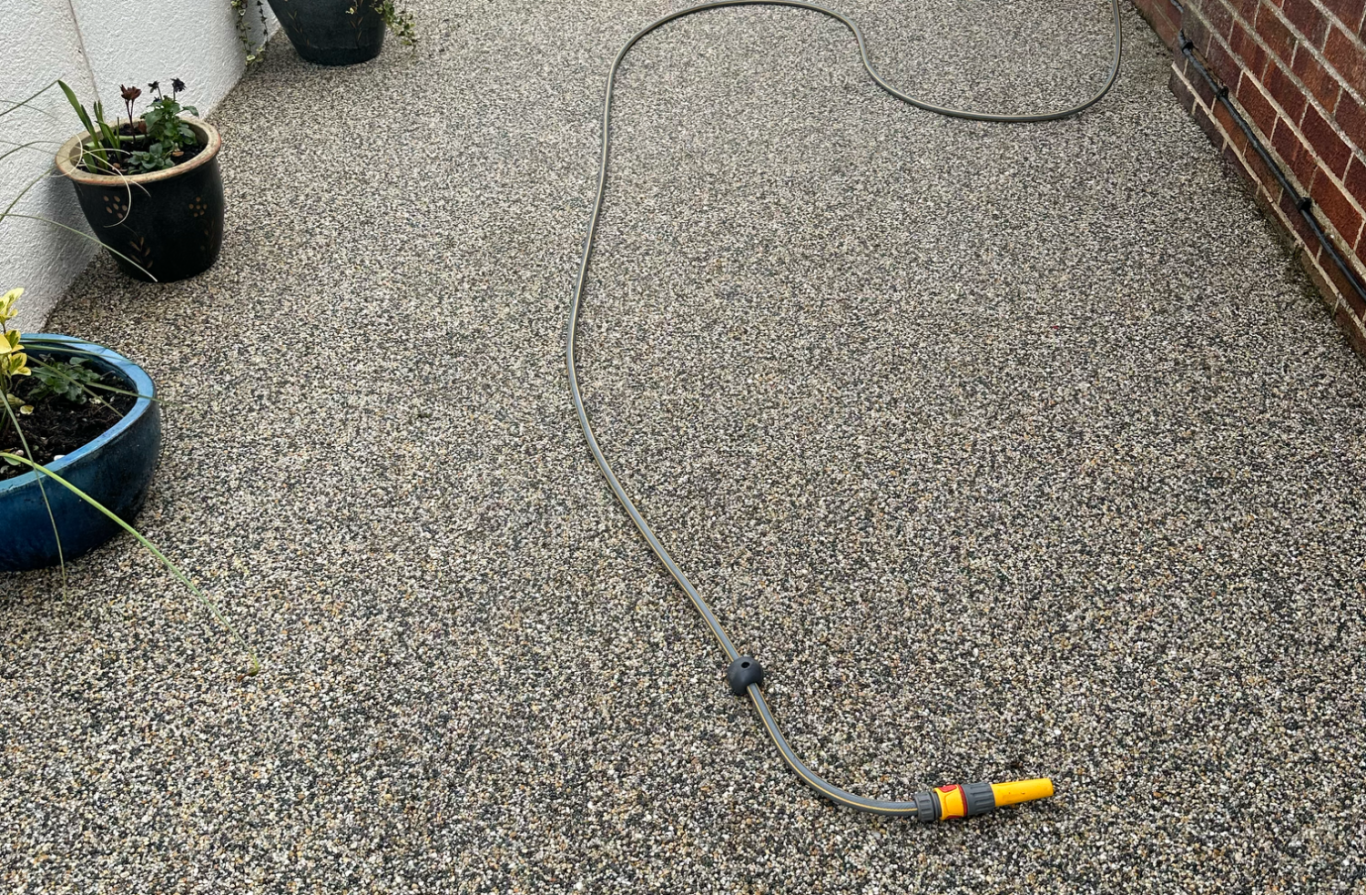
A pressure washer is not always necessary for routine resin driveway maintenance.
For many lightly soiled surfaces, a gentle cleaning approach is sufficient.
Equipment Required
Soft-bristled broom
Garden hose
Bucket
Mild resin-compatible detergent
Soft cleaning brush
Suitable protective equipment
Cleaning Method
Begin by sweeping the entire surface.
Remove loose debris, leaves and accumulated dirt.
Apply clean water and a mild, approved detergent.
Gently brush affected areas.
Rinse thoroughly and allow the surface to dry.
This method is particularly suitable for routine maintenance where heavy biological contamination is absent.
14. How Often Should Resin Driveways and Patios Be Cleaned?
The ideal cleaning frequency depends on the property's location, surrounding vegetation, drainage and exposure to sunlight.
A resin driveway beneath mature trees may require more frequent maintenance than an open driveway receiving plenty of sunlight.
Weekly or Fortnightly Maintenance
Remove leaves, soil and loose debris when necessary.
This helps prevent organic matter from accumulating.
Monthly Maintenance
Inspect the surface for algae, moss, staining and drainage problems.
Spot-clean minor contamination promptly.
Seasonal Cleaning
A more thorough clean may be beneficial during spring and autumn.
Spring cleaning can remove contamination accumulated during winter.
Autumn maintenance helps remove leaves and debris before prolonged wet weather.
Annual Professional Cleaning
Some resin driveways and patios benefit from an annual professional clean.
However, heavily shaded or contaminated surfaces may require more frequent attention, while well-maintained surfaces may need less.
The cleaning schedule should be based on actual surface conditions rather than a fixed rule.
15. Resin Driveway Cleaning Throughout the Seasons
Spring
Spring is an ideal time to assess the condition of resin driveways and patios following winter.
Typical tasks include removing algae, clearing debris and inspecting drainage.
Summer
During summer, focus on removing dust, food spills, tyre marks and other surface contamination.
Avoid allowing strong cleaning chemicals to dry on hot resin surfaces.
Autumn
Falling leaves and increased rainfall can encourage biological growth.
Regular sweeping is particularly important.
Winter
Winter maintenance should focus on keeping surfaces clear and reducing slip hazards.
Avoid using metal shovels or aggressive ice-removal tools that may damage the resin.
Only use de-icing products approved by the surface manufacturer.
16. Common Resin Driveway Cleaning Mistakes
Incorrect cleaning can cause unnecessary damage to resin bound surfaces.
Some of the most common mistakes include:
Using Excessive Pressure
High-pressure water jets can damage weakened resin and dislodge aggregates.
Using Strong Chemicals
Unapproved acids, solvents and concentrated cleaning chemicals may damage or discolour the surface.
Using Wire Brushes
Metal brushes and abrasive cleaning tools can scratch or wear the surface.
Ignoring Manufacturer Instructions
Different resin systems have different maintenance requirements.
Allowing Organic Debris to Accumulate
Leaves, soil and other organic matter create favourable conditions for algae and moss.
Ignoring Drainage Problems
Poor drainage can contribute to persistent dampness and recurring contamination.
Cleaning Damaged Resin
Loose or deteriorating resin should be assessed before cleaning.
Professional repair may be necessary.
17. Can Resin Driveways Be Restored?
Many resin driveways can be significantly improved through appropriate cleaning.
However, the results depend on the underlying condition of the surface.
Problems That Cleaning May Improve
Professional cleaning may help with:
Green algae
Surface moss
General dirt
Organic contamination
Some tyre marks
Certain oil and grease stains
Some forms of lichen contamination
Problems That Cleaning Cannot Repair
Cleaning will not repair:
Structural cracking
Delamination
Missing aggregates
Failed resin binders
Subsidence
Severe surface wear
Permanent UV-related colour changes
Where resin has deteriorated, specialist repair or resurfacing may be required.
A professional assessment can help determine whether cleaning is appropriate.
18. How Much Does Resin Driveway Cleaning Cost?
The cost of professional resin driveway cleaning varies according to several factors.
These include:
Surface area: Larger driveways generally require more time and resources.
Contamination: Heavy algae, moss and lichen may require additional treatment.
Access: Restricted access can affect cleaning time and equipment requirements.
Surface condition: Damaged or fragile resin may require additional care.
Staining: Oil, grease and other stubborn deposits can increase cleaning complexity.
Drainage and runoff: Additional measures may be needed to manage wastewater safely.
Is Professional Resin Cleaning Worth It?
Professional cleaning can help improve the appearance of a driveway or patio and reduce the accumulation of organic contamination.
However, the method must be appropriate for the resin system.
At Mr Softwash, we recommend assessing the surface before selecting a cleaning process.
For an accurate quotation, contact Mr Softwash with photographs and approximate measurements of your resin driveway or patio.
19. Professional Resin Driveway Cleaning vs DIY Cleaning
Many homeowners can successfully carry out basic resin driveway maintenance themselves.
However, more challenging contamination may benefit from professional assessment.
DIY Resin Cleaning
Professional Resin Cleaning
Suitable for routine maintenance
Suitable for assessing more challenging contamination
Low equipment costs
Access to specialist cleaning equipment
Effective for light dirt
Can address a wider range of cleaning problems
Requires careful product selection
Cleaning methods can be tailored to the surface
Limited options for stubborn stains
Specialist knowledge of exterior cleaning
Risk of damage if unsuitable methods are used
Professional assessment can help reduce cleaning risks
The decision depends on the condition of the surface and the type of contamination present.
20. How to Keep Resin Driveways Looking New
Regular maintenance is the best way to preserve the appearance of a resin driveway or patio.
Our Top Maintenance Recommendations
1. Sweep regularly
Remove leaves, soil and organic debris before they accumulate.
2. Clean spills promptly
Oil, grease and other contaminants should be addressed as soon as possible.
3. Avoid aggressive pressure washing
Use only cleaning methods permitted by the resin manufacturer.
4. Control algae and moss
Inspect shaded and damp areas regularly.
5. Keep drainage clear
Ensure water can drain as intended.
6. Protect the surface
Avoid dragging heavy or sharp objects across the resin.
7. Use suitable cleaning products
Always confirm compatibility before applying chemicals.
8. Inspect for damage
Identify loose aggregates, cracks and worn areas before they become more extensive.
9. Consider professional cleaning
Arrange specialist cleaning when routine maintenance is no longer sufficient.
10. Follow installation guidance
The manufacturer's maintenance instructions should always take priority over generic cleaning advice.
21. Resin Driveway Cleaning FAQs
What is the best way to clean a resin driveway?
For routine cleaning, the best approach is generally to remove loose debris, wash with water and a suitable mild detergent, gently brush where necessary and rinse thoroughly.
More stubborn contamination may require specialist treatment.
Always follow the resin manufacturer's recommendations.
Can you jet wash a resin driveway?
Some resin bound surfaces can be pressure washed using controlled techniques, but not all resin systems are suitable.
Excessive pressure can damage the resin or loosen aggregates.
Check the manufacturer's guidance before pressure washing.
Can you use bleach on resin driveways?
Bleach-based products should not be used unless the specific resin manufacturer confirms compatibility.
Some chemicals can damage or discolour resin surfaces.
Can you use washing-up liquid on resin driveways?
Some mild detergents may be suitable for certain resin systems.
However, washing-up liquids can contain additives that leave residues.
A cleaner specifically approved for the resin surface is preferable.
How do you remove green algae from resin?
Light algae can often be addressed through gentle cleaning.
Established algae may require a suitable resin-compatible biological treatment.
Avoid unapproved chemicals and aggressive pressure washing.
How do you remove black spots from resin driveways?
First establish whether the marks are caused by lichen, tyre deposits, pollution or another contaminant.
Treatment depends on the cause and the resin manufacturer's cleaning recommendations.
Can you use vinegar to clean resin driveways?
Vinegar is acidic and should not automatically be considered suitable for resin surfaces.
Avoid using it unless the resin manufacturer confirms compatibility.
Can you use patio cleaner on resin?
Not all patio cleaners are suitable for resin.
Many products are designed for concrete, stone or block paving and may contain chemicals unsuitable for resin binders.
Always check the product label and manufacturer guidance.
How often should resin driveways be professionally cleaned?
This depends on exposure, contamination and maintenance.
Some surfaces benefit from annual professional cleaning, while others require less frequent treatment.
Why is my resin driveway turning green?
Green discolouration is commonly caused by algae growing in damp or shaded conditions.
Regular removal of organic debris and appropriate cleaning can help control the problem.
Why does my resin driveway have black spots?
Black spots can be caused by lichen, pollution, tyre deposits or embedded dirt.
Correct identification is essential before treatment.
Can moss damage a resin driveway?
Moss can trap moisture and debris and may contribute to slippery conditions.
It should be removed using a method compatible with the resin surface.
How long does a resin driveway last?
The lifespan of a resin driveway depends on installation quality, materials, usage, drainage and maintenance.
Correct cleaning can help preserve its appearance but cannot compensate for structural or installation defects.
Can a faded resin driveway be cleaned?
Cleaning can remove surface contamination that makes resin appear dull.
However, permanent fading caused by UV exposure or resin ageing may not be reversible through cleaning.
Is soft washing safe for resin driveways?
Low-pressure cleaning can reduce mechanical stress, but the safety of soft washing depends on the chemicals used and their compatibility with the resin system.
Soft washing should not automatically be assumed safe for every resin surface.
Can resin patios become slippery?
Yes.
Algae, moss and accumulated contamination can make resin patios slippery, particularly when wet.
Regular cleaning helps reduce these hazards.
22. Professional Resin Driveway & Patio Cleaning in Poole, Bournemouth, Christchurch and Dorset
At Mr Softwash, we understand that different exterior surfaces require different cleaning methods.
Resin bound driveways and patios can be attractive, durable additions to a property, but inappropriate cleaning techniques can cause unnecessary damage.
Our approach to exterior cleaning focuses on assessing the surface, identifying the contamination and selecting an appropriate cleaning method.
We understand the importance of protecting delicate surfaces while improving their appearance.
Areas We Cover
Mr Softwash provides exterior cleaning services across Dorset and surrounding areas, including:
Poole
Bournemouth
Christchurch
Broadstone
Wimborne Minster
Ferndown
Ringwood
Wareham
Swanage
Dorchester
Blandford Forum
Dorset and surrounding areas
Why Choose Mr Softwash?
Exterior cleaning knowledge
We understand the differences between cleaning resin, natural stone, concrete, block paving and other outdoor materials.
Surface-specific cleaning
We believe cleaning methods should be selected according to the surface condition and manufacturer's guidance.
Attention to detail
Our approach focuses on identifying the causes of staining and contamination rather than simply applying excessive water pressure.
Local service
Based in the Dorset area, Mr Softwash serves customers throughout Poole, Bournemouth, Christchurch and surrounding locations.
23. Get a Quote for Resin Driveway & Patio Cleaning
Is your resin driveway turning green?
Has your resin patio become affected by algae, moss, black spots or general dirt?
Are you unsure whether your resin surface can be safely pressure washed?
Contact Mr Softwash for advice on professional resin driveway and patio cleaning.
We can discuss your surface, assess the type of contamination and advise on an appropriate cleaning approach.
Whether you have a small resin patio or a large residential driveway, our aim is to help you maintain an attractive, well-cared-for outdoor surface.
Contact Mr Softwash
Resin Driveway & Patio Cleaning Specialists
Serving Poole, Bournemouth, Christchurch, Dorset and surrounding areas.
Website: www.mrsoftwash.co.uk
Request a free, no-obligation quotation today.
Conclusion: The Best Way to Clean and Maintain Resin Driveways
Resin bound driveways and patios offer an attractive and practical outdoor surface, but regular maintenance is essential.
The most important principle is to use cleaning methods compatible with the particular resin system.
Gentle cleaning, prompt stain removal, regular sweeping and appropriate control of algae and moss can help preserve the appearance of resin surfaces.
Aggressive pressure washing and unsuitable chemicals should be avoided.
Where contamination is extensive or the surface is showing signs of deterioration, professional assessment is recommended.
For resin driveway and patio cleaning advice in Poole, Bournemouth, Christchurch and Dorset, contact Mr Softwash.
Give me a quick call, send me an email or WhatsApp
Written Quote
Tell me what you need and I'll send you a free written quote to your phone or by email
We need your consent to load the translations
We use a third-party service to translate the website content that may collect data about your activity. Please review the details in the privacy policy and accept the service to view the translations.